Best Camera Lens Selections for Every Photographer’s Need
Looking for the best camera lens to elevate your photography? This guide highlights five top options suited to different styles and cameras. Whether you shoot portraits, landscapes, sports, or travel, these lenses offer quality optics, reliable performance, and clear value. This list is ideal for enthusiasts and semi-professionals seeking versatile glass that pairs well with Canon EOS R mirrorless bodies as well as general Canon DSLR setups. Each entry explains who it’s best for, why it’s a solid pick, and any practical caveats to consider before buying. A quick buying table follows for fast comparison.
Product Quick Reference
| Product | Best For | Key Benefit |
|---|---|---|
| Canon RF24-70mm F2.8 L IS USM | General purpose, event, travel | Bright f/2.8 zoom with IS for versatile everyday use |
| Canon EF 50mm f/1.8 STM | Portraits, low light, beginner-friendly | Fast prime with affordable price |
| Canon RF70-200mm F2.8 L IS USM | Telephoto; sports; wildlife | Bright telephoto zoom with image stabilization |
| HOYA 62mm Circular Polarizer Filter | Landscape, travel | Reduces glare; richer skies and colors |
| Canon RF 24-105mm f/4L IS USM | All-around travel and everyday | Wide zoom range with constant f/4 and Nano USM |
Canon RF24-70mm F2.8 L IS USM Lens
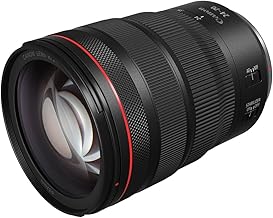
Best for: versatile everyday use, portraits, landscapes, and travel on Canon EOS R series mirrorless cameras. This high image quality lens features a bright f/2.8 aperture and up to 5 stops of optical image stabilization, supporting handheld shooting in varied lighting. Its Nano USM autofocus is fast, smooth, and quiet, which helps when shooting events or street scenes. A drawback is its bulk and weight compared with smaller primes, which may affect portability for long shoots.
Canon EF 50mm f/1.8 STM Lens

Best for: portraiture and low-light sensing on Canon DSLR bodies. The 50mm focal length with a wide f/1.8 aperture delivers a shallow depth of field and strong subject isolation. Its compact design makes it a travel-friendly option. Limitations include a fixed focal length that lacks zoom ability and potential chromatic aberration in some high-contrast scenes, though the price-to-performance ratio remains compelling for beginners and enthusiasts.
Canon RF70-200mm F2.8 L IS USM Lens

Best for: sports, wildlife, and portraiture at a distance on EOS R series. This telephoto zoom provides a bright f/2.8 aperture, reducing background blur and enabling faster shutter speeds for action. The lens is noted for its image quality and stabilization, making it a strong choice for handheld telephoto work. A potential limitation is its size and weight, which can reduce portability on long field shoots.
HOYA 62mm HD Antistatic CIR-PL Filter

Best for: landscape and travel photographers who want richer skies, reduced glare, and deeper color saturation. The filter uses 1-stop light loss due to high-rate transmission, maintaining a brighter view through the viewfinder. It also features an antistatic coating to repel dust, but filters may require additional care to prevent smudges and scratches during field use.
Canon RF 24-105mm f/4L IS USM

Best for: all-around travel and everyday use on Canon EOS R systems. This L-series lens offers a constant f/4 aperture with Nano USM for quiet focusing and reliable performance across the zoom range. Its longer effective focal length helps with tighter framing and distance shots. A caveat is the smaller maximum aperture compared to f/2.8 lenses, which may impact low-light performance and background blur in certain scenarios.
Buying Guide: Key Considerations for Selecting the Right Lens
- Camera compatibility: Ensure the lens suits your camera system (mirrorless RF vs DSLR EF). Adapters can add weight or affect AF performance on some bodies.
- F-stop and light conditions: Brighter lenses (lower f-number) enable better low-light shooting and shallower depth of field but often come at higher cost and weight.
- Focal length and versatility: Wide to standard zooms (like 24-70mm) are versatile for travel and events, while primes (like 50mm) excel in portraits and low light.
- Image stabilization: Lenses with IS help in handheld shots, especially at longer focal lengths or slower shutter speeds.
- Weight and portability: Heavier lenses may require a comfortable strap system and tripod support for long sessions.
- Filter compatibility: CirPolarizers and ND filters can enhance landscapes but add to the total system size and cost.
FAQ
- What lens is best for travel photography on Canon EOS R cameras?
– A versatile zoom like the RF24-70mm f/2.8 or RF24-105mm f/4L IS USM is commonly favored for its flexibility in varied scenes. - Is a constant f/2.8 worth it over f/4 in everyday shooting?
– Yes for low-light and subject isolation, but at the cost of size, weight, and price. - Do I need an EF lens on an EOS R body?
– Some EF lenses work via adapter, but native RF glass typically delivers better AF performance and autofocusing smoothness. - What does image stabilization do in telephoto lenses?
– It helps maintain sharpness by compensating for camera shake, especially at longer focal lengths. - When should I use a circular polarizer?
– Use it for landscapes, water scenes, or reflective surfaces to reduce glare and deepen colors.