Best Lenses With Best Bokeh for Portraits and Low Light
If you’re chasing creamy background blur and sharp foreground subjects, you want lenses that excel at producing beautiful bokeh while staying practical for everyday shooting. This guide showcases five standout lenses that deliver strong bokeh performance, with guidance on who should buy each one. Whether you’re a hobbyist, a budding content creator, or a professional needing reliable prime options, you’ll find a clear pick here.
| Product | Why It Stands Out | Best For |
|---|---|---|
| Canon EF 50mm f/1.8 STM | Bright f/1.8 for shallow depth of field; compact and affordable. | Portraits and night photography for Canon DSLR users. |
| 85mm f1.8 Portrait Lens (Manual) | Classic portrait focal length with flattering compression; very lightweight manual focus option. | Street portraits and creative MF work for Canon EF mount. |
| TTARTISAN 75mm f1.5 (M42) | Swirl bokeh with large aperture; retro design and versatile mount options. | Artistic portraits and craft photography with adaptable mounts. |
| TTArtisan 100mm f2.8 (M42) | Soap-bubble bokeh; distinctive background blur for close-ups and nature shots. | Portraits and close-up scenes seeking a playful background. |
| Canon RF50mm f/1.8 STM | Compact, fast prime for Canon RF mirrorless; smooth AF for video and stills. | Canon EOS R-series users seeking a lightweight portrait lens. |
Canon EF 50mm f/1.8 STM Lens – Best Budget Portrait Lens

The Canon EF 50mm f/1.8 STM is a classic budget-friendly prime designed for Canon EOS DSLRs. With a 50mm focal length and a bright f/1.8 maximum aperture, it delivers a natural perspective that flatters portraits and performs well in low light. Its compact size makes it ideal for street photography and travel shooters who want a lightweight lens without sacrificing bokeh quality. Best for photographers who need an affordable, reliable option that still creates pleasing background blur.
- Best for: Canon DSLR users seeking a simple yet effective portrait or low-light lens.
- Limitations: Autofocus is reliable but not as fast as newer AF systems; edge sharpness improves when stopped down slightly from f/1.8.
85mm f/1.8 Portrait Lens – Manual Focus
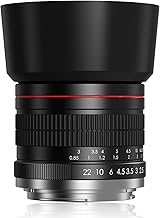
This 85mm manual-focus lens offers a flattering portrait focal length with a fixed aperture that creates shallow depth of field. It is best for photographers who enjoy precise control over focus and lighting, and who don’t mind manual operation for a distinct creative process. The lens is well-suited for studio or street portraits where the photographer wants deliberate, hands-on focusing and classic portrait compression.
- Best for: Experienced shooters who prefer MF control and a classic portrait look.
- Limitations: No autofocus; requires careful focusing, especially in dynamic scenes.
TTARTISAN 75mm f1.5 – Swirl Bokeh

The TTARTISAN 75mm f1.5 lens specializes in a swirl bokeh effect that adds an artistic atmosphere to subjects. Its large f/1.5 aperture supports shallow depth of field in low light, producing standout portraits with a distinctive background swirl. This option is particularly appealing to photographers who want a vintage-inspired look and the flexibility to adapt mounts with adapters.
- Best for: Creative portrait work and photographers seeking unique bokeh textures.
- Limitations: Manual operation with potential compatibility considerations across different camera bodies without adapters.
TTArtisan 100mm f/2.8 – Bubble Bokeh

TTArtisan’s 100mm f/2.8 focuses on a distinctive soap-bubble bokeh, producing a bright-edged bokeh ball that stands out against the subject. It offers balanced sharpness with its specialized background blur, making it a strong choice for distinctive portraits, nature close-ups, and scenes where the background needs a playful, eye-catching character. The M42 mount compatibility adds flexibility for adapters across many camera systems.
- Best for: Portraits and nature shots seeking a fun, bubble-like blur.
- Limitations: Non-native mounts may require adapters; image quality is shaped by the unique design rather than universal sharpness expectations.
Canon RF50mm F1.8 STM – For Canon RF Mirrorless

This Canon RF50mm f/1.8 STM is a compact, lightweight prime designed for Canon’s RF-mount mirrorless cameras. It delivers a fast f/1.8 aperture that facilitates strong background blur while maintaining good overall image quality. The stepping-motor autofocus helps with smooth, quiet operation for both photos and video, making it a solid option for travel, vlogging, and general portrait work on EOS R-series bodies.
- Best for: RF-m mount users needing a portable, versatile portrait lens with reliable AF for video and stills.
- Limitations: As a beginner-friendly option, some advanced pros may seek lenses with more specialized bokeh effects.
Buying Guide: Lenses With Best Bokeh
- Focal length matters: Short primes (50mm) are versatile for head-and-shoulders portraits; longer primes (85mm, 100mm) offer flattering compression and stronger off-axis blur.
- Aperture influence: Wider apertures (f/1.8, f/1.5, f/2.8) yield shallower depth of field and more pronounced bokeh, but real-world sharpness varies by lens design.
- Manual vs. autofocus: Manual lenses offer precise control and unique bokeh characteristics but require steady technique. Autofocus lenses provide convenience and speed, especially for candid work or video.
- Mount compatibility: Ensure the mount (Canon EF, RF, M42, or others) matches your camera body or has a reliable adapter. Some lenses are native to Canon DSLR, others to Canon mirrorless.
- Image quality versus creative look: Some lenses emphasize creamy bokeh, others create swirl or bubble bokeh. Choose based on your preferred aesthetic and subject matter.
- Weight and size: Travel and street photographers benefit from compact, lightweight lenses that still deliver strong bokeh.
- Price-to-performance: Budget-friendly primes like the EF 50mm f/1.8 STM offer solid bokeh without a premium price, while specialty lenses justify their cost through distinctive effects.
Frequently Asked Questions
- What is bokeh, and why does it matter for portraits?
Bokeh is the quality of the out-of-focus areas in an image. It matters for portraits because it helps separate the subject from the background, drawing attention to the face and eyes. - Which lens is best for beginners seeking shallow depth of field?
A 50mm prime with a wide aperture (around f/1.8) is a popular starting point due to its versatility and forgiving perspective. - Is manual focus necessary for bokeh-focused photography?
Not necessary, but some photographers use manual focus to achieve precise focus with unique bokeh effects, especially in controlled environments. - Should I choose a lens for Canon DSLR or Canon mirrorless?
Choose based on your camera system. DSLR lenses (EF) suit Canon DSLRs, while RF lenses fit Canon’s mirrorless cameras. Adapter solutions exist but may affect autofocus speed. - What makes swirl or bubble bokeh different?
Swirl bokeh designs circular, spiraling blur patterns around subjects, creating a distinctive artistic look; bubble bokeh features a bright edge around bokeh balls for a playful effect. - Can I mix mounts using adapters?
Adapters enable broader compatibility, but they can affect autofocus, metering, and overall ease of use depending on camera and lens.