Best Camera for Vlogging: Top Picks for Smooth, Shareable Content
Looking for the best camera for vlogging that fits your style and budget? This guide reviews five top options, from compact wearables to feature-rich mirrorless cameras, to help you choose the right tool for your channel. Whether you’re a travel storyteller, daily vlogger, or casual creator, these picks prioritize reliable autofocus, stable footage, and easy setup for quick uploads.
Buyer snapshot: the top five picks below cover wearable action cams for hands-free recording, wireless starter kits for iPhone and Android, and flagship vlogging cameras with advanced stabilization. Use the comparison table to scan key strengths at a glance.
| Product | Best For | Main Advantage |
|---|---|---|
| 4K Mini Body Camera | On-the-go professionals, travel bloggers | Compact, hands-free recording with versatile mounting |
| Movo iVlogger-PRO Wireless Kit | Beginner and intermediate creators, solo shooters | Wireless mic, full-size tripod, LED light kit |
| DJI Osmo Pocket 3 | Travel vloggers, quick setup | 1-inch sensor, 4K/120fps, 3-axis stabilization |
| Canon EOS R50 Kit | Vloggers seeking high image quality | APS-C sensor, fast autofocus, 4K video |
| Sony ZV-1F | creators who need wide framing | Ultra-wide 20mm lens, strong eye-AF |
4K Mini Body Camera — Wearable, Hands-Free
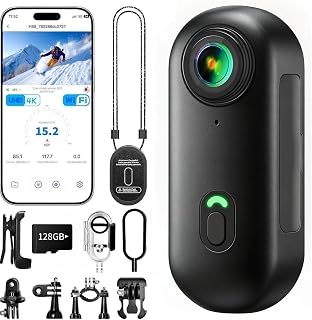
Best for: on-the-go professionals and travel vloggers who need compact, hands-free recording. This wearable design enables discreet capture in dynamic settings. Caution: limited manual controls compared with larger setups.
Movo iVlogger-PRO Wireless Vlogging Kit

Best for: solo creators who want a complete studio setup on a budget. The wireless mic, tripod, and LED light simplify recording in varied environments. Limitation: wireless components may require fresh batteries and syncing is essential.
DJI Osmo Pocket 3 Vlogging Camera

Best for: travel vloggers needing built-in stabilization and a compact form factor. Features include a 1-inch CMOS sensor, 4K/120fps, and 2-inch touchscreen with 3-axis stabilization for ultra-smooth footage. Caution: small handheld design may limit grip for long shoots.
Canon EOS R50 Kit

Best for: creators who prioritize image quality and fast autofocus. The R50 offers a 24.2 MP APS-C sensor, DIGIC X processing, and up to 15 fps electronic shutter for crisp 4K video. Choose this if you want strong color science and reliable subject tracking; limitation: APS-C sensor may require larger lenses for deeper depth of field.
Sony ZV-1F Vlogging Camera

Best for: creators who want wide framing and solid low-light performance. The ultra-wide 20mm lens and 1-inch sensor with 20.1MP enable broad scenes and strong background blur. Eye-AF and autofocus tracking help keep subjects sharp. Limitation: fixed lens means less zoom flexibility compared with interchangeable-lens options.
Buying Guide
- What type of videos will you shoot? If you need hands-free recording, a wearable (like a mini body camera) can be ideal. For static desk setups, a compact mirrorless or compact camera may offer better video quality and controls.
- How important is stabilization? For walking tours or active scenes, choose models with mechanical or electronic stabilization to minimize shake.
- Lens and sensor size matter. Larger sensors and versatile lenses improve low-light performance and depth of field, but may cost more or be less portable.
- Autofocus capabilities. Look for reliable eye or face detect and tracking if you film subjects moving toward or away from the camera.
- Audio integration. Some kits include wireless mics or accessory paths; consider whether you’ll rely on built-in mics or require external audio gear.
- Portability vs. features. Smaller devices are easier to carry, but larger bodies may offer more manual control and better battery life.
Frequently Asked Questions
- What is the best camera for vlogging on a budget? The Movo iVlogger-PRO kit provides a starter set with wireless audio and lighting, suitable for beginners.
- Which camera is best for travel? DJI Osmo Pocket 3 combines portability with strong stabilization and versatile shooting modes.
- Do I need an interchangeable-lens camera for vlogging? Not necessarily; many compact and fixed-lens models offer excellent autofocus and video quality for typical vlogging needs.
- Is stabilization necessary for vlogging? Yes, it helps maintain a professional look, especially in moving scenes or handheld shooting.
- Which camera handles low light well? Cameras with larger sensors and bright lenses (such as the Sony ZV-1F or Canon EOS R50) tend to perform better in dim environments.
- Should I buy a wireless microphone kit? If you plan to shoot without a dedicated camera person, a wireless mic can substantially improve audio clarity in diverse environments.