For photographers who crave expansive perspectives without sacrificing light, a wide-angle lens with a fast maximum aperture is ideal. The following picks balance wide fields of view with generous openings, enabling dramatic landscapes, architecture, and night scenes. This guide highlights five options across brands and mounts, with practical notes on usability and image quality.
| Product | Brand | Focal Length / Aperture | Mount Type | Key Benefit |
|---|---|---|---|---|
| Sony FE 20mm F1.8 G | Sony | 20mm / f/1.8 | Full-Frame Sony E | Ultra-wide, bright f/1.8 for landscapes and astro |
| SIRUI 16mm F1.2 Night Walker | Sirui | 16mm / T1.2 | E-mount (APS-C/S35) | Very fast aperture for video and night shots |
| TTArtisan 10mm F2.0 | TTArtisan | 10mm / f/2.0 | Sony E-Mount APS-C | Extremely wide angle with strong low-light performance |
| Rokinon 14mm F2.8 | Rokinon | 14mm / f/2.8 | Canon EF | Wide perspective with solid f/2.8 speed |
| TTArtisan 25mm F2 | TTArtisan | 25mm / f/2.0 | APS-C | Bright wide option with practical framing |
Summary notes: The five selections emphasize wide fields of view with apertures broadly at f/2 or faster. They cover Sony E-mount and Canon EF options, including both full-frame and APS-C formats. Each lens offers distinct advantages for environments ranging from architectural interiors to night skies and cinematic close-ups.
Sony FE 20mm F1.8 G Overview
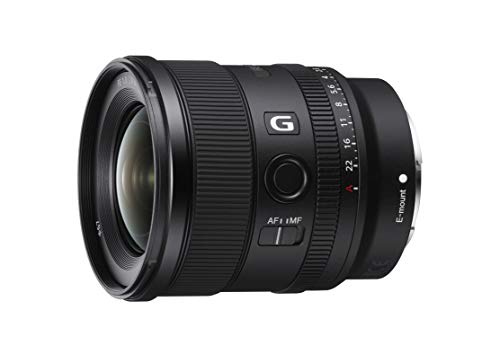
The Sony 20mm F1.8 G is a compact, ultra-wide prime designed for full-frame Sony E-mount. Its maximum aperture of f/1.8 delivers bright performance in low-light scenarios and helps create pronounced background separation in wide compositions. The lens is noted for sharpness across the frame and a lightweight profile that suits travel and documentary work. When paired with a high-resolution body, it enables expansive landscapes with detailed corners and minimal distortion at the edges.
SIRUI Night Walker 16mm T1.2

The SIRUI Night Walker 16mm T1.2 is a cine-compatible wide-angle designed for E-mount cameras. Its 16mm focal length frames expansive scenes, while the T1.2 aperture enables dramatic depth of field and superior low-light performance. The lens focuses close enough for immersive interior shots and has a distinct three-dimensional look due to its fast aperture. For video work, the combination of brightness and control can be especially advantageous in dim environments.
TTArtisan 10mm F2.0 Ultra-Wide

The TTArtisan 10mm F2.0 is a true ultra-wide for Sony E-mount APS-C bodies, delivering a 105-degree field of view. The f/2.0 maximum aperture helps capture scenes in dim light and supports artistic distortion-free landscapes or interior shots. The lens design emphasizes optical clarity with limited chromatic aberration across the frame, making it a strong option for creative wide-angle shooters seeking bold compositions.
Rokinon 14mm F2.8 For Canon EF

The Rokinon 14mm F2.8 is a classic wide-angle option for Canon EF-mount cameras. Its 14mm focal length yields dramatic perspectives ideal for landscapes and architectural interiors. At f/2.8, it maintains solid light gathering and depth of field control, with a compact build and a built-in hood for practical field use. It remains a reliable budget-friendly choice for enthusiasts exploring wide-angle storytelling.
Meike 25mm F2.0 For Micro Four Thirds
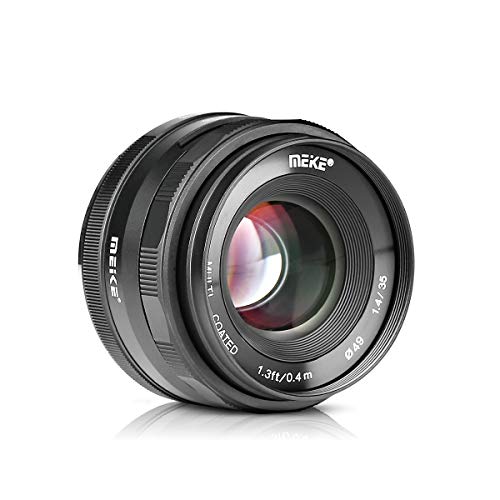
The Meike 25mm F2.0 is a compact wide-angle option for Micro Four Thirds. Its 25mm focal length on MFT yields a versatile field of view suitable for street, portraits, and interior shots when paired with a smaller sensor. With a relatively bright f/2.0, it supports improved subject isolation and pleasing bokeh for close-ups, while the manual focus design encourages deliberate framing and composition.
Buying Guide: Key Considerations For Wide-Angle, Low-Aperture Lenses
Mount compatibility and sensor format strongly impact choice. Full-frame lenses on crop-sensor bodies provide a wider field of view than their field-of-view rating on full-frame cameras. Consider focal length ranges in relation to your subjects: ultra-wide 10–16mm is great for landscapes and architecture, 16–25mm works well for interiors and environmental portraits, and 20–25mm often suits street and travel photography.
A fast maximum aperture (f/1.8 or faster) improves low-light performance, allows for more dramatic bokeh, and enables faster shutter speeds in dim scenes. However, the trade-off can include size, weight, and cost. Cine-oriented designs (like the Night Walker series) add manual focus precision and consistent focus breathing, which is beneficial for video work.
Optical quality is critical—look for sharpness across the frame, minimal distortion, and coatings that reduce flare. Some lenses perform best in center frames with softer edges; others maintain uniform sharpness at the corners. For astro or night photography, consider lenses with minimal coma and good edge-to-edge performance.
Autofocus behavior matters depending on use: much wide-angle glass is manual-focus friendly, but many modern lenses offer reliable autofocus for stills. If you frequently shoot video, cine-style lenses with smooth focus rings and consistent breathing provide a smoother experience.
Budget, weight, and build quality are practical. For travel or landscape work, lighter lenses reduce fatigue on long shoots. Protective features like weather sealing and lens hoods help during outdoor sessions. Finally, compatibility with your existing camera system (Sony E, Canon EF, Micro Four Thirds, etc.) is essential to maximize value.