Documentary filmmaking demands versatile cameras that deliver sharp detail, steady footage, strong low-light performance, and practical workflow options. Below are five camcorders and cameras chosen for field reporting, interviews, and travel shoots. Each model offers a balance of resolution, stabilization, audio compatibility, and connectivity to support documentary crews of varying sizes and budgets. Read on to compare how these options align with your production style, whether you’re capturing on the move, conducting interviews, or producing long-form content.
| Product | Brand | Notable Feature |
|---|---|---|
| 8K Video Camera Camcorder | FlyFrost | 8K Ultra HD, 88MP stills, 270° touchscreen |
| OLESIT Camcorder | OLESIT | Full HD 1080P, 48MP, webcam mode |
| Muitune Camcorder QHD | Muitune | 2.7K, 56MP, dual batteries |
| Suttie Camcorder Ultra HD | Suttie | 4K, 80MP, IR night vision |
| FIREFOTO Camcorder | FIREFOTO | 4K, 42MP, LED fill light |
FlyFrost 8K Video Camcorder

The FlyFrost camera targets documentary work with an emphasis on image fidelity and versatility. It records up to 8K resolution at 15 frames per second, delivering exceptionally sharp detail and broad creative latitude for post-production. The device also captures 88MP stills, supported by a 6-axis gyro autofocus system to help maintain critical focus across dynamic scenes. A 3.0-inch touchscreen supports 270-degree rotation, enabling comfortable framing from the backseat during interviews or from low angles during B-roll. A generous 16x digital zoom lets shooters compose distant scenes with reasonable clarity while maintaining a compact setup.
Connectivity and control rounds out the package. Built-in WiFi paired with the iSmart DV2 app allows rapid file transfer, remote operation, and quick preview on mobile devices—useful for field reviews or on-the-go edits. The camera supports a webcam mode for streaming and video calls, and an external microphone input helps capture clearer dialogue in noisy environments. Infrared night vision expands capabilities for low-light or night shoots, while the included accessories—such as a remote and stabilizer—help stabilize handheld footage and support varied shooting configurations.
OLESIT Camcorder Full HD 1080P
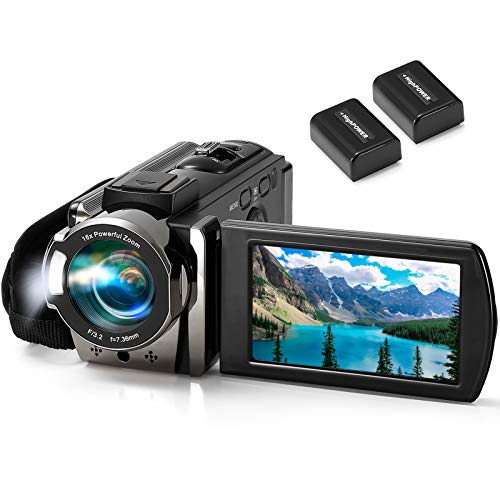
The OLESIT camcorder focuses on accessible, compact documentation workflow. It records in 1080p at 15 frames per second with a 3.0-inch IPS screen and a 270-degree rotatable LCD, enabling flexible framing for interviews and candid field moments. The camera supports a fill light to improve visibility in dim environments and includes convenient features such as a webcam function, USB 2.0 connectivity, and TV output for quick playback. It emphasizes ease of use and value, with a bundled 32GB SD card and a remote control for comfortable handheld shooting or remote operation during sit-down interviews.
Important workflow details include the Pause function for controlled takes, JPEG/AVI formats for simple editing pipelines, anti-shake and face capture options, and a suggested path to PC webcam use via AMCAP software. While not designed as a high-end cinema tool, the OLESIT provides reliable performance for documentary projects that require quick setup, straightforward streaming, and flexible control without heavy gear. This makes it a practical option for solo shooters and small crews focusing on content cadence and accessibility.
Muitune Camcorder QHD 2.7K
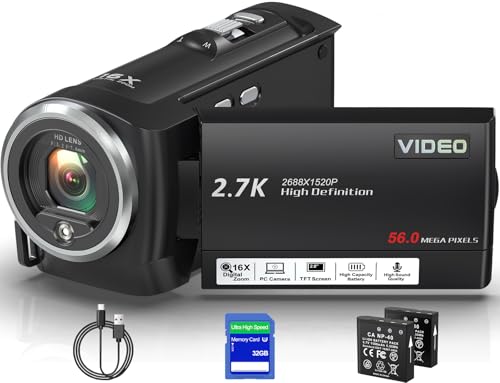
The Muitune camera targets portable documentary work with a strong balance of resolution and flexibility. It records in QHD 2.7K at up to 56MP stills, offering a crisp image pipeline for on-location shoots. A 2.8-inch LCD with 270-degree rotation supports versatile framing for handheld or shoulder-mounted use. The camera features 16x digital zoom to capture intimate moments at a distance and includes a 32GB SD card, plus two NP-40 batteries that provide extended shooting sessions. It also supports webcam functionality and simultaneous charging with recording, enabling uninterrupted sessions during long shoots.
Low-light and audio considerations are addressed with a built-in LED light and an external microphone input option (microphone not included). While the kit focuses on affordability and mobility, the Muitune still offers practical interview framing, social streaming options, and a straightforward editing path for documentary crews that value speed and lightweight gear without compromising core image quality.
Suttie Camcorder Ultra HD 4K

The Suttie model emphasizes 4K video with high-resolution stills (up to 80MP) and practical features for field production. An 18x digital zoom helps capture distant action, while a 3.0-inch IPS screen provides a clear, responsive interface for framing and reviewing takes on location. Infrared night vision broadens shooting options in dim conditions, which is useful for documentary work that spans day-to-night schedules. The kit typically includes two batteries and a 32GB SD card, along with a remote control for easier group shots or self-recording during interviews or b-roll sessions. A lens hood reduces glare in bright outdoor environments, supporting clearer exposure in challenging lighting.
Webcam capability allows live streaming or remote collaboration, complementing field shoots with real-time updates or remote interviews. While the device emphasizes versatility and portability, it remains a capable option for documentary crews who need reliable color, stabilization, and a balanced feature set without the cost of higher-end cinema cameras.
FIREFOTO Camcorder 4K UHD

The FIREFOTO camera offers a compact 4K workflow with notable versatility for documentary shoots. It records cinema-quality 4K at 30fps and captures 42MP stills, delivering sharp detail for on-the-go storytelling. The 3-inch rotating screen (270°) supports flexible framing, including selfie-style interviews, while the 18x digital zoom helps draw closer to action without switching lenses. An LED fill light helps illuminate scenes in low-light environments, and the kit includes two batteries and a 32GB SD card for immediate use. A detachable external stereo microphone and a webcam mode extend the camera’s utility to interviews, live streams, and remote collaborations. The model notes that there is no optical zoom or autofocus, emphasizing rich digital zoom and careful shot composition for best results.
Buying Guide
Key purchase considerations
- Resolution and frame rate: For documentary work, 4K provides crisp detail with manageable file sizes, while 8K offers future-proofing and more aggressive cropping in post. Consider whether you need high frame rates for slow motion or standard 24/30/60fps footage.
- Low-light performance and night vision: Models with infrared night vision or strong low-light performance help in interviews at dusk, indoor locations without additional lighting, or covert shots in darker environments.
- Stabilization and handling: Handheld stabilization, weight, and ergonomics influence shoot duration and fatigue. Look for built-in stabilization, robust external mounts, and a comfortable grip for long days in the field.
- Autofocus and image stability: A reliable autofocus system plus gyro or optical stabilization reduces focus hunting during talking-head interviews or moving B-roll sequences.
- Audio options: External microphone compatibility, wind protection, and the presence of a dedicated audio input ensure clear dialogue capture, which is crucial for documentary storytelling.
- Webcam and streaming versatility: Some cameras offer PC webcam modes or direct streaming, which can shorten post-production time and support remote interviews and audience engagement.
- Battery life and storage: Two or more batteries and included memory cards help ensure continuous filming between charges. Consider cards with fast write speeds for 4K or 8K footage.
- Portability vs. feature set: Lighter, more compact rigs are ideal for field reporting and travel; heavier kits may offer more professional features at the cost of mobility.
- Accessory ecosystem: Availability of tripods, external mics, batteries, lens hoods, and protective cases influences your total cost and setup flexibility.
How to choose for different documentary contexts
Field reporting often prioritizes battery life, quick setup, and reliable autofocus. For interviews, a stationary setup with an external mic and good room lighting can yield high-quality dialogue. For travelogues, a lightweight camera with robust stabilization and dual batteries can maximize shooting time while keeping gear manageable. If you plan to produce long-form content, consider a camera with easy file transfer to mobile devices or a livestream option to support timely sharing. Evaluate each model against your crew size, shooting pace, and post-production workflow to identify the best overall fit.
Comparative snapshot
8K cameras deliver superior detail and flexible cropping in post, but require substantial storage and processing power. 4K models strike a balance between image quality and workflow efficiency, making them a common choice for independent documentary teams. 1080p cameras remain viable for tight budgets or where bandwidth and storage are limited, while still providing a solid base for online distribution. Night-vision capabilities expand shooting options in low-light environments, though may add cost and complexity. Finally, webcam and streaming features can dramatically speed up collaboration and remote interviews, but check compatibility with your preferred software and workflow.