Best Ultra Wide Angle Lenses for Cameras and More
Looking for the best ultra wide angle lens to capture expansive landscapes, architectural interiors, or engaging vlogs? This guide highlights five top choices across Canon’s EOS R lineup, Canon APS‑C options, third‑party options, and mobile attachments. Each pick targets specific buyers—from serious landscape shooters to travel vloggers and smartphone photographers—so you can choose with clear, data‑driven reasons. Below is a quick buyer summary and a detailed look at each option.
| Product | Best For | Key Benefit |
|---|---|---|
| Canon RF16mm F2.8 STM | EOS R mirrorless shooters seeking fixed focal length | Bright f/2.8, smooth video AF |
| Canon RF-S10-18mm F4.5-6.3 | Travel, vlogging, tight spaces | Compact zoom with wide range |
| Altura Photo 58mm Wide Angle Lens | Canon DSLR users needing macro add‑on | Adds wide view plus detachable macro |
| Rokinon FE14M-C 14mm F2.8 | Astro and real estate enthusiasts | Ultra wide with strong optics |
| Canon EF-S 10-18mm f/4.5-5.6 IS STM | Budget APS‑C shooters | Affordable IS zoom with travel‑friendly size |
Note: Each option is described with who it suits best, why it was selected, and any practical caveats to help you compare accurately.
Canon RF16mm F2.8 STM Lens — Fixed Ultra Wide

Best for: EOS R Series users who want a compact, bright fixed focal length ultra wide. This is Canon’s first ultra wide fixed RF prime, designed for high image quality with a bright f/2.8 aperture. It includes a stepper motor that delivers smooth, quiet autofocus during video, making it a good choice for travel diaries and cinematic shots.
Why chosen: The fixed focal length provides predictable perspective ideal for landscapes and architecture, with a durable small form factor for on‑the‑go shooting. The STM AF helps videographers maintain quiet, continuous AF. Caution: Fixed focal length means you don’t zoom; plan your framing in advance or pair with other lenses for versatility.
Canon RF‑S10‑18mm F4.5‑6.3 IS STM

Best for: Canon EOS APS‑C users who need a versatile, compact ultra‑wide zoom for travel, interiors, and vlogging. Its 10–18mm range covers expansive scenes while staying light and travel‑friendly.
Why chosen: The zoom flexibility makes it easier to frame in tight spaces and produce wide vistas without swapping lenses. Caution: The widest end is relatively slow (f/4.5–f/6.3), which is typical for compact powers; consider lighting when shooting at the extreme wide end.
Altura Photo 58mm Wide Angle with Macro

Best for: Canon DSLR shooters who want an affordable way to expand field of view with an optional macro attachment. This lens attaches to a 58mm filter thread and adds both wide and macro capabilities.
Why chosen: The combination of wide framing with macro versatility suits nature close‑ups and landscapes that benefit from foreground detail. Caution: It’s an attachment, not a standalone camera body lens; use it with compatible lenses and expect some added size and weight at the front.
Rokinon FE14M-C 14mm F2.8 Ultra Wide
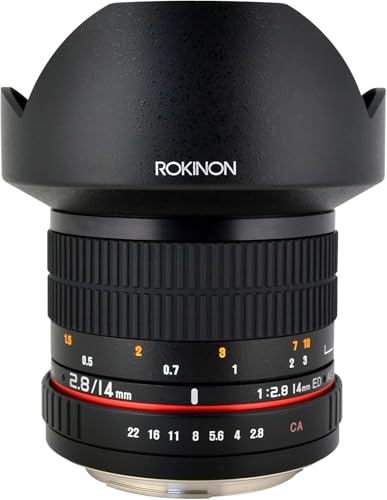
Best for: Real estate, landscapes, and astrophotography enthusiasts seeking a budget‑friendly EF mount ultra wide. The 14mm focal length provides a dramatic field of view, suitable for immersive scenes.
Why chosen: The lens delivers strong edge-to-edge sharpness with a broad perspective at a relatively accessible price point. Caution: It is a manual focus lens; adjust expectations for autofocus scenarios and use focus peaking if available.
Canon EF‑S 10‑18mm f/4.5‑5.6 IS STM

Best for: Budget‑minded APS‑C DSLR users who want a wide zoom with image stabilization. The 10–18mm range covers sweeping architectural interiors and landscapes with a compact kit form factor.
Why chosen: The IS feature helps steady handheld videos, and the internal stepping motor supports smooth AF for casual shooting. Caution: This is for Canon EF‑S mount DSLRs; compatibility is key for your camera body.
Canon EF‑S 10‑18mm f/4.5‑5.6 IS STM Bundle

Best for: Travelers and hobbyists who want a complete travel‑ready kit for landscapes and interiors on Canon APS‑C bodies. The bundle adds a shoulder bag and memory card for convenience.
Why chosen: The bundled accessories simplify packing and shooting on the move, while the lens’ optical design aims to minimize chromatic and spherical aberrations. Caution: The bundle’s value depends on your current accessories; verify that you need the included bag and card.
Buying Guide: How to Choose Your Ultra Wide Angle Lens
What matters most depends on your camera system and intended use. Consider these practical questions to refine your choice:
- What camera system do you own? Fixed primes like the RF16mm suit Canon EOS R bodies, while EF‑S zooms fit APS‑C DSLRs. Third‑party options can adapt to multiple mounts with adapters.
- Is fixed focal length or zoom more important? Fixed primes offer a consistent perspective and brighter maximum aperture; zooms provide flexible framing in tight spaces.
- Do you shoot video or stills primarily? Lenses with smooth, quiet AF (like STM) benefit video, while macro or specialty attachments suit macro or architectural detail work.
- What are your size and weight constraints? Compact lenses are ideal for travel and handheld vlogging, while heavier glass may be needed for astro or architecture work.
- What kind of environment will you shoot in? Consider weather sealing, resistance to flare, and coating technologies to minimize ghosting in bright scenes.
Practical buying considerations
- Aperture and low‑light performance: Wider max apertures improve light capture and background blur in brighter environments.
- Image stabilization: Lenses with IS/OSS help with handheld video and low‑light handheld shots on compatible bodies.
- Minimum focusing distance: If you shoot close‑ups or interiors, a shorter minimum focus distance expands your composition options.
- Compatibility: Ensure lens mount and sensor size align with your camera system to avoid vignetting or autofocus issues.
FAQ
- What is an ultra wide angle lens best used for? It’s ideal for landscapes, architecture, interiors, and environmental portraits where broad perspective matters.
- Do I need a full‑frame lens to shoot wide on a cropped sensor? You can use crop‑sensor lenses; note the actual field of view will be narrower on a smaller sensor.
- Are zooms better than fixed primes for wide angles? Zooms offer framing flexibility; fixed primes often deliver brighter apertures and sharper edge performance.
- Can I use these lenses on non‑Canon bodies? Some third‑party options and adapters enable cross‑brand use, but check compatibility and AF behavior on each camera.
- Is image stabilization necessary for landscapes? Not always, but it helps in low light or when handholding with slower shutter speeds.
- What should I consider when buying for travel? Prioritize compactness, weight, and a versatile focal range to minimize gear while maximizing coverage.