Best Studio Portrait Lens Picks for Crisp, Professional Results
Whether you’re building a dedicated portrait setup or expanding a versatile studio kit, a prime lens with a flattering perspective and reliable performance is essential. This guide highlights five top studio portrait lenses suited for a range of camera systems and budgets. Each option is best for specific needs—from ultra-wide environmental portraits to tight headshots with beautiful background separation. The included buyer table summarizes key suitability at a glance.
| Product | Best For | Why It Stands Out |
|---|---|---|
| Canon RF16mm F2.8 STM | Environmental portraits | Ultra-wide field of view with bright f/2.8; smooth AF for video; unique space for creative framing. |
| Canon RF50mm F1.8 STM | Headshots and versatile day-to-day | Compact and affordable with bright f/1.8, great for low light and shallow depth of field. |
| Canon RF 85mm F2 Macro IS STM | Portraits with macro detail | Medium-telephoto for flattering perspective; macro capabilities and stabilization. |
| Canon EF 75-300mm f/4-5.6 III | Longer distance portraits | Zoom flexibility for studio or location shoots; versatile reach. |
| Sony FE 50mm F1.8 | Full-frame portrait versatility | Bright f/1.8, lightweight, ideal for Sony full-frame bodies. |
Canon RF16mm F2.8 STM Lens

Type: Ultra wide-angle fixed focal length prime. This is Canon’s first ultra wide RF lens, offering a bright fixed aperture of f/2.8 and smooth autofocus thanks to a stepping motor (STM). Best for environmental and creative portraits where you want expansive background inclusion without distorting facial features excessively.
Best for: Photographers who need dramatic space in the frame or interior studio shots where subject distance is limited. The wide angle helps capture surroundings for storytelling portraits while maintaining sharp center focus.
Why selected: Combines a bright aperture with a compact design and native RF mount, enabling clean image quality and smooth video AF. The STM contributes to quiet operation in video contexts.
Caution: The ultra-wide perspective may introduce facial distortion if placed too close to the subject; plan shooting distance accordingly to keep natural looks.
Canon RF50mm F1.8 STM Lens

Type: Compact fixed 50mm prime. Features a large f/1.8 aperture for low-light performance and creamy background blur. The gear-type STM provides smooth, quiet AF for both video and stills.
Best for: Everyday portraiture, street portraits, and travel photography where a lightweight lens is advantageous without sacrificing image quality.
Why selected: The 50mm focal length offers a natural perspective for flattering portraits, while the small footprint keeps a minimal studio setup unobtrusive. The bright aperture supports shallow depth of field for subject isolation.
Caution: Bokeh quality depends on subject distance and background; at very close distances, framing choices matter to keep lines from becoming too soft.
Canon RF 85mm F2 Macro IS STM
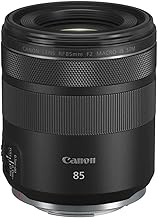
Type: Medium-telephoto macro lens with portrait-friendly perspective. Bright f/2, macro capabilities up to 0.5x magnification and a minimum focusing distance of 1.15 ft. Optical Image Stabilization provides up to ~5 stops of shake correction.
Best for: Close-up portraits with subtle facial detail and micro texture, or product portraits requiring macro ability in a portrait context.
Why selected: The combination of soft background blur, accurate rendering, and macro reach makes it a standout for studio setups that want both character portraits and tiny subject details.
Caution: Macro capability alters working distance; ensure you have adequate space for framing at macro distances.
Canon EF 75-300mm f/4-5.6 III

Type: Telephoto zoom lens for Canon EF-mount. Covers a broad focal range from 75mm to 300mm with a variable aperture of f/4-5.6. Built with 13 elements in 9 groups and a diagonal angle of view from 32°11′ to 8°15′.
Best for: Studio or outdoor portraits where distance is a factor, offering flexibility in framing without moving the subject much.
Why selected: The zoom range lets you switch from head-and-shoulders to full-body portraits within the same shoot, which can be advantageous for variable lighting or backgrounds.
Caution: The slower aperture at longer focal lengths reduces light intake; consider lighting support or use when ambient light is ample.
Sony FE 50mm F1.8 Standard Lens

Type: Bright standard prime for Sony full-frame E-mount cameras. Large F1.8 aperture enables creative defocusing for portraits, with a 7-blade circular aperture to deliver pleasing bokeh. Noted for compact, lightweight design.
Best for: Sony users seeking a versatile portrait lens with high image quality in a portable form, suitable for both studio and on-the-go shoots.
Why selected: The combination of bright aperture and compact size makes it a practical all-around choice for portraits and daily photography.
Caution: Being a native Sony lens, ensure compatibility with your specific body and check autofocus behavior in video if you require precise tracking in fast-moving scenes.
Buying Guide: Critical Considerations For Studio Portrait Lenses
Focal length and perspective
- Shorter primes (50mm) deliver natural perspective and are versatile for headshots and environmental portraits.
- Medium telephotos (85mm) provide flattering compression and shallow depth of field without distortion.
- Ultra-wide (16mm) adds environmental context but can distort features if too close.
Aperture and light
- Faster apertures (f/1.4–f/2.0) yield pronounced bokeh and better low-light performance; ideal for studio lighting variations.
- A stepping motor (STM) can improve autofocus smoothness for video and stills, reducing focus hunting.
Image stabilization
- Stabilization helps in hand-holding or when shooting at slower shutter speeds; consider lenses with IS for higher flexibility in studios with natural light constraints.
Autofocus behavior
- Quiet, smooth AF is beneficial for video portrait work and runs in practical studio scenarios where noise is a concern.
- Confirm mount compatibility and AF performance with your camera model to ensure consistent results.
Weight and balance
- Studio setups favor lighter lenses for ease of handling and fast lens changes between shots.
- Consider a stable tripod or monopod when using heavier telephoto options.
Budget and future-proofing
- Prime lenses with wide apertures are often worth investing in for year-round portrait work due to their depth-of-field control.
- Compatibility with your camera system is essential; some brands offer extensive color and rendering traits that become a signature in your work.
Frequently Asked Questions
- What focal length is best for head-and-shoulders portraits?
Generally 85mm to 100mm equivalents provide flattering compression; on full-frame, 85mm is a classic choice. - Should I use a prime or zoom for studio portraits?
Primes offer sharper rendering and wider apertures, while zooms provide flexibility for varying setups and subjects. - Do I need stabilization for studio work?
Stabilization helps with longer exposure or limited light, but a tripod and lighting setup can largely offset camera shake. - Is an ultra-wide lens good for portraits?
Ultra-wide lenses are great for environmental portraits but require careful positioning to avoid distortion near the subject. - Which lens is best for Sony full-frame portraits?
The Sony FE 50mm F1.8 is a strong, lightweight option, offering a natural field of view with strong low-light performance. - Can macro-capable lenses be used for portraits?
Yes, macro-capable lenses like the 85mm Macro IS can add detailed texture in close-up portraits and product shots.