Choosing the best PTZ camera tripod mount means balancing stability, compatibility, and ease of use across installations from studios to churches. This guide reviews five top mounts and tripods designed for PTZ cameras, including ceiling brackets, desk mounts, and tall tripods. The quick-reference table below highlights key specs at a glance. Whether you need a ceiling solution for a fixed room, a sturdy desk arm for overhead shots, or a tall tripod for versatile positioning, these picks cover common PTZ setups in American studios and venues.
| Product | Brand | Mount Type | Max Load | Key Use |
|---|---|---|---|---|
| Prisual PTZ Ceiling Mount | Prisual | Ceiling Mount | Not specified | PTZ cameras incl. secure ceiling installs |
| SMTAV PTZ Ceiling Mount | SMTAV | Ceiling Mount | Not specified | Center-mount PTZ cameras |
| Sumnacon PTZ Bracket | Sumnacon | Wall/Bracket | Not specified | Versatile PTZ mounting in varied spaces |
| NEEWER 72-Inch Tripod | NEEWER | Tripod | Up to 33 lb | DSLR/Video gear with overhead options |
| VICTIV 74-Inch Tripod | VICTIV | Tripod | 9.5 lb | Camera and phone setups with tall reach |
Prisual PTZ Ceiling Mount for Cameras

Prisual’s ceiling mount features a military-grade, monolithic steel construction with a 1.2mm cold-rolled unibody design, delivering superior torsional strength and a low-profile silhouette ideal for conference rooms, churches, and studios. The anti-fingerprint coating and sandblasted finish enhance durability and aesthetics in busy environments. The kit is designed for quick setup, including seven M3 stainless screws and a sliding lock hole system that enables installation in under five minutes, while silicone damping pads help minimize camera wobble for stable framing.
Although marketed for Prisual PTZ systems, the mount’s precision interlocking components remain suitable for a wide range of center-mount PTZ cameras. This solution emphasizes secure attachment, vibration damping, and repeatable positioning, making it appropriate for fixed installations where reliability and long-term serviceability matter most.
SMTAV PTZ Ceiling Mount

SMTAV’s PTZ ceiling mount is built for durability with versatile compatibility. It supports all center-mount PTZ cameras and is designed to work with brands such as HuddleCam, Sony, and AVIPAS, among others. A standard 1/4″-20 bolt and six device mounting screws help secure cameras tightly, reducing vibration and wobble during pans and tilts. The compact, unobtrusive profile makes it suitable for classrooms, studios, and small conference spaces where a discreet, reliable ceiling solution is needed.
Installation is straightforward, and the mount emphasizes precise alignment and robust fastening. For venues prioritizing a permanent, low-profile overhead setup, SMTAV offers a practical balance of simple installation and dependable performance, with compatibility extended to a broad range of PTZ cameras beyond SMTAV’s own lineup.
Sumnacon PTZ Camera Bracket

The Sumnacon PTZ camera mounting bracket is designed to support many center-mount PTZ cameras with a standard 1/4″ mounting screw. Its bracket leg includes a long screw slot, enabling up-and-down position adjustment to align for precise framing. The all-metal construction offers durability for busy environments like churches, offices, and theaters, where steady movement and reduced vibration are essential for smooth panning and zooming. This bracket emphasizes practical simplicity, clean lines, and long-term reliability for frequent camera repositioning.
Ideal for venues that require adaptable, secure mounting across different camera models, the Sumnacon bracket prioritizes compatibility and stability. While not providing active stabilization, its sturdy metal build and adjustable leg design help maintain consistent angles during dynamic shoots and multi-camera setups.
NEEWER 72-Inch Camera Tripod with Center Column
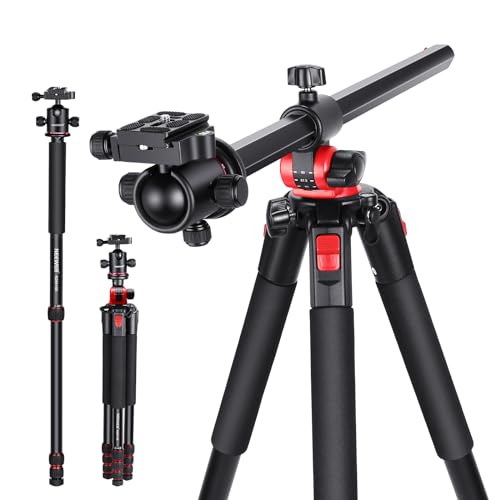
The NEEWER 72-inch camera tripod combines aluminum construction with a robust center column option that supports up to 33 lb, making it suitable for DSLR cameras, video camcorders, and heavier PTZ setups when mounted carefully. A carabiner adds optional stability by attaching sandbags or other weights, boosting steadiness in challenging environments. The center column can be angled—0°, 22.5°, 45°, 67.5°, 90°—or rotated 360° for panoramic shots, and it accepts Arca-type quick-release plates for fast setup and teardown. Two bubble levels help ensure precise alignment on uneven floors or stages.
In overhead or flat-ground configurations, the NEEWER tripod offers versatility for long-form shoots, live streams, or event coverage. Its combination of rigidity, modular hardware, and practical accessories makes it a strong option for studios and venues that require reliable, all-purpose support for varied camera gear.
VICTIV 74-Inch Camera Tripod

The VICTIV 74-inch camera tripod provides substantial height flexibility with a 19–74 inch adjustment range, making it suitable for low-angle or high-angle shots in studios and outdoor venues. It weighs 3.14 lb and uses a standard 1/4″ screw for camera mounting, plus a 360° phone mount for convenient smartphone capture. The included 3-way pan head supports smooth horizontal panning, vertical tilting, and portrait orientation, while non-slip pads improve grip. A weight hook offers additional stability when necessary, helping anchor the tripod in windy or uneven conditions.
Designed for broad compatibility, this tripod accommodates DSLR or mirrorless cameras, compact camcorders, and even phone adapters. Its combination of lightweight portability, generous height, and practical head mechanism makes it a versatile option for photographers and videographers who need quick, reliable positioning across a range of environments.
Buying Guide
Mount Type and Installation
Consider whether you need a ceiling, wall, desk, or freestanding tripod setup. Ceiling mounts and wall brackets are ideal for fixed installations in studios, churches, and classrooms, delivering clean lines and minimal footprint. Desk mounts and overhead arms save desk space while enabling flexible angles for product shots or streaming. Freestanding tripods offer portability and quick reconfiguration for events or remote shoots. Balance permanence with future reconfiguration when choosing a mount type.
Camera Compatibility and Mounting Hardware
Check compatibility with PTZ cameras, including mounting hole patterns (commonly 1/4″-20). Look for mounting kits that include screws, spacers, and damping features to reduce wobble. Some mounts are designed for Prisual or SMTAV PTZ systems, while others support a broad range of center-mount PTZ cameras. A robust mounting base and secure fasteners reduce drift during pans and tilts, which is crucial for broadcast-quality footage.
Load Capacity and Stability
Load capacity matters when pairing mounts with heavier PTZ units, additional lenses, or external lighting. Tripods such as the NEEWER model offer up to 33 lb, while other ceiling brackets may not list a maximum load. When in doubt, opt for a higher-rated mount to ensure stability, especially in venues with airflow or vibrations. Stability is also influenced by the mounting surface and the inclusion of weight hooks or ballast possibilities.
Positioning Flexibility and Head Type
3-way pan heads and adjustable arms enable precise framing and creative angles. Ceiling mounts prioritize line-of-sight and minimal obstruction, while desk and overhead arms provide dynamic angles for overhead lighting and product shots. For PTZ use, smooth panning and reliable clamp mechanisms are essential. If fast positional changes are common, choose a head with intuitive locking and micro-adjustment capabilities.
Durability, Maintenance, and Warranty
Durability depends on materials (steel, aluminum) and coatings (anti-fingerprint, anodized) that resist wear in high-traffic spaces. Look for corrosion resistance, robust screws, and damping features that prolong camera life. A clear warranty or customer support policy adds value for long-term installations and frequent reconfigurations.
Value and Longevity
Evaluate the bundle of features against price: ease of installation, modularity, weight, and portability. Ceiling and wall mounts offer permanence and reliability, while tripods deliver flexibility and quick setup. For venues with evolving needs, prioritize mounts that accommodate multiple camera models and accessories without frequent replacements.