Astronomical photography demands lenses that maximize light gathering, minimize aberrations, and maintain sharpness from edge to edge across the frame. Prime lenses—fixed focal lengths—offer superior optical quality, reduced distortion, and brighter apertures than many zooms, helping you capture expansive star fields, the Milky Way, and night landscapes with precision. This guide showcases five top full‑frame prime options across ultra‑wide and standard wide angles, balancing brightness, resolution, and handling for night-sky work on American camera systems.
| Product | Brand | Focal Length / Max Aperture | Best Use |
|---|---|---|---|
| Sony 14mm f/1.8 GM (First Listing) | Sony | 14mm / f/1.8 | Astronaut fields, landscapes, night skies |
| Canon RF16mm F2.8 STM Lens | Canon | 16mm / f/2.8 | Ultra-wide astro-landscapes, video |
| Sony FE 14mm F1.8 GM | Sony | 14mm / f/1.8 | Astronomy, architecture, landscapes |
| Sony FE 20mm F1.8 G | Sony | 20mm / f/1.8 | Astronomy, landscapes, cityscapes |
| Sony FE 24mm F1.4 GM | Sony | 24mm / f/1.4 | Wide scenes, night sky details |
Sony 14mm f/1.8 GM Ultra-Wide Prime

The Sony FE 14mm f/1.8 GM is designed for full-frame Sony E-mount bodies, delivering exceptional sharpness across the frame with a bright F1.8 aperture. Its optical design relies on two XA (extreme aspherical) elements and multiple ED elements to minimize aberrations and maintain high contrast from corner to corner, even in low light. The circular 9‑blade aperture contributes to smooth, natural background defocus, while Nano AR Coating II reduces flare in challenging night scenes, helping stars and landscapes maintain fidelity when light is scarce.
- F/1.8 brightness supports long exposures in dark skies.
- Two XA elements and multiple ED elements for edge-to-edge sharpness.
- Nano AR Coating II reduces internal reflections and ghosting.
- Circular 9‑blade aperture for pleasing night-sky bokeh.
Blending compact size with high optical performance, this lens is well suited for star trails, Milky Way imagery, and daytime landscapes alike. The autofocus system remains accurate in many situations, while the lens’ build quality stands up to outdoor use on a sturdy tripod or tracker setup.
Canon RF16mm F2.8 STM Ultra-Wide

Canon’s RF16mm F2.8 STM marks Canon’s entry into a dedicated ultra-wide fixed focal length lens for RF-mount bodies. It provides high image quality with a bright fixed aperture of f/2.8, ensuring good performance in starry skies with practical exposure times. The gear-type STM AF motor delivers smooth and quiet continuous autofocus during video capture, making it a versatile choice for astro-landscapes that require both stills and moving footage on EOS R-series cameras.
- Ultra-wide 16mm fixed focal length with bright f/2.8 aperture.
- STM motor enables smooth, quiet AF for video.
- Predictable rendering with compact, approachable form.
This lens suits photographers who want a lightweight, reliable option for wide-angle night shots and travel-friendly shoots, with straightforward handling for beginners and enthusiasts alike.
Sony FE 14mm F1.8 GM Ultra-Wide

The Sony FE 14mm F1.8 GM builds on Sony’s G Master line with an ultra-wide field of view and a bright F1.8 aperture. It combines sharpness and contrast across the entire image circle, supporting astrowork with features like Nano AR Coating II and an optical design that minimizes chromatic aberration and flare. Two XD (extreme dynamic) Linear Motors enable fast, precise autofocus, while the lens’ compact, lightweight profile makes it a practical option for shooters using gimbals or small tripods on night shoots.
- F/1.8 for excellent low-light performance.
- Two XA elements with additional ED glass for edge-to-edge sharpness.
- Nano AR Coating II reduces flare and ghosting.
- Two XD Linear Motors provide fast, accurate AF.
Ideal for Milky Way photography, star clusters, and architectural night scenes where high resolution and smooth bokeh are desired without compromising on field coverage.
Sony FE 20mm F1.8 G Ultra-Wide Prime
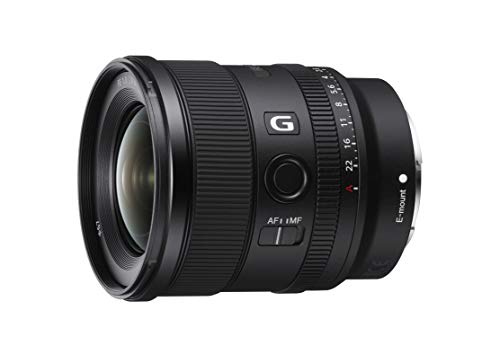
The Sony FE 20mm F1.8 G is a compact, high-performing wide-angle prime designed for full-frame Sony bodies and also compatible with certain APS‑C models. Its bright F1.8 maximum aperture supports short exposure times in dim skies, helping reduce star trailing in accurately framed shots. The lens emphasizes a balance of resolution and practicality, offering a lightweight profile for travel and astro shoots. While not as ultra-wide as the 14mm options, the 20mm angle provides a versatile field for night landscapes and near-stellar scenes with less distortion near the edges.
- F/1.8 brightness for low-light capture.
- Compact, lightweight design for easy handling.
- High-resolution image quality across the frame.
- Suitable for astro landscapes and architectural night scenes.
Its balance of size, weight, and performance makes it a strong choice when you need a slightly narrower field of view without sacrificing light gathering in dark environments.
Sony FE 24mm F1.4 GM Wide Prime
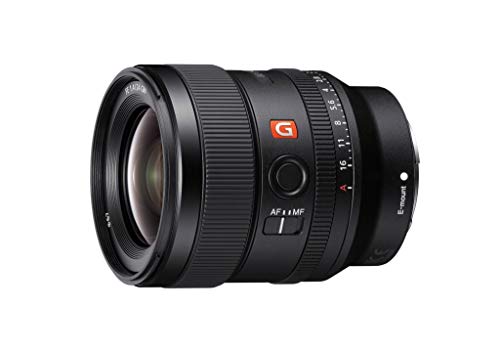
The Sony FE 24mm F1.4 GM combines the practical field of view of 24mm with a bright F1.4 aperture, delivering outstanding low-light performance and a sense of expansive space in astrophotography. As part of the G Master family, it emphasizes high resolution with smooth bokeh and excellent contrast. The design aims for edge-to-edge sharpness, helping capture star fields, subtle night textures, and architectural details with a clean, cinematic look. Its compact build supports handheld night shots but shines when paired with a tripod for longer stacks.
- F/1.4 for exceptional low-light performance.
- G Master optical quality for sharpness and rich contrast.
- Smooth, aesthetically pleasing bokeh and concise distortion control.
- Versatile for astro-landscape and environmental night photography.
For photographers who want a balance between wide framing and manageable working distance, the 24mm option provides a strong mix of light gathering and scene breadth for night skies and cityscapes alike.
Buying Guide
Choosing the right prime lens for astrophotography depends on your camera system, target night-sky scenes, and workflow preferences. Consider these perspectives to make an informed choice:
- Field of view needs: Ultra-wide options (14–16mm) reveal dramatic Milky Way cores and expansive star fields, while 20–24mm lenses offer more versatility for landscapes and architecture without excessive distortion.
- Aperture impact: Lenses with f/1.4–f/1.8 provide faster light gathering, enabling shorter exposures and less star trailing, but may come at the cost of size, weight, and price. F/2.8 can still perform well with longer exposures and stacking techniques.
- Optical design and aberrations: XA and ED elements, along with coatings like Nano AR II, help minimize coma, chromatic aberration, and flare—crucial for clean star points and crisp landscapes.
- Autofocus versus manual focus: While AF is useful for video and certain composed shots, many astrophotographers rely on precise manual focus using live view magnification. Lenses with reliable AF can still support mixed-use scenarios.
- Weight and handling: Heavier, larger lenses demand stiffer tripods or tracking mounts and can affect balance on gimbals. Consider your setup’s portability for handheld sky work and long sessions.
- Weather sealing and durability: Outdoor night shoots expose gear to dew, humidity, and temperature swings. Weather sealing and robust construction reduce weather-related wear and risk of damage.
- Sensor compatibility: Ensure your lens is compatible with your camera’s mount (Sony E, Canon RF) and full-frame sensor coverage to avoid vignette or corner softness.
- Accessories and workflow: Star trackers, filters (e.g., light pollution filters), and stacking software influence your lens choice. A brighter, wider lens can shorten exposure times and simplify stacking workflows.
- Budget and future use: Invest in a lens that offers a balance of optical performance, build quality, and future-proofing for upgrades in body and astrophotography ambitions.
In practice, many astrophotographers prioritize ultra-wide primes with f/1.8 or faster for Milky Way work, while adding a slightly longer wide option (around 20–24mm) for landscapes and urban-night scenes. Coping with coma and achieving star point fidelity at the edges is often a deciding factor between models, as is the ease of stacking and post-processing when collecting long exposure data.