Macro work in the Micro Four Thirds ecosystem combines portability with solid optical quality. The following five lenses offer a range of magnifications, builds, and price points, all optimized for Olympus/OM SYSTEM, Panasonic, and other MFT bodies. From true 1:1 macros to specialized 2x magnification, these options let you capture tiny details—from insects to jewelry—with sharpness and clarity. Each choice below highlights core strengths, so you can select a lens that matches your shooting style, budget, and preferred focus approach.
| Product | Brand | Focal Length / Macro | Notes |
|---|---|---|---|
| 60mm Macro Lens (M.Zuiko Digital ED 60mm F2.8 Macro) | OM SYSTEM | 60mm, Macro | Weather sealed; Focus limit switch; Bright f/2.8 |
| Laowa 50mm f/2.8 2x Ultra Macro APO | LAOWA | 50mm, 2x magnification | Three Extra-Low Dispersion elements; f/2.8–f/22 |
| 30mm F3.5 Macro (M.Zuiko Digital ED 30mm F3.5 Macro) | OM SYSTEM | 30mm, Macro | 1.25x magnification; compact; 0.095 m closest focus |
| Meike 35mm F1.4 Macro | Meike | 35mm, Macro | Manual focus; supports a wide range of MFT bodies; 5 groups 8 elements |
| Panasonic LUMIX G Macro 30mm F2.8 ASPH | Panasonic | 30mm, Macro | Approximately 1.0x–2.0x magnification; MEGA O.I.S.; AF at 240 fps |
60mm Macro Lens For Micro Four Thirds

The OM SYSTEM M.Zuiko Digital ED 60mm F2.8 Macro is a compact prime tailored for Micro Four Thirds cameras. Its 60mm focal length and bright F2.8 aperture provide comfortable working distance and subject separation for close-ups. The lens features a weather-sealed design, enabling outdoor macro work in challenging conditions. A dedicated focus limiter switch speeds up focusing at macro distances, which is helpful when subjects are small and quickly moving. This lens is compatible with Olympus PEN and other MFT bodies, delivering sharp macro results in a lightweight, travel-friendly package.
Laowa 50mm Macro 2x For Micro Four Thirds

The Venus Laowa 50mm f/2.8 2X Ultra Macro APO is built for high-midelity close-ups on Micro Four Thirds bodies. Its 2x magnification lets you capture minute details with extraordinary foreground clarity. Three Extra-Low Dispersion elements help minimize chromatic aberration and color fringing across the frame, while an aperture range from f/2.8 to f/22 provides flexibility for shallow or deeper depth of field. This lens is optimized for MFT cameras, delivering sharp, distortion-free macro images with reduced chromatic issues—ideal for micro-subject work and product photography.
M.Zuiko Digital ED 30mm Macro

The OM SYSTEM M.Zuiko Digital ED 30mm F3.5 Macro focuses on compact macro performance for Micro Four Thirds cameras. It offers 1.25x image magnification (2.5x 35mm equivalent) and a 7-element-in-6-group optical design, with a closest focus distance of 0.095 meters. The combination of a small footprint and precise close-up capabilities makes it a practical option for travelers who want macro versatility without extra bulk. This lens pairs well with fast AF and smooth rendering for everyday macro tasks and close-up composition.
Meike 35mm F1.4 Macro Lens For MFT
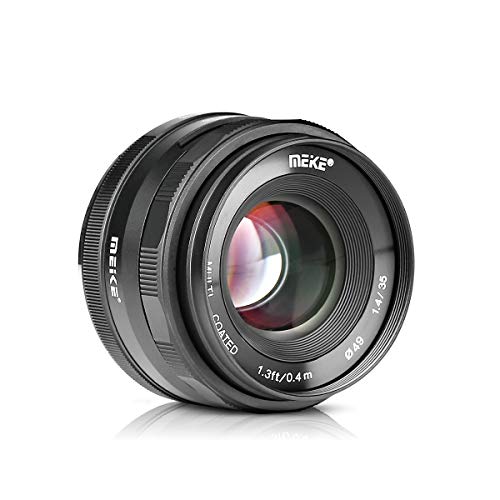
The Meike 35mm F1.4 Large Aperture Macro is a budget-friendly manual-focus option for Micro Four Thirds. It is designed to work with Olympus and Panasonic mirrorless cameras and supports a broad set of MFT bodies. The fixed 35mm focal length and a bright maximum aperture of f/1.4 enable creamy background separation for macro close-ups and portrait-oriented work. Its 5-group, 8-element construction supports sharpness across the frame, while the manual focus approach offers precise control for close-range shooting on a budget-friendly platform.
Panasonic LUMIX G Macro 30mm F2.8 ASPH

The Panasonic LUMIX G Macro 30mm F2.8 ASPH is a compact, dedicated macro lens for Micro Four Thirds. It delivers approximate 1.0x to 2.0x magnification (35mm equivalent), making it versatile for detailed close-ups and small subject work. The lens is noted for sharp rendering and strong corner-to-corner performance, with MEGA Optical Image Stabilization to help reduce camera shake during macro shooting. Its lightweight build and efficient autofocus make it a practical choice for on-the-go macro photography with MFT bodies.
Buying Guide
Key purchase considerations
- Magnification and working distance: Decide whether you need 1:1 macro (true close-up) or the higher magnification of a 2x system like the Laowa lens. Also consider how much working distance you prefer—longer focal lengths generally provide more room to work away from delicate subjects.
- Aperture and depth of field: A wider aperture (around f/2.8 to f/1.4) helps in low light and can give shallow depth of field for artistic isolation, but macro work often benefits from stopping down to maximize sharpness across the frame.
- Autofocus vs. manual focus: Auto focus speeds matter for living subjects, while manual focus can give you precise control for tiny details. Several Meike lenses offer manual focus, which can be a deliberate choice for macro enthusiasts on a budget.
- Image stabilization: Lenses with built-in stabilization (or compatibility with camera IBIS) help reduce shake in close-up shots, especially at higher magnifications. This is particularly valuable for handheld macro work.
- Build and weather sealing: Weather sealing is beneficial for outdoor macro work, while a compact, lightweight design improves portability for field use and travel.
- Optical elements and corrections: Look for ED or APO elements to minimize chromatic aberration and color fringing, especially with high-contrast macro subjects. Lens coatings and design impact contrast and color fidelity at close distances.
- Compatibility and ecosystem: Ensure the lens is fully compatible with your Micro Four Thirds camera body and supports your preferred features (AF, stabilization, weather sealing, etc.).
- Budget vs. performance: Macro lenses span from budget-friendly manual options to premium AF-enabled glass. Balance price with features you truly need, such as macro magnification, autofocus, and stabilization.
Practical comparisons and use cases
- For extreme close-ups and 2x magnification, the Laowa 50mm macro excels in product photography and scientific close-ups, though it lacks autofocus. It’s a strong choice when ultimate magnification and optical precision are the priorities.
- Prime macro lenses like the 60mm and 30mm offer compact builds with reliable AF and weather-sealed options, ideal for fieldwork and outdoor macro subjects such as insects or leaves.
- Faster apertures, as seen in the Meike 35mm F1.4, support creative bokeh and low-light macro work, but manual focus requires careful handling for precise composition.
- Stabilization is a practical advantage in handheld macro shots; pairing a stabilized lens with a camera’s IBIS can yield steadier images without tripods in many environments.
- Travel and portability considerations matter; shorter focal lengths tend to be lighter and smaller, which is beneficial when you’re carrying gear for hours of shooting on location.
Make your choice based on priority
If you value magnification and optical precision above all, consider Laowa’s 2x macro. If you want a balanced travel lens with reliable AF and weather resistance, the 60mm or 30mm macro from OM SYSTEM are strong bets. For budget-conscious shooters who prefer manual focus, Meike offers an accessible option. Finally, the Panasonic 30mm macro delivers a compact, all-around macro tool with stabilization and practical performance for everyday close-ups.