Best Low Light 35mm Film for Clearer Shots in Dim Conditions
If you shoot in dim environments, you need film that performs well under low light. This guide highlights five 35mm films that handle challenging lighting while delivering strong color, contrast, and detail. Each pick targets a specific photographer’s need—from cinematic color to classic black-and-white—so you can choose the right stock for street, portrait, or event work.
Buyer types at a glance: portrait photographers seeking natural skin tones; event shooters needing reliable performance in indoor lighting; travelers who want versatile color film; and film enthusiasts exploring cinematic looks. The table below summarizes the five selected options and their strongest use cases.
| Product | Best For | Key Benefit |
|---|---|---|
| Kodak Ultramax 400 Color Print Film (3-Pack) | Everyday color photography, travel | Balanced color with fine grain for general low light |
| CineStill Film 800 Tungsten (2-Pack) | Cinematic look in tungsten lighting | High ISO with unique color rendition |
| Kodak Portra 800 35mm | Portraits and weddings in mixed light | Natural skin tones and strong underexposure latitude |
| Ilford HP5 Plus 400 Black & White (3-Pack) | Monochrome in mixed lighting | Wide latitude and push-friendly |
| Kodak Ultramax 400 3-Pack | All-around low-light color | Reliable ISO 400 color with good sharpness |
Kodak Ultramax 400 Color Print Film 36 Exp. 135-36 (108 Pics) Pack

Kodak Ultramax 400 is a versatile color negative film that performs well in mixed lighting. Its 400 speed helps in low-light scenarios without sacrificing too much grain. This 3-pack is convenient for shooters who want spare stock for travel or weekend shoots. Best for general everyday photography, travel, and casual portraits where reliable color is valued.
Best for: photographers who want dependable color with fine grain at a reasonable price. Cautions: may not deliver the same skin-tone precision as Portra in sensitive portrait work; consider white balance when shooting under unusual lighting.
CineStill Film 800 Tungsten C-41 Color Negative Film (2-Pack)

This high-speed tungsten-balanced film is designed for indoor or tungsten-lit scenes, delivering a distinctive cinematic look. ISO 800 (with push capabilities to 3200) makes it strong for low-light environments, while the Premoval process enables standard development. Ideal for moody portraits or night scenes that benefit from a filmic color shift.
Best for: photographers wanting a cinematic color palette in dim lighting. Caution: the film’s distinctive look may require careful exposure and post-processing to achieve natural skin tones in some scenes.
Kodak Portra 800 35mm Film Pack 36exp
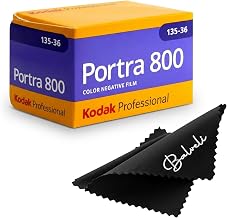
Kodak Portra 800 excels in low-light settings, offering smooth natural skin tones and balanced color. Its true ISO 800 speed helps you capture credible color with strong detail indoors or at dusk, while its underexposure latitude helps salvage scenes with challenging lighting. This is a favored choice for portraits and weddings in dim environments where color fidelity matters.
Best for: portrait and event photographers prioritizing skin tone accuracy and color stability. Caution: Portra can be more expensive and may require careful development in mixed lighting to maintain the desired look.
Ilford HP5 Plus 400 Black & White 35mm (3-Pack)

Ilford HP5 Plus 400 is a classic black-and-white film with wide exposure latitude and good contrast. It responds well to push processing, making it effective in mixed lighting and low-light scenes where a monochrome palette can simplify exposure challenges. This pack is suitable for street photography and documentary work in less forgiving lighting conditions.
Best for: shooters who prefer a flexible B&W stock that tolerates exposure variations. Caution: requires careful development or scanning to maximize tonal range and avoid flat results in high-contrast scenes.
Kodak Ultramax 400 35mm Film (3 Rolls)

Another variant of Ultramax 400, this bundle offers three rolls for a total of 108 exposures. It remains a reliable all-around color option suitable for varied lighting conditions, including indoor and low-light settings. It pairs well with standard C-41 processing and is broadly compatible with 35mm cameras, making it a versatile choice for beginners and seasoned shooters alike.
Best for: photographers who want a straightforward, affordable color film with dependable results. Caution: not the best choice if you require extremely accurate skin tones compared to Portra in portrait work.
Buying Guide: Key Considerations For Low-Light 35mm Film
Film speed (ISO) is a primary factor in low-light performance. Higher ISO stocks like 800 can expose better in dim environments, but may introduce more grain. Consider your subject and desired aesthetic when selecting ISO.
Color vs. black-and-white: Color stocks deliver mood and atmosphere but can require precise white balance. Black-and-white films simplify lighting, offering broad latitude and a classic look in mixed lighting.
Exposure latitude: Films with wider latitude help salvage underexposed impressions, especially in indoor or venue settings. Portra 800 and Ilford HP5 Plus 400 illustrate two ends of latitude in color and monochrome, respectively.
Development process: Some films use standard C-41 chemistry (color) while others are B&W. Ensure your lab or scanner can handle the specific film type and look you aim for.
Camera compatibility: Most 35mm films are DX-coded for common 35mm cameras. Ensure your camera’s compatibility, especially with older models or specialized film formats.
Frequently Asked Questions
- What is the best color film for low light? Kodak Portra 800 is renowned for natural skin tones and good performance in dim environments, followed by versatile Ultramax 400 for everyday use.
- Is high ISO always better in low light? Higher ISO helps in darker conditions but can introduce grain and color shifts; balance ISO with desired grain and latitude.
- Can I push process color film for more sensitivity? Pushing film can increase apparent sensitivity and grain; some films handle it better than others, especially certain cinema stocks.
- When should I choose black-and-white over color in low light? Use B&W when color is not essential and you want strong contrast and texture; it often tolerates exposure variations better in mixed light.
- How many exposures do I get with a standard 35mm roll? Most color and B&W 35mm rolls provide 24 or 36 exposures, depending on the film format you select.
- Do these films require special development? Most color films use standard C-41 development; some B&W stocks may require conventional processing suitable for monochrome film.