Nighttime wildlife surveillance relies on cameras that capture clear images without spooking animals. Low glow trail cameras balance discreet infrared illumination with solid daylight image quality, making them ideal for scouting, security, and nature watching. This guide highlights five reliable options, spanning cellular and non-cellular models, so you can pick the right level of field connectivity and battery life. Below is a quick snapshot of the five choices, focusing on image quality, night performance, and key features to help you compare at a glance.
| Product | Brand | Core Feature | Connectivity |
|---|---|---|---|
| Bushnell Prime Low Glow Trail Camera | Bushnell | Low Glow with up to 24MP images and 1080p video | Non-Cellular |
| Moultrie Edge 2 Cellular Trail Camera | Moultrie | 36MP photos, 1080p video, Auto Connect 4G LTE | Cellular |
| Bushnell Spot-On 2-Pack Low Glow Trail Camera | Bushnell | Low Glow IR, 18MP images, weatherproof | Non-Cellular |
| TACTACAM Reveal X Gen 3.0 LTE | TACTACAM | Low Glow IR, GPS, HD photos/videos to app | Cellular |
| SPYPOINT FORCE-24 Non-Cellular | SPYPOINT | 2K video, 24MP photos, low-glow LEDs | Non-Cellular |
Bushnell Prime Low Glow Trail Camera
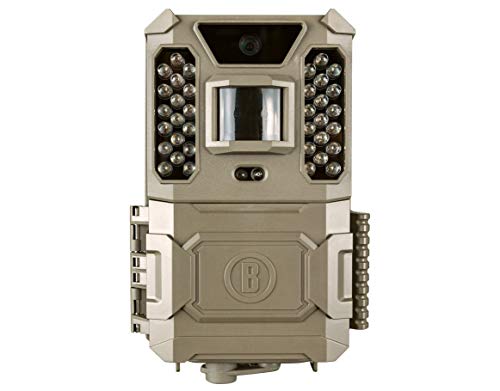
The Bushnell Prime Low Glow combines field-Scan capabilities with flexible image settings. It supports a programmable trigger interval, multi-image mode, and adjustable PIR for tailored detection. Users can choose full-color high-resolution options (3MP, 12MP, 24MP) and view date, time, and temperature stamps on each capture. Night performance benefits from a low-glow infrared approach designed to stay discreet in wildlife habitats.
With its practical night vision, this camera provides reliable nighttime footage without overtly disturbing animals. It’s well-suited for general wildlife surveys, property monitoring, and occasional security use. The combination of a durable housing and straightforward configuration makes it a solid non-cellular option for remote setups where data retrieval requires manual access to the SD card.
Moultrie Edge 2 Cellular Trail Camera

The Moultrie Edge 2 brings nationwide cellular connectivity with Auto Connect technology, simplifying setup across major U.S. networks. It captures high-resolution 36MP photos and 1080p video with audio, and benefits from an enhanced sensor for improved low-light images. The camera’s night imaging employs a 100-foot detection range and a low-glow infrared flash that minimizes wildlife disturbance, making it ideal for both game tracking and security monitoring after dark.
Users gain the advantage of remote access and quick field setup on deployment. This model targets users who want real-time updates and quick response capabilities in hunting, trespass deterrence, or property surveillance, while maintaining good battery efficiency and solid image quality in varied lighting.
Bushnell Spot-On 2-Pack Low Glow 18MP Trail Camera

Spot-On’s two-pack offers a rugged, weatherproof solution designed for challenging outdoor conditions. Although compact, these cameras deliver solid 18MP imagery with low-glow IR lighting for discreet nighttime captures. The package emphasizes durability, including weatherproof housing and reliable operation in varying climates, plus convenient mounting options for trees and secure perimeters. The dual-pack setup is attractive for broader surveillance or quick multi-angle scouting on larger properties.
The cameras focus on dependable field performance, with an emphasis on straightforward operation and steady daytime/nighttime results. They are well-suited for wildlife surveys, property monitoring, and seasonal game tracking where multiple vantage points are beneficial.
TACTACAM Reveal X Gen 3.0 LTE Cellular Trail Camera

The X 3.0 model from TACTACAM is built for year-round field work with a pre-installed, extra-durable antenna, integrated GPS, and long battery life. It delivers HD photos and videos directly to a mobile device via a robust app, enabling deer analytics, mapping, and weather data overlays. Its low-glow IR flash is designed to be almost invisible, reducing disturbance to wildlife while enabling fast trigger speeds for central-frame captures during dawn and dusk.
Designed for hunters, property security, and wildlife researchers, the Reveal X Gen 3.0 blends cellular connectivity with field-ready toughness. The combination of GPS integration and real-time mobile delivery makes it a strong choice for remote monitoring where immediate updates matter and reliable coverage is essential.
SPYPOINT FORCE-24 Non-Cellular Trail Camera

The FORCE-24 offers an affordable non-cellular option with crystal-clear 2K video and 24MP photos. It relies on SD card-based storage, requiring field retrieval of captured media. Its low-glow LEDs help minimize disturbance when imaging at night, while the 70-foot motion detection range supports longer scouting windows. This model is notable for straightforward operation and cost-effectiveness, especially for hobbyists or property owners who prefer periodic, on-site data collection over remote data transmission.
With longer deployment possible due to energy efficiency, it suits extended wildlife monitoring projects or security applications where regular site visits are feasible. The combination of solid image quality and practical features makes it a dependable, entry-to-mid level option in the low-glow category.
Buying Guide
Key considerations for choosing a low glow trail camera
- Night vision performance: Decide between low glow versus no glow. Low glow cameras emit subtle infrared light that may glow faintly on distant subjects, while no glow models rely on passive infrared to avoid light emission entirely. For sensitive wildlife areas, no glow may be preferable, but many low glow models still deliver discreet nighttime imagery.
- Image and video quality: Look for megapixel ratings and video resolution. Higher MP (e.g., 24MP) yields crisper stills, while 1080p or 2K video provides clearer motion. Consider whether color daytime images are important and if the device offers time-stamp and temperature data.
- Trigger speed and recovery: Fast trigger speeds ensure you capture moving animals in frame, especially at dawn and dusk. Recovery time limits how quickly the next image or video starts after a capture, affecting multi-shot sequences.
- Detection range and field of view: A longer detection range helps cover larger areas. A wide-angle lens reduces blind spots, increasing the chance of a complete encounter in the frame.
- Power and battery life: Cellular models tend to consume more power due to data transmission. Evaluate battery options (AA, rechargeable, solar) and consider models with efficient sleep modes for extended deployments.
- Connectivity: Cellular models provide real-time updates via 4G LTE or GPS-enabled apps, useful for security or time-sensitive wildlife tracking. Non-cellular cameras require manual data retrieval but often offer longer battery life and simpler setups.
- Durability and weather resistance: Look for IP ratings and rugged housings for harsh environments. waterproof or dustproof design ensures reliable operation in rain, snow, or dusty habitats.
- Data management: Some cameras support app-based monitoring and cloud features, while others rely on SD cards. Consider how you plan to access media and whether you need remote alerts or analytics.
Comparing the five options
- Best all-around non-cellular option: Bushnell Prime Low Glow — strong image quality, flexible settings, straightforward operation for remote scouting.
- Best cellular option with robust night imaging: Moultrie Edge 2 Cellular — high-resolution photos, 4G LTE connectivity, and strong low-light performance.
- Best rugged dual-pack non-cellular: Bushnell Spot-On 2-Pack Low Glow — durable, weatherproof, ideal for multiple monitoring points.
- Best cellular with analytics: TACTACAM Reveal X Gen 3.0 LTE — GPS, app-based analytics, fast triggers, discreet night illumination.
- Best budget non-cellular option: SPYPOINT FORCE-24 Non-Cellular — solid 2K video, 24MP imagery, low-glow LEDs, economical choice for basic surveillance.
Usage scenarios
- Wildlife research or photography: Prioritize higher megapixels, longer battery life, and reliable night imaging. A non-cellular model with strong local storage can be ideal for field experiments without network concerns.
- Property security: Cellular options provide real-time alerts. Look for robust construction, quick trigger speed, and GPS features that aid in locating events.
- Hunting or scouting: Fast trigger speed, reliable detection range, and user-friendly settings help maximize chance of capturing animals in action while reducing disturbance at night.
Final considerations
- Plan retrieval routines: Non-cellular cameras require on-site data collection, so place cameras where access is feasible.
- Balance cost and features: Cellular models offer convenience, but batteries and data plans add ongoing costs. Non-cellular options may deliver longer deployments for the same price.
- Check regional network availability: If considering a cellular model, confirm supported bands for your location and carrier plans.