Best Low F-Stop Lenses for Bright, Sharp Images in Any Light
Answering the need for fast, versatile lenses, this guide highlights low f-stop options across popular brands and formats. Best for low-light photography, portraits, and action, these lenses maximize brightness and subject separation. The top picks suit enthusiasts and pros using Canon, Sony, and DSLR or mirrorless systems, with considerations for crop vs full-frame sensors, zoom vs prime flexibility, and autofocus performance.
Buyer profiles: the aspiring portraitist will value wide apertures for natural bokeh; videographers look for stable focus and smooth AF; travel shooters want compact, versatile zooms; and budget-conscious shoppers seek a balance of speed and value. The table below summarizes the five selected products and their ideal use cases.
| Product | Best For | Key Strength |
|---|---|---|
| Canon EF 50mm f/1.8 STM | Portraits and night scenes (Canon DSLRs) | Fast f/1.8 prime with close focus |
| Tamron 17-70mm f/2.8 Di III-A VC RXD | Versatile APS-C mirrorless | Constant f/2.8 and built-in stabilization |
| Canon RF 24-70mm f/2.8L IS USM | High-quality travel and events (RF) | Bright zoom with stabilization |
| Tamron AF 28-75mm f/2.8 | Budget-friendly standard zoom | Constant f/2.8 throughout zoom range |
| Sony FE 35mm f/1.4 GM | Stylish full-frame street and portraits | Ultra-sharp with exceptional bokeh |
Canon EF 50mm f/1.8 STM Lens

This is a compact, affordable prime lens with a fast f/1.8 aperture, ideal for low-light portraits and candid street shots. The 50mm focal length provides a natural perspective with a 40° horizontal field of view. Minimum focusing distance is 0.35 meters, making close-ups feasible.
Best for: Canon DSLR users seeking a lightweight, sharp prime for everyday use and low-light work. It’s a strong value for beginners and those on a budget who still want a bright, dependable lens.
Caution: Autofocus speed and performance can vary with newer Canon bodies; consider this if you shoot fast-moving subjects at the closest distances.
Tamron 17-70mm f/2.8 Di III-A VC RXD

This APS-C mirrorless zoom covers a versatile 17–70mm range with a constant f/2.8 and built-in VC for stabilization. Its optical design includes multiple special elements to maintain sharpness across the zoom range, delivering robust performance for landscapes, portraits, and video.
Best for: Sony APS-C users needing a flexible, fast standard zoom with effective stabilization for handheld video and stills. It’s also a good upgrade from kit lenses for better edge-to-edge sharpness.
Limitation: The lens is designed for Sony E APS-C bodies; users with full-frame Sony bodies may not maximize its field of view without cropping.
Canon RF 24-70mm f/2.8 L IS USM
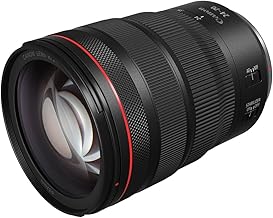
This high-end standard zoom for Canon RF mount offers a bright f/2.8 aperture and Optical Image Stabilization (up to 5 stops). It pairs fast, quiet Nano USM autofocus with exceptional image quality for portraits, landscapes, and travel photography.
Best for: Full-frame Canon users who want a professional standard zoom with strong image quality, reliable AF, and stabilization for handheld shooting in variable light.
Caution: The lens is premium-priced; evaluate whether the improved build and stabilization justify the higher cost versus other fast zoom options.
Tamron AF 28-75mm f/2.8 SP XR Di LD Aspherical

This budget-friendly standard zoom provides a constant f/2.8 aperture across the 28–75mm range. Its fast performance and flexible focal length make it a practical choice for enthusiasts who want a reliable general-purpose lens without breaking the bank.
Best for: Photographers seeking a value-oriented option for everyday use, travel, and events. Choose this if you need a constant aperture and cost efficiency.
Limitation: It’s older in design and may not offer modern coatings or stabilization found in newer lenses; consider updated options for video work.
Sony FE 35mm f/1.4 GM

This G Master prime delivers a bright f/1.4 maximum aperture with remarkable sharpness and bokeh. The design includes Extreme Aspherical elements to preserve resolution across the frame while maintaining a compact, high-performance profile for portraits and street photography.
Best for: Sony full-frame users who want top-tier image quality, creamy background separation, and reliable performance in low light and at wide apertures.
Caution: Premium build and optics come with a premium price; for casual shooters, a slower aperture lens may meet daily needs at lower cost.
Buying Guide
Key considerations for choosing low f-stop lenses include sensor format, focal length needs, and whether you prefer prime or zoom versatility. The following questions help clarify common buyer intents.
- What camera system are you using (Canon, Sony, etc.) and is it full-frame or APS-C?
- Do you want a constant aperture zoom or a fast prime for shallow depth of field?
- How important is image stabilization for your shooting style?
- Is autofocus speed a priority for action or portrait work?
- What is your budget and how do you balance cost with optical performance?
Practical recommendations by scenario:
- Low-light portraits: a fast prime (f/1.8–f/1.4) offers strong subject separation and skin tone rendering.
- Versatile travel or event use: a bright standard zoom (f/2.8–f/2.8) provides flexibility without changing lenses.
- Video work: stabilization and smooth AF can improve handheld results; consider lenses with VC or IS and quiet focusing.
- Budget-conscious buyers: prioritize primes or older fast zooms that deliver better image quality than kit options at a reasonable price.
Frequently Asked Questions
- What does a low f-stop lens do for photography? It allows more light to enter the camera, enabling faster shutter speeds and shallower depth of field for blur-free backgrounds.
- Is a prime lens always better than a zoom in low light? Not always. Primes typically offer wider apertures and sharpness, but modern zooms with constant f/2.8 can be more versatile for changing scenes.
- Should I choose stabilization on a fast lens? Stabilization helps in handheld shooting at slower shutter speeds, especially in low light or video; if you shoot primarily with tripod or external light, it’s less critical.
- Are third-party lenses compatible with all body types? Compatibility depends on the mount (Canon EF/RF, Sony E, etc.). Always confirm the mount and sensor format before purchasing.
- Is f/2.8 sufficient for concert photography? Often yes for stage lighting, but f/1.8–f/1.4 can provide better subject isolation in dim venues.
- Does image quality degrade at the edges with wide-open lenses? Some lenses show edge softness wide open; stopping down a half stop often improves sharpness across the frame.