Laser line generator lenses enable precise, straight reference lines for alignment, layout, and measurement tasks across woodworking, fabrication, stage setups, and DIY projects. The options below focus on green and multi-lens modules that are easy to mount, adjust, and integrate with existing equipment. Wavelength choice, line width control, and mounting compatibility all impact visibility and accuracy in real-world environments. This guide highlights five practical lens-based modules and how they perform in common use cases, from small workshop tasks to bigger projection setups.
| Product | Brand | Notable Feature |
|---|---|---|
| 532nm Green Line Module | Laserlands | Focusable, adjustable line width |
| GM532-30 Green Line Module | Qianfabeam | Two-pack; high brightness 532nm |
| 520nm Green Line Module | Laserlands | 520nm, adjustable width, 5V adapter |
| 5pcs Laser Line Lenses Set | Lilly Electronics | Multiple lens degrees for coverage |
| VLM-650-29 Red Crosshair Module | Infiniter | Crosshair, Class I, wide angle |
532nm Green Line Module
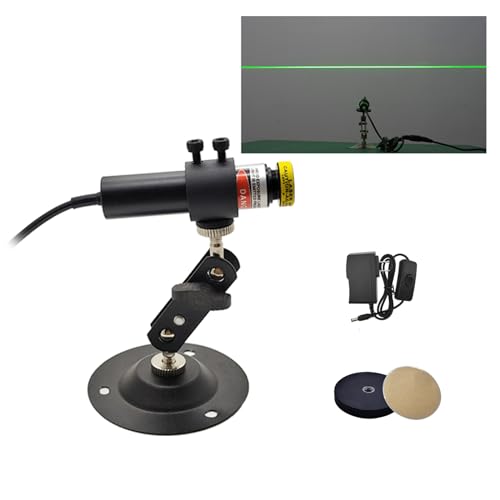
The 532nm Focusable Green Line Module from Laserlands is designed for adjustable line projection with a bright green beam that remains visible in well-lit environments. It offers focusability to tailor line sharpness and width, along with an output under 5 mW, placing it in Class IIIr safety. The compact form supports simple mounting to a variety of fixtures or toolheads, making it suitable for woodworking alignment, panel fitting, and layout tasks where a crisp reference line is essential. The device is compatible with standard accessories and provides reliable performance in hobbyist and professional workshop settings.
Key features include focusable optics to tune line width, a green 532 nm wavelength for high visibility, and a lightweight, compact design ideal for quick deployments. Users can adjust line width to accommodate working distance, enhancing precision on small components or large assemblies. While the module is designed for steady operation, care should be taken to observe safety guidelines for laser exposure and to ensure proper mounting to minimize heat buildup and vibration during extended use.
GM532-30 Green Line Module

The Qianfabeam GM532-30 Green Line Module is presented as a dual-pack option designed for DIY green laser projects. It uses 532 nm green diodes that provide brighter visibility than some 520 nm alternatives, which can be advantageous in brighter workspaces. The kit is promoted for creating green line projections and can be paired with other components to build custom alignment tools. Temperature considerations indicate a brief warm-up period may be required in cooler environments, and users should ensure appropriate heat management for stable performance. The two-pack arrangement supports parallel setups or backup units.
Core considerations include wavelength consistency, brightness, and compatibility with common drivers and power sources. Since the module is intended for DIY applications, users will need to integrate appropriate power supplies and mounting hardware themselves. The 532 nm line offers strong visibility on most background materials, which is beneficial for precise alignment tasks in shop floors, cabinetry, and electronics assembly. As with all laser modules, adherence to safety guidelines and proper eye protection remain essential.
520nm Green Line Module

The 520nm Green Light Line Module Projector from Laserlands focuses on a slightly different green wavelength with adjustable line width settings. This module operates at 5V DC with a recommended 5V 1A power adapter, delivering flexibility for integration with various benches or control systems. The adjustable line width makes it suitable for alignment across different working distances, enabling precise marking on wood, stone, fabric, or metallic surfaces. The 520 nm band is generally well perceived in daylight conditions, but optimal visibility remains reliant on ambient lighting and surface contrast.
Practical considerations include voltage compatibility, mounting options, and the need for a stable power source to maintain consistent line brightness. The ability to tailor line width helps users adapt the tool to framing tasks, edge alignment, and fixture setup. For best results, test at intended working distances and ensure the device is securely mounted to avoid inadvertent shifts during operation.
5pcs Laser Line Lenses Set

The 5-piece Lens Set from Lilly Electronics provides a collection of colophony/plastic lenses with five different degrees (35/45/60/90/120). These options enable users to experiment with focal lengths and angular spread to customize line projection characteristics. The set is particularly useful when building or upgrading laser line systems where the base diode needs to be paired with interchangeable lenses for varying line widths and projection angles. The small-diameter 8 mm lenses and thin 2 mm thickness support compact module configurations for hobbyist builds and small-scale projects.
Key considerations include compatibility with existing modules, the quality of the plastic material, and the precision of the lens angles. While this set broadens flexibility, users should verify that each lens can be securely mounted within their laser housing and that the assembly remains aligned after changes. This kit is ideal for experimental setups or when developing multiple line-projection tools for different tasks.
VLM-650-29 Red Crosshair Module

The VLM-650-29 LPT Red Crosshair Laser Module from Infiniter is a compact crosshair generator designed for budget-conscious projects. It operates at a 650 nm red wavelength with a Class I safety rating, delivering a very small output under 0.39 mW. The unit emphasizes a wide 60° emitting angle and a relatively short 40 cm line width, making it suitable for quick alignment tasks on short-distance projects or demonstrations. Taiwan-built quality is highlighted in its design and manufacturing, which can contribute to dependable performance for basic crosshair needs. As with other modules, you should wire it to an appropriate power source and ensure proper mounting to avoid stray movement.
Important considerations include eye safety, line width at close range, and integration requirements with power sources. Red crosshair modules tend to be visually distinct on various surfaces, which can help in projects where a clear crosshair reference aids in cutting, drilling, or assembly. For extended use, ensure adequate ventilation and verify that the low-power output remains within safe operating practices.
Buying Guide
When selecting a laser line generator lens or module, consider these key factors to ensure you choose a tool that fits your tasks and environments:
- Wavelength: Green (520–532 nm) lines are typically more visible in bright settings than red lines, improving contrast on many surfaces. If you require color versatility, some kits offer multi-wavelength options or interchangeable lenses.
- Line width and focus control: Look for modules with adjustable focus and adjustable line width to adapt to different distances and surface textures. A focused, narrow line is beneficial for fine alignment, while a broader line supports quick, coarse setup.
- Power and safety: Most consumer-grade line modules fall into Class I or Class IIIr. Higher brightness can improve visibility but may require stricter safety practices. Always use eye protection as appropriate and follow local regulations for laser exposure.
- Mounting and compatibility: Check for standardized mounting bases (e.g., 8 mm diameter) and compatibility with common adapters, mounts, and magnetic bases. A robust mount reduces drift during measurement or alignment tasks.
- Hardware integration: If you plan to run the laser from a power supply, verify voltage and current requirements. Some 5V or 7–10V modules require adapters or driver boards to function reliably in a given setup.
- Lens options and customization: Sets that include multiple lenses or a variety of focal lengths enable tuning line width and projection angle. For projects with changing distances, having interchangeable lenses can save time.
- Environment and distance: For short-range alignment in tight spaces, compact modules with a wide emission angle may be ideal. For longer-distance alignment, select focused optics and stable mounts to minimize beam divergence and vibration.
Across the five options reviewed, you can select between ready-to-use modules with focusable lines and lens kits that allow customization for specific applications. Green wavelength modules provide strong visibility on wood, metal, and stone, while red crosshair systems offer economical cross-reference solutions for basic alignment. For precise, repeatable setups, prioritize adjustable line width, reliable mounting, and a stable power supply. Keep safety considerations at the forefront, especially in environments with reflective surfaces or bystanders.