Choosing a full-frame mirrorless camera means balancing sensor performance, autofocus reliability, speed, and handling. The models highlighted here offer strong image quality, solid video options, and practical ergonomics for American photographers across genres—from street and portrait work to sports and wildlife. To help with decisions, this guide includes five relevant products and a concise Buying Guide that covers what to consider when upgrading or starting a new system. The selections emphasize full-frame sensors, robust performance, and compatible accessories that uphold image quality and workflow efficiency.
| Product | Brand | Sensor Type | Notable Focus |
|---|---|---|---|
| Canon EOS R6 II (Body Only) | Canon | Full-Frame CMOS, 24.2 MP | Fast shooting, Dual Pixel AF, DIGIC X |
| Canon EOS R8 | Canon | Full-Frame CMOS, 24.2 MP | Compact full-frame, advanced AF, 4K video |
| Sony Alpha 7 II | Sony | Full-Frame CMOS, 24.3 MP | In-body 5-axis image stabilization |
| Reflex Camera Sensor Cleaning Kit | Reflex Camera | Accessory Kit | Full-frame sensor swabs and cleaner |
| VSGO VS-S03E Full Frame Cleaning Kit | VSGO | Accessory Kit | 12 sensor swabs and cleaner |
Canon EOS R6 II: Full-Frame Performance

The Canon EOS R6 II centers on a 24.2-megapixel full-frame CMOS sensor designed to deliver sharp detail and strong performance in varied lighting. It is compatible with Canon’s Dual Pixel CMOS AF, which helps maintain reliable focusing across a wide range of subjects. This setup supports rich color and clean tonal transitions, making it versatile for portraits, events, and street photography. The camera’s sensor design also facilitates effective noise control at higher ISOs, which remains valuable in indoor environments and at dusk.
Powering these capabilities is Canon’s DIGIC X image processor, which enhances overall camera performance, including image processing speed, stabilization, and video features. The processor contributes to smoother color rendering, improved dynamic range handling, and efficient processing for both stills and video. Users can expect crisp details with minimal noise in typical daylight scenarios and reasonable performance in challenging lighting when paired with quality glass.
For action and fast-moving subjects, the R6 II offers high-speed continuous shooting at up to 40 frames per second in electronic shutter mode at 20 MP. This makes it a strong choice for sports, wildlife, and dynamic portraits where timing matters. The combination of a full-frame sensor, fast AF performance, and rapid burst rates supports applications from action photography to candid street work, while still allowing flexibility for landscape or studio setups with the right RF lenses.
Canon EOS R8: Compact Full-Frame Power

The Canon EOS R8 packs a full-frame 24.2-megapixel CMOS sensor into a compact, approachable body, delivering capabilities suited to photographers seeking a lighter form without sacrificing image quality. The DIGIC X image processor supports sharp processing, efficient color rendering, and reliable video functionality, making it a cohesive option for both still photography and content creation. The R8’s design prioritizes portability, enabling longer shooting sessions with less fatigue while maintaining strong image performance across a broad range of subjects.
Autofocus is a major highlight with Dual Pixel CMOS AF II, covering up to 100% of the frame with 1,053 AF zones and automatic subject detection supported by deep learning for people, animals, vehicles, and more. This helps maintain consistent focus in varied scenes, from portraits to action sequences. The camera also features an OLED EVF with high refresh rates (up to 120 Hz) and a versatile 3.0-inch vari-angle LCD, giving photographers flexible composition options when shooting from low angles or high vantage points.
Canon’s R8 remains a practical choice for creators who want full-frame image quality in a compact body, supported by an expanding RF lens ecosystem. It balances portability with advanced processing, enabling strong stills and smooth 4K video workflows for everyday photography, documentary work, or social media content creation without overwhelming new users with complexity.
Sony Alpha 7 II: Full-Frame Flexibility
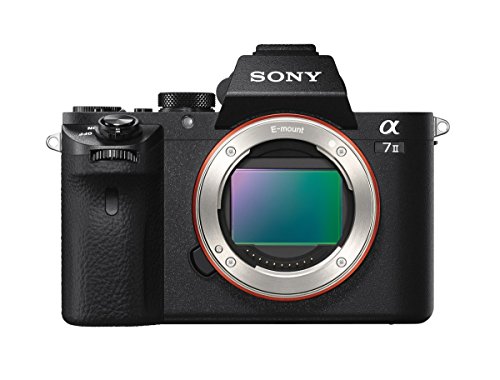
The Sony Alpha 7 II delivers a full-frame 24.3-megapixel sensor that focuses on stabilization and versatile performance. It is notable for introducing (in its lineage) advanced in-body stabilization, making it easier to capture sharp images across different lenses and shooting situations without relying solely on lens-based stabilization. This contributes to improved performance in low light, handheld video, and longer exposure scenarios, as well as more forgiving results when using older or non-stabilized lenses.
Stabilization is complemented by a broad lens ecosystem and Sony’s established autofocus capabilities, providing reliable performance for a variety of genres—from landscapes and portraits to documentary work. The A7 II strikes a balance between older, proven technology and practical ergonomics, offering a solid platform for enthusiasts who want a full-frame mindset without venturing into the latest, price-leaning models. It remains a dependable workhorse for users who value continuous improvement through lenses and accessories.
With a flexible interface and established compatibility, the A7 II supports many shooting styles, including street, travel, and environmental portraits. Its full-frame sensor ensures robust image quality, while the body design emphasizes comfort and intuitive control, helping photographers maintain consistent technique across sessions and subjects alike.
Reflex Full-Frame Sensor Cleaning Kit

This cleaning kit targets full-frame sensors with 6 sensor Swabs designed to fit a 24mm frame. It includes a 5 ml residue-free cleaner and a microfiber cloth, providing a comprehensive package for removing invisible particles and smudges from sensitive surfaces. The swabs are engineered to be gentle on sensor coatings while effectively capturing debris that can degrade image quality. The kit’s compact carrying case helps keep tools organized for field maintenance between shoots.
The included cleaning solution is formulated to be non-irritating and safe for electronics, coated lenses, and sensor surfaces. By combining dry swabs with a compatible liquid cleaner, users can perform routine maintenance without introducing streaks or harmful residues. This makes it a practical option for photographers who rely on consistent sensor cleanliness for high-clarity images, especially in dusty or humid environments.
Overall, Reflex’s kit offers a straightforward approach to on-site sensor care. It emphasizes controlled, careful cleaning with materials sized for full-frame sensors and emphasizes residue-free results. For those who travel or shoot across varied locales, maintaining a pristine sensor can preserve dynamic range and color fidelity across your most important images.
VSGO VS-S03E Full Frame Sensor Kit

The VSGO VS-S03E kit focuses on full-frame sensor care with 12 sensor swabs sized for 24mm sensors, plus 10 ml cleaner. The swabs are designed for precise alignment with sensor surfaces, allowing for careful removal of dust and smudges without abrasion. The included cleaner is described as ultrapure and suitable for electronics, coatings, and lenses, helping ensure streak-free results. This kit emphasizes a soft touch and ergonomic design to reduce risk during maintenance tasks on full-frame sensors.
VSGO emphasizes compatibility with major camera brands, delivering a cleaning solution that aims to protect optical coatings while delivering reliable cleaning performance. The combination of swabs and cleaner is intended to minimize residue and keep sensors in peak condition, supporting long-term image fidelity for photographers who frequently switch between lenses and shooting environments. Users appreciate the methodical, kit-based approach to sensor upkeep as part of a broader care routine.
Buying Guide
When selecting a full-frame mirrorless camera, the most important considerations typically include sensor performance, autofocus quality, and overall handling. Full-frame sensors offer improved dynamic range and low-light capability, but the type of autofocus system, frame rates, and video features can have a bigger impact on real-world results than resolution alone. For many American shooters, a balance of speed, reliability, and lens ecosystem determines value. This guide outlines critical purchase considerations and practical comparisons to help you choose a model that fits your workflow and budget. It also highlights relevant accessories to support sensor care and longevity.
Key considerations include sensor size and pixel density. A 24–25 MP full-frame sensor, as seen in the Canon R6 II and R8, often provides an excellent blend of detail, noise performance, and file manageability for most genres. For action or wildlife work, prioritize autofocus speed, subject detection, and burst rates. The Sony A7 II introduces in-body image stabilization, which can improve handheld shooting across many lenses, especially when natural light is limited. While newer models may offer more advanced AI-driven AF, older full-frame bodies often deliver dependable results with fewer evolving feature requirements.
Autofocus and subject detection capabilities are increasingly central to the best cameras. Canon’s R6 II and R8 offer robust AF systems with deep learning-assisted subject detection, while Sony’s ecosystem emphasizes reliable continuous focusing and stabilization. Your choice depends on lens availability, color science preferences, and how you shoot. If you frequently film or stream, pay attention to video resolution, frame rates, and encoder efficiency. 4K options and high frame rates enable more flexible production workflows. Always verify the latest firmware updates for improved autofocus and performance.
Lens ecosystems and expandability play a major role in long-term satisfaction. Canon’s RF line offers extensive third-party support and evolving native options, while Sony’s FE lineup is broad and highly adaptable for various shooting styles. Consider weight, balance, and grip when selecting a camera to ensure comfortable handling during long sessions. Weather sealing, durable construction, and reliability in diverse weather conditions contribute to camera longevity and consistent results in outdoor environments.
Maintenance and sensor care are often overlooked during initial purchases. The cleaning kits shown above help manage dust, smudges, and residues that impair image clarity. Regular sensor cleaning, proper storage, and careful lens handling preserve dynamic range and color fidelity. If you frequently relocate between locations or shoot in dusty or humid climates, a small, dedicated maintenance kit is a prudent addition to your camera bag. Keeping sensors clean is part of an effective workflow to protect investment and maintain image quality over time.
Finally, price, weight, and overall system investment should guide your decision. Full-frame bodies vary in cost, and lenses contribute significantly to total expenditure. A practical approach is to select a camera that meets your core needs (speed, autofocus, video, or portability) and then grow your system with lenses and accessories that complement your shooting style. For those who value compact form and advanced autofocus, Canon’s R8 presents an accessible starting point, while the R6 II delivers stronger action-oriented performance. If stabilization is a priority, the Sony A7 II can offer significant benefits with the right lenses.