Lighting is a decisive factor in DSLR photography, shaping exposure, mood, and texture. A reliable external flash expands your creative control, whether you’re shooting portraits, events, or travel landscapes. This guide highlights five budget-friendly DSLR flashes that offer manual control, wireless options, and compact form factors. They cover Canon, Nikon, Sony, Fujifilm, and other brands with standard hot shoes. Read on for clear descriptions, practical insights, and a buying guide to help you pick the best flash to suit your camera system and shooting style.
| Product | Brand | Key Strength |
|---|---|---|
| Neewer TT560 Manual Flash | NEEWER | Affordable, reliable manual control with wide compatibility |
| Godox TT520II On-Camera Flash | GODOX | Versatile wireless triggering and flexible power options |
| PHOTOOLEX FK300 | PHOTOOLEX | GN33 power, S1/S2 wireless modes, solid build |
| MEDALight F1 Mini Flash | MEDALight | Compact, rechargeable lithium battery, USB-C charging |
| ULANZI SL03 Mini Flash | ULANZI | Small form with built-in light and hot-shoe compatibility |
Neewer TT560 Manual Flash
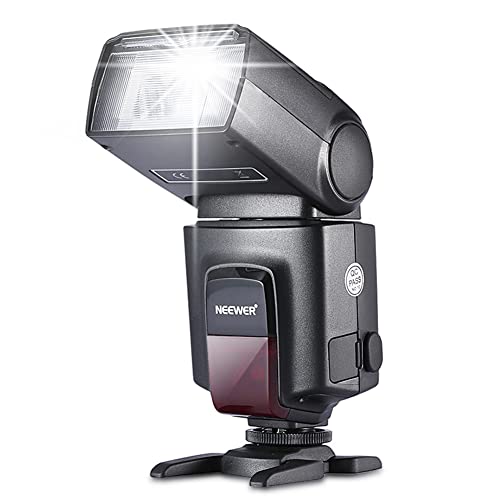
The Neewer TT560 is a classic budget option that emphasizes manual control over automatic exposure. It does not support TTL or camera-menu settings, making it ideal for photographers who want predictable lighting without relying on camera firmware. The unit offers flexible angle adjustment, with a vertical rotation of 0–90 degrees and a horizontal rotation of 0–270 degrees, enabling dramatic sidelight to overhead lighting. It is designed to be compatible with Canon, Nikon, Panasonic, Olympus, Pentax, Fujifilm, and other DSLR cameras using the MI hot shoe. This broad compatibility makes it a popular entry point for learning light ratios and modifiers.
Power settings are purely manual, so you’ll dial the exposure using your light output and distance to the subject. The TT560’s non-TTL approach can be advantageous in studio-like situations or when teaching lighting basics. A charging indicator helps you know when the flash is ready, and the unit’s simple layout keeps setup quick during shoots. Because there is no camera menu integration, it pairs best with shooters who want to control fill, key, or rim light independently of the camera’s metering. It’s also a durable, affordable choice for experimenting with off-camera lighting on a budget.
Pros include broad compatibility, simple interface, and robust mounting for modifiers. Cons are the lack of TTL, no automatic zoom control, and a steeper learning curve for beginners who rely on automatic exposure. For enthusiasts who want consistent, manual lighting without complex menus, the Neewer TT560 remains a compelling starter flash with a proven track record in the field.
Godox TT520II On-Camera Flash

The Godox TT520II is a compact flash designed for photographers who want reliable wireless control without the complexity of high-end gear. It relies on 433MHz wireless transmission with an RT transmitter and offers 16 channels for precise triggering in multiple setups. This makes it well-suited for off-camera lighting where you need to coordinate multiple flashes across a scene. Although TTL is not supported, you gain consistent manual output across rooms or venues, which helps when you’re balancing multiple light sources or working in environments with difficult metering.
In terms of performance, the TT520II covers a broad shutter speed range from 1/300 to 1/20000 seconds, enabling you to freeze action or shorten ambient exposure as needed. It provides three flash modes: M (manual), S1, and S2, facilitating creative synchronization with other lights or flash units. The unit’s 15-meter range ensures you can position the flash away from the camera while keeping reliable control. For budget-conscious shooters who want reliable wireless operation and solid build quality, the TT520II is a practical upgrade over basic shoe-mount units.
Users should note that this model does not offer TTL or automatic camera menu integration. It is best used with manual exposure planning and light modifiers like softboxes and umbrellas. With proper setup, the TT520II delivers consistent lighting for portraits, product shots, and event photography, while maintaining a small footprint and reasonable price point.
PHOTOOLEX FK300 Flash Speedlite

The FK300 from PHOTOOLEX is a robust mid-range speedlite designed for Canon, Nikon, Sony, Panasonic, Olympus, Fujifilm, and more, with a single-contact hot shoe. It features a GN33 output at 35mm, ISO 100, delivering strong, reliable light for standard portraits and product shots. The flash maintains a steady color temperature around 5600K with a tolerance of ±200K, ensuring consistent daylight-like color. It supports Manual mode as well as S1 and S2 wireless flash trigger modes, offering flexible synchronization with a master flash or another unit on a secondary channel.
FK300 includes a multi-flash mode and a practical long-term duty cycle, with a 2.8-second recycle time that keeps your shooting pace steady. In operation, it uses a metal hot shoe and provides test and wake-up functionality to verify current settings. The absence of TTL means the photographer controls the exposure manually, which can be advantageous in studio-style setups or when precise flash-to-subject ratio is essential. The FK300 balances power, stability, and reliability in a compact unit for everyday DSLR work.
Use cases for FK300 include formal portraits, still-life, and simple event coverage where manual control is preferred. The gun-style physique and consistent color output make it a versatile choice for photographers who want predictable lighting without relying on automatic camera exposure. While it lacks TTL, the FK300’s feature set is well-matched to photographers who value control and predictable performance in a budget-friendly package.
MEDALight F1 Mini Flash

The MEDALight F1 Mini is a compact, rechargeable hot-shoe flash designed for photographers who need a travel-ready accessory. It includes a built-in xenon flash and a lithium battery that can be recharged via USB-C, offering a streamlined setup for on-the-go work. The flash provides four power levels—1/1, 1/2, 1/4, and 1/8—with a color temperature around 6200K, delivering bright daylight-balanced light with predictable performance. Its universal hot shoe design makes it compatible with many DSLRs and mirrorless cameras that use a standard single-contact interface.
Power management is a notable strength here, as the built-in battery reduces the need for frequent battery swaps during long shoots. The F1 Mini is a practical choice for travel photography, mobile portraits, and quick-fill lighting when you want a small, self-contained unit. It also includes a USB-C charging option for convenient recharging between locations. Note that it is not compatible with several Sony ZV-series models, so confirming camera compatibility before purchase is advised for optimal use.
Because the unit is compact, its light output is best suited for fill light, headshot touch-ups, or small product shots rather than large, dramatic lighting setups. The integrated battery and compact form factor make the F1 Mini a strong companion for photographers who want reliable flashes without adding bulk to their kit.
ULANZI SL03 Mini Flash

The ULANZI SL03 is a compact mini flash that doubles as a video light, offering a GN8 output with a 6500K color temperature. It is designed for Sony, Canon, Fuji, and Nikon DSLRs with a single-contact hot shoe mount, making it a flexible option for on-camera or small-studio setups. A notable caveat is the need to confirm camera compatibility before purchase, as this model does not work with several popular cameras, including certain Sony and Canon models. The package includes a charging cable and essential accessories, but adapters are not provided.
SL03 emphasizes portability and versatility. Its 90° tilt allows for directional lighting from a variety of angles, while the integrated video light adds an extra dimension for vlogging or product demos. This makes it a strong choice for travelers, run-and-gun photographers, or hobbyists who want a multi-use light source in a compact form. Its limitations—compatibility caveats and the absence of certain adapters—are important to consider when planning a uniform kit across multiple camera bodies.
In practice, the SL03 excels for close-range portraits, macro work, and fill lighting in tight spaces, or as a secondary light to complement a larger kit. If you value size, weight, and a built-in light combined in one unit, the SL03 provides a compelling option among budget-friendly flashes for DSLR shooters.
Buying Guide
Key purchase considerations
- Compatibility and hot shoe type: Verify whether your camera uses a single-contact hot shoe or a more modern multi-contact interface. Several models in this round-up are designed for single-contact hot shoes and do not support TTL, so manual exposure control is expected. If automatic exposure is important, you may need a different class of flash or a dedicated TTL-capable unit.
- Power output and Guide Number: A higher guide number provides more reach and versatility in brighter environments. The PHOTOOLEX FK300 offers GN33 (35mm, ISO 100) for strong on-camera performance, while smaller units like the ULANZI SL03 have a lower GN but add a video-light function for close-range use.
- Modes and wireless control: Manual modes (M) and wireless trigger modes (S1/S2) enable off-camera work and synchronized lighting. If you shoot weddings, events, or studio portraits with multiple lights, a model with reliable wireless support, such as the Godox TT520II, can streamline setups.
- Recycle time and battery type: Recharge speed matters for fast-paced shoots. The FK300 mentions a 2.8-second recycle time, while the MEDALight F1 Mini uses a rechargeable battery with USB-C charging for convenient recharges on location. Consider whether you want AA-powered units, built-in batteries, or external power options based on shooting duration.
- Portability and accessories: Smaller flashes are easier to carry and can be paired with diffusion panels, bounce cards, and light modifiers. Keep in mind that some compact models omit adapters or extra accessories, so plan for compatible accessories if you want to expand your lighting toolkit.
Practical comparisons
- Budget manual units like the Neewer TT560 excel for learning light principles and achieving repeatable setups, but lack TTL automation. They’re ideal as a base unit or for students and hobbyists building a lighting kit.
- Wireless-capable units such as the Godox TT520II provide reliable off-camera triggering, which is essential for multi-light setups. They work well in small studios, location shoots, and controlled environments where you want creative positioning without line-of-sight limitations.
- GN-focused speedlights from PHOTOOLEX balance power with a straightforward feature set. The FK300’s manual modes and S1/S2 support enable creative synchronization patterns, useful for portraits where you want precise light placement with minimal camera involvement.
- Compact, battery-powered options like the MEDALight F1 Mini emphasize portability and quick setup. They are best for travel and casual shoots where weight and size matter more than maximum power.
- Multi-function units such as the ULANZI SL03 deliver a blended solution — miniature flash and video light — valuable for content creators who shoot both stills and video. Confirm compatibility with your camera body before relying on it as your primary flash.
What to buy first
- If you primarily shoot portraits or events with multiple light sources, start with a reliable wireless-ready flash and ensure your camera body is compatible with the hot shoe.
- For learning exposure and manual control, a budget unit like the Neewer TT560 can be a great foundation for practicing light ratios and modifier usage.
- If portability is a priority, consider a compact, rechargeable option like the MEDALight F1 Mini, while keeping in mind its distance and power limitations.
- Always verify compatibility lists and supported modes before purchasing, especially if you own a newer camera model or a less common brand.