F-Theta scan lenses are essential for achieving precise, uniform marking, engraving, and micromachining with fiber lasers. When selecting a lens for a 1064 nm system, field size, focal length, mounting thread, and thermal stability all play crucial roles in performance and reliability. This guide showcases five top 1064 nm F-Theta lenses available on Amazon, highlighting key specs, ideal applications, and mounting considerations to help American buyers compare options quickly and make informed choices.
| Brand & Model | Field Size | Wavelength | Thread |
|---|---|---|---|
| Hunst F-Theta 200x200mm Lens (DGHUNST) | 200 x 200 mm | 1064 nm | M85x1 |
| Cloudray F-Theta 175x175mm Lens | 175 x 175 mm | 1064 nm | M85x1 |
| M85X1 F-Theta 110×110 Lens | 110 x 110 mm | 1064 nm | M85x1 |
| M52 F-Theta 200x200mm Lens | 200 x 200 mm | 1064 nm | M52 |
| ComMarker 300x300mm F-Theta Lens | 300 x 300 mm | 1064 nm | Not specified |
Hunst F-Theta 200x200mm Lens

The Hunst F-Theta 200x200mm lens is designed for 1064 nm fiber laser systems, delivering a broad working field with precise spot placement. With a focal length near 290 mm, it supports a maximum scanning angle of about ±28°, enabling large-area marking and engraving without sacrificing spot quality. The 200×200 mm field is well-suited for flat-panel work, nameplates, and large-area textures where uniform intensity is essential. Built from wear-resistant materials with high temperature tolerance, this lens maintains thermal stability even under sustained high-power operation, helping minimize thermal focus shift that can degrade image quality over time.
- Field: 200×200 mm; Focal length: ~290 mm; Max scan angle: ±28°
- Ideal for fine laser marking, engraving, material processing and cutting
- Wear-resistant, high-temperature resistant; improved thermal stability
- Mounting thread: M85x1
Cloudray F-Theta 175x175mm Lens
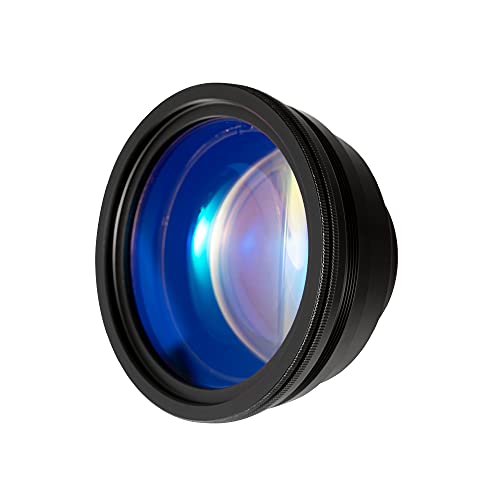
The Cloudray 175x175mm F-Theta lens is tailored for high-precision 1064 nm laser marking and engraving. Its 175×175 mm field, combined with a ~254 mm focal length, enables fast, accurate positioning when paired with two-axis galvo systems. The lens emphasizes wear and high-temperature resistance to minimize thermal focus shift, a common challenge in demanding applications. Users can achieve consistent spot quality across the entire field, making it suitable for marking metal parts, prototypes, and components with intricate, multi-spot designs.
- Field: 175×175 mm; Focal length: 254 mm; Wavelength: 1064 nm
- Designed for ultra-fine laser marking and engraving; compatible with Raycus and similar fiber lasers
- Wear-resistant and thermally stable; reduces thermal focus shift
- Field supports precise marking across a 6.9×6.9 inch area
M85X1 F-Theta 110×110 Lens

The M85X1 F-Theta lens provides a compact 110×110 mm work area, optimized for 1064 nm fiber laser systems. It is built to integrate with galvanometer-based scanning, supporting fast positioning and precise focus within a small footprint. The 110×110 mm field is ideal for micro-marking, precision drilling, and compact component engraving. The M85x1 thread ensures compatibility with standard galvo mounts, offering reliable mounting and repeatable results, even under continuous operation. The design emphasizes durability and stable performance across typical industrial environments.
- Field: 110×110 mm; Wavelength: 1064 nm; Thread: M85x1
- Widely used with galvanometer scanners for drilling and marking
- Compact, robust design aimed at fast positioning and precise focus
- Good thermal stability for steady long-run performance
M52 F-Theta 200x200mm Lens

The M52 F-Theta lens delivers 1064 nm compatibility with a larger 200×200 mm field, making it suitable for wide-area fiber laser marking and engraving on metal and coated surfaces. The M52 thread ensures compatibility with many standard galvo assemblies, and the lens is designed to maintain tight spot quality across the scanning field. Its robust construction supports reliable performance in industrial environments where longer processing runs and repeated passes are common, helping maintain consistent throughput and finish quality.
- Wavelength: 1064 nm; Field: 200×200 mm; Thread: M52
- Suitable for laser marking, engraving, and processing on metal surfaces
- Designed for reliable performance with fiber laser systems
- Emphasizes stable spot quality across the scan area
ComMarker 300×300 F-Theta Lens

The ComMarker 300x300mm F-Theta lens expands the working field to 300×300 mm for 1064 nm fiber laser systems. This broad field supports large-format marking, engraving, and drilling on bigger workpieces or panels while maintaining consistent spot size across the field. The model is positioned as a versatile option for B4/B3 fiber laser engravers and similar equipment, enabling efficient, uniform processing over extensive surface areas. It is designed to balance field size with focus accuracy, ensuring reliable performance across diverse metal and coated substrates.
- Field: 300×300 mm; Wavelength: 1064 nm
- Suitable for marking, engraving, drilling, welding, and cleaning
- Broad field supports large-area processing without sacrificing spot quality
- Compatible with standard fiber laser galvanometer setups
Buying Guide
Key Factors To Consider
When choosing an F-Theta lens for a 1064 nm fiber laser, consider the field size required by your applications, the focal length, and the mounting thread that matches your galvo housing. Larger fields enable faster material coverage but often require longer focal lengths and different optical coatings. Wavelength compatibility is essential; 1064 nm lenses are designed for most fiber laser systems, while CO2-specific lenses operate at 10.6 µm and are unsuitable for 1064 nm work. Thermal stability and coating quality influence long-term performance, especially at higher power levels.
Field Size And Coverage
Field size determines how much of the workpiece you can mark in a single pass. Common options range from compact 70×70 mm to expansive 300×300 mm. Larger fields reduce the need for rastering or multiple passes but may demand a longer focal length and higher-quality coatings to maintain spot uniformity. Consider the typical workpiece dimensions and whether you need edge-to-edge consistency for labeling, texture patterns, or decorative engraving.
Wavelength, Power Handling, And Material Suitability
All listed 1064 nm lenses are compatible with standard fiber lasers, but power handling and thermal performance vary. Look for lenses with materials and coatings designed to minimize thermal focus shift. If you work with high-power systems or heat-sensitive materials, prioritize lenses described as having superior thermal stability and high-temperature resistance. For some setups, ZnSe or specialized coatings aren’t necessary; what matters is reliable transmission at 1064 nm with minimal distortion over time.
Mounting, Compatibility, And Maintenance
Verify thread size (for example, M85x1 or M52) and whether your galvo assembly supports the chosen lens. Correct mounting ensures repeatable alignment and stable focus across your entire field. Routine inspection, cleaning of anti-reflective coatings, and avoiding contaminant exposure extend lens life and preserve mark quality. For CO2-compatible configurations, separate lens families are required due to wavelength differences—do not substitute 1064 nm lenses in CO2 systems.
Practical Comparisons And Recommendations
- If you need a large field for panel marking, consider 300×300 mm options (ComMarker) with appropriate mounting.
- For mid-sized workpieces, 175×175 mm (Cloudray) or 200×200 mm (Hunst, M52) offer a balance of field and working distance.
- For compact machines or tight mounting constraints, the 110×110 mm lenses (M85X1) provide precise focus in a small footprint.
- Always match thread size to your galvo hardware (M85x1 vs M52) to avoid adapters that may introduce misalignment.
These lenses represent a cross-section of available options tailored for 1064 nm fiber laser systems. When choosing, align the lens field, mounting, and focal characteristics with your machine’s geometry, scanning speed, and the types of materials you process to achieve consistent, high-quality results.