The right zoom lens can dramatically expand the versatility of a Nikon F-mount camera, from sweeping landscapes to tight portraits and distant action. This guide highlights five notable zoom lenses available on Amazon, chosen for optical quality, portability, and value across common budgets. While some options extend beyond Nikon’s F-mount, they illustrate important performance benchmarks and how adapters or hybrids can influence results. The quick summary table below offers a snapshot, followed by in-depth sections that analyze compatibility, performance, and ideal use cases for each pick.
| Product | Brand | Mount / Type | Typical Focal Range | Notes |
|---|---|---|---|---|
| Nikon 55-200mm F/4-5.6G ED IF AF-S DX VR Zoom | Nikon | Nikon F-mount DX | 55-200mm | VR; AF-S; lightweight tele-zoom |
| Canon EF 75-300mm F/4-5.6 III Telephoto Zoom | Canon | Canon EF | 75-300mm | Economical long reach |
| Tamron 28-75mm F/2.8 Di III VXD G2 | Tamron | Nikon Z Mount | 28-75mm | Fast, compact standard zoom |
| JINTU 420-800mm F/8.3 Manual Telephoto Zoom | JINTU | Canon EF (with adapter) | 420-800mm | Very long reach; manual focus |
| Sony 16-50mm F/2.8 Standard Zoom | Sony | Sony A-mount | 16-50mm | Bright wide-range zoom |
Nikon 55-200mm F/4-5.6G ED IF AF-S DX VR Zoom

The Nikon 55-200mm f/4-5.6G ED IF AF-S DX VR is a compact telephoto zoom designed for Nikon DX-format DSLRs. It covers 55-200mm with a practical aperture range that is flexible for travel and wildlife shots. Two extra-low-dispersion (ED) elements help curb chromatic aberration, delivering sharper color across the frame. The Silent Wave Motor enables quick, quiet autofocusing, while the VR (Vibration Reduction) helps steady shots at longer focal lengths. Weighing roughly 9 ounces, this lens prioritizes portability without sacrificing reach.
In practice, this lens serves well for everyday telephoto work on Nikon DX bodies and can be a dependable walk-around option for enthusiasts. It is optimized for Nikon F-mount cameras, with compatibility that shines on crop-sensor bodies where the effective focal length remains manageable. While not a fast aperture lens, its combination of VR stabilization and solid optics makes it a strong value choice for travel, kids’ sports, and nature photography where a little extra reach matters.
Canon EF 75-300mm F/4-5.6 III Telephoto Zoom

The Canon EF 75-300mm f/4-5.6 III Telephoto Zoom covers a broad reach, ideal for portraits, sports, and distant subjects on Canon EF-mount bodies. It uses a dedicated DC autofocus motor to provide smoother, quieter focusing, with a minimum focus distance of 4.9 feet at its widest end for flexible shooting near subjects. A 58mm filter thread keeps accessories affordable, and the relatively compact build is accessible for hobbyists exploring telephoto reach without a high price tag.
While not the brightest option in low light due to its modest maximum aperture, the 75-300 is a practical choice for enthusiasts who want long-range versatility on a budget. It remains a common pick for Canon shooters who need a lightweight zoom for travel, wildlife, or event photography, especially when working with inherited Canon bodies or film-era DSLRs.
Tamron 28-75mm F/2.8 Di III VXD G2 (Nikon Z Mount)

Tamron’s 28-75mm f/2.8 Di III VXD G2 for Nikon Z-mount offers a fast constant f/2.8 aperture across its 28-75mm range, delivering strong performance in low light and excellent subject separation. The lens uses Tamron’s VXD linear motor for swift and precise autofocus and provides a compact, lightweight design—about 4.7 inches long and 19.4 ounces. It also features a minimum focus distance of 7.1 inches at the wide end, enabling close-up creativity while maintaining edge-to-edge sharpness at typical portrait distances.
Despite being designed for Nikon Z-mount mirrorless cameras, this zoom can be used on Nikon F bodies only with adapters, and performance may vary with adapters. It’s especially well-suited to travel, street photography, and portrait work where a bright, versatile zoom and reduced weight are advantageous. For traditional F-mount shooters, this lens represents a modern, fast option to consider when planning a system upgrade or hybrid workflow.
JINTU 420-800mm F/8.3 Manual Telephoto Zoom Lens
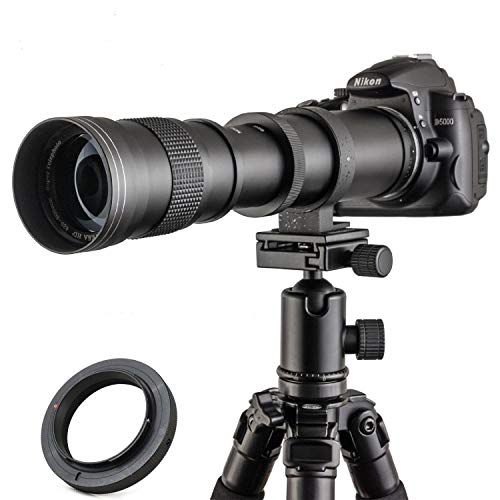
The JINTU 420-800mm f/8.3 Telephoto Zoom is a manual focus telephoto lens with a very long reach, sold with a T-mount to facilitate compatibility with Canon EOS Rebel and other DSLR bodies via adapters. Its all-metal construction and sizable length deliver a solid, durable feel, while the long focal range enables dramatic compression and distant subject framing. The package includes a free Canon adapter, expanding options for compatible Canon bodies, and even broad compatibility with other brands that accept T-mount adapters.
A note for Nikon users: this lens is primarily positioned for Canon EF-mount cameras, and use on Nikon bodies typically requires adapters which may affect focusing accuracy and infinity performance. The lens is best suited for photographers who require extreme reach for wildlife and aviation scenarios and are comfortable working with manual focus. Its weight and length are a consideration for hand-held use over extended periods.
Sony 16-50mm F/2.8 Standard Zoom

The Sony 16-50mm f/2.8 DT standard zoom provides a versatile range from wide to short tele, paired with a bright constant aperture that helps with selective focus and low-light shooting. The DT design is optimized for APS-C DSLR-style bodies, delivering sharp images and a robust build in a compact package. While primarily associated with Sony A-mount legacy cameras, this lens remains appealing for shooters who own compatible bodies, value a fast aperture, and want a travel-ready zoom with strong performance across everyday scenes.
Buying Guide
When selecting a zoom lens, several factors determine long-term satisfaction beyond just focal length. The following considerations explore different perspectives to help you choose the best fit for your camera system, shooting style, and budget.
Mount Compatibility and Adapters
Identify your camera’s mount and evaluate how a lens will perform on that system. Native Nikon F-mount lenses typically deliver the best autofocus speed, metering, and optical compatibility. If you’re using adapters to fit a non-F-mount lens on Nikon gear, check for infinity focus accuracy, AF compatibility, and any impact on metering or exposure. Adapters can unlock flexibility, but they may introduce additional weight, height, and potential focus breathing in video work.
Focal Range and Versatility
A broader zoom range offers convenience, but the trade-off is often size, weight, and optical performance at extremes. For travel and street photography, a compact 24-70mm or 28-80mm class can be ideal. For wildlife or sports, a 70-200mm or 55-200mm-type telephoto zoom can provide essential reach. Consider your typical subjects, distances, and whether you’re more often shooting wide scenes or tight close-ups.
Aperture and Low-Light Performance
A faster constant aperture (for example f/2.8) enables better subject isolation and lower shutter requirements in dim light. However, lenses with larger maxima often cost more and weigh more. If you shoot primarily in daylight or plan to use higher ISO, a variable-aperture zoom (f/4-5.6) can offer good value with acceptable performance for most outdoor scenes.
Autofocus Speed and Stabilization
Autofocus speed and accuracy matter for action and wildlife. A lens with a fast motor (like Nikon’s SWM or Tamron’s VXD) will focus smoothly and reliably. Image stabilization (VR/IS) is especially beneficial at longer focal lengths, helping to counter camera shake and produce sharper handheld images at telephoto ranges.
Build Quality, Weight, and Handling
Consider the lens’s physical size and weight relative to how you shoot. Heavier, larger lenses can demand better handling, steadying techniques, and sometimes a monopod or tripod. Weather sealing or rugged construction is worth evaluating if you frequently shoot outdoors in temperature or moisture extremes.
Price, Warranty, and After-Sales Support
Balance your budget with expected use. Third-party brands often deliver strong value, while first-party options tend to provide superb autofocus and color consistency. Check warranty terms, return policies, and the availability of replacement parts and service centers in your region to ensure long-term reliability.
In short, the best zoom lens for you depends on your camera system, typical subjects, and how much weight you’re willing to carry. For Nikon F-mount shooters prioritizing native performance, the Nikon 55-200mm offers a solid balance of reach, stabilization, and portability. If you explore non-F-mount options, ensure you understand how adapters may affect handling and autofocus. By weighing focal range, aperture, stabilization, and build quality against your shooting style, you’ll identify the lens that best expands your creative possibilities.