Geotagging adds a precise GPS location to every photo, turning casual travel shots into an organized map of your adventures. For avid travelers and budding content creators, a camera with geotagging can streamline how you sort, share, and revisit moments from different destinations. The following article reviews five capable cameras that either offer built-in GPS or strong connectivity for location tagging, along with key features that matter for quality imaging and ease of use. Use this guide to compare options that balance travel-friendly features, image quality, and social sharing capabilities.
| Product | Brand | Geotagging | Main Feature |
|---|---|---|---|
| Nikon COOLPIX P510 With GPS | Nikon | Yes | 42x zoom and built-in GPS for location tagging |
| Canon PowerShot ELPH 360 With Wi‑Fi | Canon | No | 12x optical zoom and built-in Wi‑Fi/NFC for easy sharing |
| AUREAPIX 4K Digital Camera With WiFi | AUREAPIX | No | 4K recording, 16x zoom, and Wi‑Fi transfer |
| Aboobu 5K Digital Camera With Dual Lens | Aboobu | No | 5K resolution, 64MP, dual lens and long battery life |
| VAHOIALD 4K Camera With Flip Screen | VAHOIALD | No | 4K video, 48MP, 3-inch flip screen for vlogging |
Nikon COOLPIX P510 With GPS

The Nikon COOLPIX P510 centers on reach and location tagging. It features a 16.1 MP CMOS sensor and an expansive 42x optical zoom, making distant subjects accessible with clarity. Its claim to geotagging is rooted in its GPS capability, allowing you to embed exact coordinates in your photo metadata. This is especially useful for travel diaries, birdwatching expeditions, or urban exploration where you want to map where each shot was taken. The camera supports rapid shooting up to 7 frames per second, helping you capture fast-moving scenes without sacrificing detail.
Beyond GPS, the P510 balances beginner-friendly controls with robust zoom and versatility. The lens covers a broad focal range, and the optical performance helps maintain image quality even at full zoom. In practical terms, you can photograph landscapes, street scenes, and events with relative ease, then attach location data for later retrieval. For travelers who document itineraries or create location-based albums, the built-in GPS is a meaningful differentiator in this category.
Canon PowerShot ELPH 360 With Wi‑Fi
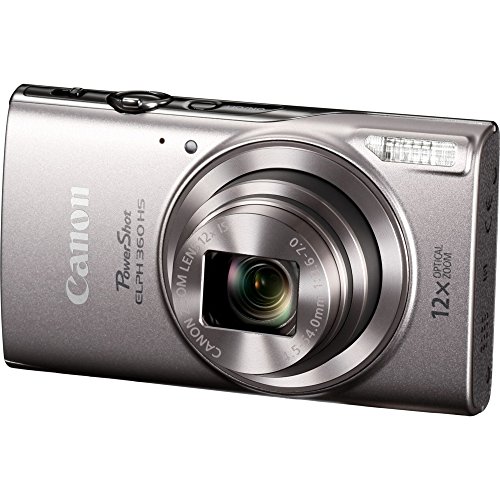
The Canon PowerShot ELPH 360 emphasizes portability and connectivity. With a 12x optical zoom and Optical Image Stabilizer, it offers flexible framing whether you’re shooting city streets or scenic vistas. Built-in Wi‑Fi and NFC enable quick sharing and wireless transfers to compatible devices, which is convenient for on-the-go posting and archiving. While geotagging isn’t listed as a built-in GPS feature, the camera’s strong connectivity makes it easy to attach location data afterward via mobile apps that support geotagging metadata, a practical workaround for travelers who prioritize immediate sharing.
Key image quality comes from a 20.2-megapixel CMOS sensor paired with Canon’s DIGIC 4+ processor, delivering vivid stills and solid 1080p video. The 3.0-inch LCD offers comfortable viewing angles, which helps when composing shots at a distance or in tight spaces. This model is well-suited for casual photographers who value compact design, simple controls, and reliable wireless sharing to popular platforms.
AUREAPIX 4K Digital Camera With WiFi

The AUREAPIX 4K digital camera is positioned for vlogging and travel storytelling. It features a 2025-generation auto-focus system and records 4K Ultra HD video with a 64MP image mode for high-resolution stills. The built-in Wi‑Fi enables quick transfer to phones and social platforms via the Viipulse app, making it simple to edit on mobile devices and publish content while you’re still on the road. A 16x digital zoom provides flexibility for both wide landscapes and detailed close-ups, and the 3-inch LCD flips 180 degrees—great for self-recorded videos or tutorials.
In addition to its imaging capabilities, the camera supports a built-in microphone for improved audio during recordings. The absence of a documented GPS feature means it may rely on external geotagging methods. For creators who value a compact kit with strong video performance and seamless connectivity, the AUREAPIX model offers a compelling balance between image quality and workflow efficiency.
Aboobu 5K Digital Camera With Dual Lens

The Aboobu 5K camera delivers a standout resolution with 64MP imaging and 5K video potential, built around a capable IMX386-based sensor package. Its dual-lens design gives versatility for both forward-facing shots and selfies, a useful feature for vloggers and travel journals. A 6x optical zoom helps in capturing distant scenes with clarity, while the included 64GB TF card and two batteries reduce the need for frequent recharging on long trips. A built-in LED flash and comprehensive exposure options support creative freedom in varied lighting conditions.
Geotagging isn’t listed as a native feature, but the camera’s robust still and video capabilities make it suitable for producing high-quality travel content. If you’re building a travel portfolio that prioritizes resolution, color detail, and flexible shooting modes, this model offers strong performance across image capture, video, and battery longevity endpoints.
VAHOIALD 4K Camera With Flip Screen
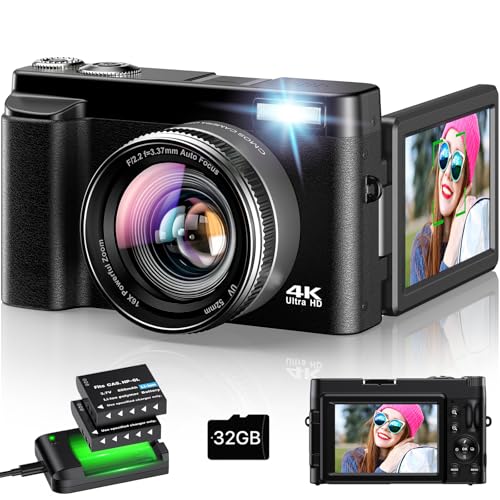
The VAHOIALD 4K camera focuses on a broad feature set aimed at vloggers and budding creators. It records 4K video with a 48MP image mode, delivering crisp stills alongside high-definition footage. A 3-inch 180-degree flip screen makes self-recorded shots and online teaching easier, while 16x digital zoom offers flexibility for various subjects. The built-in microphone supports better audio capture, and the webcam capability allows this camera to double as a live streaming tool for web-based lectures or remote meetings. Battery life and charging options are practical for on-the-go shooting, though GPS tagging is not specified in the features provided.
Buying Guide: Key Factors For Choosing A Geotagging Camera
When evaluating cameras for geotagging and travel use, consider how location data is captured and stored, how easy it is to transfer files, and how well the camera supports your daily shooting style. Here are essential purchase considerations and practical comparisons across the five reviewed models.
- Geotagging vs. GPS readiness: A model with built-in GPS automatically embeds location metadata in each photo. If GPS is absent, maintain compatibility with geotagging apps or external devices to add coordinates after capture. For travelers who want organized travel logs, native GPS tagging provides a straightforward workflow.
- Image quality and resolution: Higher megapixels generally yield more detail, especially when cropping or printing large images. However, sensor size, dynamic range, and processing also influence image quality. If you create 4K video, ensure the camera supports reliable 4K capture and stable autofocus.
- Zoom range: Optical zoom maintains image sharpness when framing distant subjects. A longer optical zoom is beneficial for landscape and wildlife photography, while digital zoom should be used sparingly to avoid quality loss.
- Connectivity and sharing: Built-in Wi‑Fi, NFC, or Bluetooth speeds up content transfer to smartphones and social platforms. Look for companion apps that enable easy geotag editing, batch transfers, and quick posting.
- Self-recording features: Flip screens and reliable autofocus simplify vlogging and remote teaching. A bright LCD and good color reproduction help you frame scenes accurately in varied lighting.
- Batteries and storage: Travel days require long battery life and ample storage or expandable memory. Some cameras include extra batteries or larger capacity cards; others rely on external power options or USB charging.
- Durability and ease of use: Ergonomic designs, simple menus, and rugged builds are valuable for hiking, urban exploration, or family trips. Kid-friendly modes or simplified interfaces can also help younger photographers.
- Budget and value: Budget-conscious buyers should weigh whether geotagging is essential or if a capable camera with good connectivity suffices. Premium cameras offer more features, but a mid-range model with GPS or strong sharing tools can deliver excellent results for most travelers.
In summary, a camera with built-in GPS delivers the most seamless geotagging experience, while models with robust connectivity enable easy content sharing and post-processing. For travelers focused on content creation, prioritize a balance of GPS tagging, image quality, and workflow features likeWi‑Fi transfers and flip screens. The Nikon COOLPIX P510 stands out for its native GPS and expansive zoom, whereas the Canon, AUREAPIX, Aboobu, and VAHOIALD models offer strong image and video capabilities with varied connectivity options. Your choice should reflect how you shoot most often: stills, video, or a hybrid approach, and how important geotagging is to your organization and storytelling.