Affordable reusable 35mm cameras offer a simple path to capture memories without a steep price tag. This guide highlights five practical, budget-friendly options that balance portability, ease of use, and reliable results. Each model is designed to be easy for beginners, lightweight for daily carry, and compatible with standard 35mm film so you can shoot, develop, and learn without fuss. Whether you want street portraits, travel scraps, or landscapes, these cameras help you explore analog photography without breaking the bank.
Below is a quick summary table of the chosen products.
| Product | Brand | Notable Feature | Film Type | |
|---|---|---|---|---|
| RETO Ultra Wide And Slim 35mm Camera | RETO | 22mm ultra-wide lens for expansive views | 35mm | Lightweight, beginner-friendly |
| Kodak EKTAR H35 Half-Frame | KODAK | Half-frame design doubles exposures | 35mm | Built-in flash option |
| Kodak M35 35mm Film Camera | KODAK | Fixed-focus with built-in flash | 35mm | AAA battery operated |
| CAMEDAFLX 135SC 35mm | CAMEDAFLX | Easy film loading and rewinding | 35mm | Beginner-friendly shooting guidelines |
| RETO PANO 35mm Film Camera | RETO | Panorama switch with 22mm wide lens | 35mm | Panorama and standard ratios |
RETO Ultra Wide And Slim 35mm Camera

The RETO Ultra Wide and Slim is a compact, reusable 35mm camera designed for everyday use. Its standout feature is a 22mm ultra-wide lens that captures broad scenes, which is especially appealing for street photography, landscapes, and travel pockets where space is limited. The camera accepts standard 35mm film, allowing easy sourcing of color or black-and-white stock. With a focus-free system and straightforward controls, beginners can quickly learn composition and exposure without deciphering complicated settings. Its lightweight chassis makes it easy to carry all day, making it a practical choice for new photographers who want immediate, tangible results.
Portability and simplicity define this model. It encourages shooting on the move—load a roll, frame a scene, and press the shutter. The minimalist design minimizes confusion about focal length and depth of field, enabling quick decision-making in dynamic environments. For budget-conscious buyers, the RETO’s film economy combined with widely available 35mm stock means you can shoot more frames per roll without a steep learning curve. This balance of wide perspective and ease of use makes it a strong entry point into reusable film cameras.
Kodak EKTAR H35 Half-Frame 35mm
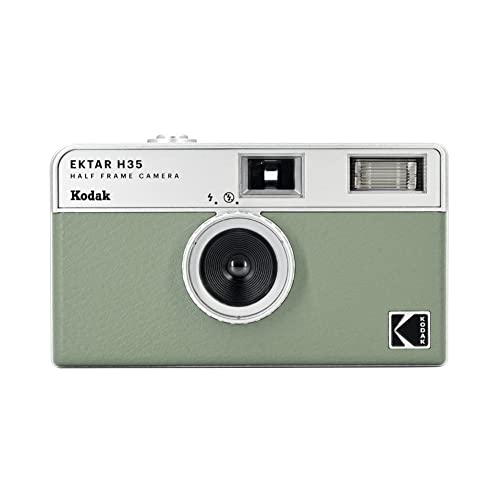
The Kodak EKTAR H35 Half-Frame offers a compact, film-saving design that doubles your frame count. By using half-frame exposure, a standard 36-exposure roll can yield approximately 72 images, allowing longer shoots or a broader creative exploration without frequent roll changes. The camera remains lightweight and pocketable, designed for easy daily carry and casual photography. Its fixed-focus system and simple operation suit beginners who want reliable results with minimal setup, making it a practical choice for travelers and street photographers who want more frames per roll.
Despite its small footprint, the H35 includes a built-in flash, which you can activate by adjusting a ring around the lens to accommodate indoor or low-light environments. The camera is compatible with color and black-and-white film, and its mostly automated operation supports quick, forgiving shooting. With no complicated modes, this Kodak model fosters a steady learning curve, letting you focus on framing, light, and storytelling across more frames per roll.
Kodak M35 35mm Film Camera

The Kodak M35 is a reusable, entry-level 35mm camera designed for simplicity. It features a fixed-focus lens and built-in flash, making it suitable for quick snapshots without technical guesswork. The camera runs on a single AAA battery and accepts standard 35mm film, supporting color and black-and-white stock. With its compact form and minimal controls, the M35 helps new shooters focus on composition and moment rather than navigating complex camera settings, offering a reliable gateway into analog photography.
Equipped with an optical viewfinder and straightforward exposure basics (fixed aperture and shutter speed), the M35 provides a predictable workflow that is less intimidating for beginners. This balance of ease, portability, and film compatibility makes it a practical choice for travel, family moments, and street photography where spontaneity matters and you want dependable results from a budget-friendly model.
CAMEDAFLX 135SC 35mm Film Camera

CAMEDAFLX 135SC focuses on approachable, beginner-friendly film photography. Its loading mechanism is straightforward, with clear, step-by-step instructions for loading film, making it accessible even for first-timers. The camera supports a simple workflow: open the back, insert the film canister, thread the film, and advance to the first frame with ease. A clear rewinding function and basic shooting instructions help users safely and efficiently complete a roll, reducing wasted frames.
The CAMEDAFLX also features a built-in flash to widen usable lighting scenarios, along with a design that emphasizes practical, no-fuss shooting. For learners, this model offers a gentle entry into film photography, helping you build confidence in framing, exposure, and timing before moving to more advanced gear.
RETO PANO 35mm Film Camera

The RETO Pano 35mm Film Camera centers on panoramic capability with a 22mm wide lens. It supports both color and black-and-white film and offers an easy switch between panoramic and standard photo ratios, enabling expansive compositions without complicated controls. The built-in flash adds versatility for indoor or dusk scenes, while the reusable design keeps costs down for regular film shooters. The panorama feature broadens storytelling possibilities without requiring advanced settings or extra lenses.
Lightweight and simple to operate, the Pano model is well-suited for travel, street photography, and documentary-style work where a wider field of view helps capture more context. It emphasizes practical usability: load film, switch to panorama, and shoot, then reuse with another roll. For budget-minded enthusiasts seeking greater framing options, this camera offers a compelling blend of ease, durability, and creative potential.
Buying Guide
Key purchase considerations help you choose a reusable film camera that fits your style and budget. Start by evaluating film economy, portability, and ease of use. Half-frame designs dramatically increase the number of exposures per roll, which can be advantageous for long shoots or learning on a budget, while standard 35mm cameras offer broader lens options and familiar development pipelines.
- Ease of loading and basic operation: Look for models with clear loading steps, fixed focus, and simple shutter control to minimize wasted film and frustration as you learn.
- Lens choice and field of view: Wide or ultra-wide lenses are great for street and landscape work, while standard lenses suit portraits and general scenes. Panoramic switches add versatility if you enjoy expansive framing.
- Power requirements and bulbs: Some cameras rely on AAA batteries or built-in flash. If you shoot in low light, confirm that the flash is reliable and easy to engage.
- Film format and economy: Half-frame cameras double exposures per roll but may require careful framing. Consider how you plan to develop and process film and whether you prefer color or black-and-white stock.
- Portability and build quality: Lightweight, compact bodies are ideal for travel, daily carry, and casual photography, while sturdier builds withstand on-the-go use.
- Availability of film and support: Ensure your chosen model uses widely available 35mm stock and that development services can handle the film type you plan to shoot.
- Learning curve and long-term versatility: Some cameras offer more instructional support or forgiving exposure, which helps beginners grow into more advanced analog methods over time.
Pros And Cons Across Models
- Pros: Budget-friendly, simple to operate, widely available film stock, compact and portable, some models offer additional features like panorama or built-in flash.
- Cons: Fixed focus or limited controls may limit creative options, film economy varies by design, battery or flash availability can affect usability in low light.
How To Get The Best Results
- Choose the right film for your subject: color for street scenes, black-and-white for mood and texture, or slide film if you want bold color.
- Practice framing with fixed focus: compose thoughtfully rather than relying on autofocus, especially with wide views.
- Test lighting conditions: early morning or late afternoon light often yields more favorable results for analog film.
- Keep exposure steady: avoid overly bright scenes in the middle of the day unless the camera’s exposure performance is proven to handle it.
- Develop systematically: keep a simple note on each roll to track shooting conditions and film type for better processing choices later.