Expanding your Canon glass onto Micro Four Thirds bodies from Olympus or Panasonic opens new possibilities without buying new lenses. The right adapter preserves infinity focus, offers solid mechanical control, and matches the build quality of your camera system. This guide highlights five top adapters that bridge Canon EF/EF-S (and in one case Canon FD) to Micro Four Thirds, with options ranging from autofocus to manual focus. Use these comparisons to pick a adapter that best fits your Canon lenses, shooting style, and camera body.
| Brand | Adapter | |||
|---|---|---|---|---|
| YKEASU | MFT Lens Mount Adapter | Canon EF/EF-S | Panasonic/Olympus 4/3 | Autofocus & aperture control; IS support |
| K&F Concept | Canon EOS EF/EF-S To M4/3 | Canon EF/EF-S | Olympus/Panasonic 4/3 | Manual exposure; rugged brass & aluminum |
| PHOLSY | Canon EF EF-S To M4/3 | Canon EF/EF-S | Olympus/Panasonic 4/3 | Manual focus; no electronics |
| VILTROX | EF/EF-S To M4/3 (EF-M1) | Canon EF/EF-S | Micro 4/3 bodies | AF capable; EXIF transmission |
| K&F Concept | Canon FD To M4/3 | Canon FD | Micro Four Thirds | Manual focus; brass & aluminum |
Canon EF/EF-S To MFT Adapter By YKEASU
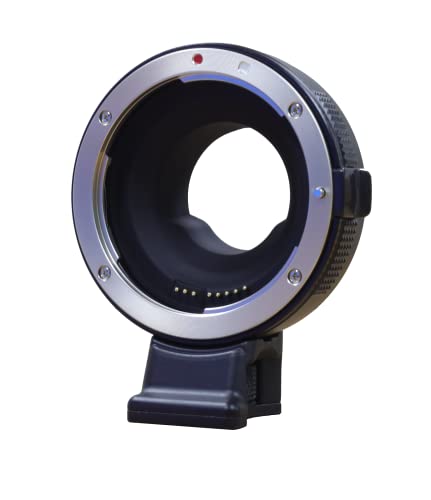
The YKEASU adapter bridges Canon EF/EF-S lenses to Micro Four Thirds bodies from Olympus and Panasonic. It enables autofocus and electronic aperture control through the camera, allowing exposure adjustments without removing the lens. The adapter supports in-body IS on compatible Canon lenses and M4/3 bodies, helping maintain sharpness in lower light. The interface is machined for a precise fit, preserving alignment and minimizing play during handling. Infinity focus is generally maintained for standard zooms and primes, making it a practical option for many users.
Designed to accommodate a wide range of Canon glass, it preserves infinity focus for most standard lenses and primes. It adds some extra length and weight, but remains compact enough for travel and daily use. This adapter is well suited for photographers who own Canon glass and want to explore Micro Four Thirds bodies without buying new lenses.
Canon EOS EF/EF-S To M4/3 Adapter By K&F Concept
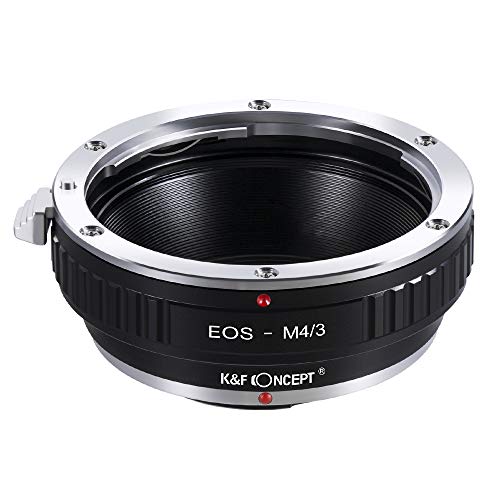
The K&F Concept EOS EF/EF-S To M4/3 adapter is a rugged, all-metal solution designed to mount Canon EF/EF-S lenses onto Micro Four Thirds bodies. There are no electrical contacts in the ring, so exposure and focus must be adjusted manually. The construction uses brass and aluminum for precise alignment and durability, avoiding plastic. While it delivers infinity focus, it does not provide electronic control, making it ideal for vintage Canon lenses and photographers who prefer hands-on adjustment without electronics.
Compatibility covers Olympus and Panasonic Micro Four Thirds cameras, including popular Olympus PEN and OM-D models. The adapter’s solid build helps maintain lens alignment across frequent changes, and its manual operation keeps weight manageable for long shoots. Users should plan on manual exposure adjustments and focus when using older Canon glass.
PHOLSY Canon EF EF-S To M4/3 Adapter

The PHOLSY adapter focuses on manual control for Canon EF/EF-S lenses on Micro Four Thirds bodies. It supports a broad range of Olympus and Panasonic cameras and emphasizes infinity focus with no electronics or glass inside the adapter. Built from aircraft-grade aluminum and magnesium, the exterior is designed for durability and a clean aesthetic. Since there are no electronic contacts, autofocus and aperture control rely entirely on the lens and camera settings, making it a strong choice for those who shoot manual and prefer reliable, vibration-free operation.
Infinity focus is preserved for most Canon EF/EF-S glass, and the adapter’s metal construction helps maintain alignment under demanding shooting conditions. The absence of electronics means you’ll manually operate exposure and focus, which can be advantageous in controlled environments or with vintage lenses that don’t require modern data transmission.
VILTROX EF-M1 Auto Focus Lens Mount Adapter For Canon EF/EF-S To M4/3

The VILTROX EF-M1 adapter enables autofocus when mounting Canon EF/EF-S lenses on Micro Four Thirds bodies such as Olympus and Panasonic cameras. It supports EXIF data transmission, so camera settings like aperture, shutter speed, and ISO are communicated to the lens. Compatibility extends to popular models like GH4, GH5, and other M4/3 bodies, delivering a fast and smooth focusing experience that is close to native performance on many lenses. The build emphasizes stable electronic communication between lens and body while preserving image quality.
AF performance and data transmission are supported through a built-in copper electronic interface, providing real-time metadata to the camera. This makes it a convenient choice for users who want modern Canon glass on M4/3 bodies without sacrificing autofocus speed or exposure control. It’s especially beneficial for photographers who rely on quick focusing in dynamic scenes.
K&F Concept Canon FD To M4/3 Adapter

The K&F Concept FD To M4/3 adapter provides a bridge for Canon FD lenses to Micro Four Thirds bodies. It’s a manual-only solution, with no electronics to maintain, ensuring compatibility with vintage Canon glass. The adapter is crafted from brass and aluminum for a robust, durable fit, and it preserves infinity focus for compatible FD lenses. Since there are no electrical contacts, exposure and focus must be adjusted manually, which can be ideal for photographers who enjoy hands-on control and a classic optical approach.
Designed specifically for Canon FD lenses, this adapter does not fit EF/EF-S glass without the appropriate adapter. It offers a straightforward, reliable physical interface that appeals to shooters who value simplicity and a sturdy build. If you own FD-era Canon lenses and want to explore them on Micro Four Thirds cameras, this option provides a practical, no-frills solution.
Buying Guide
Choosing the right Canon-to-Olympus adapter involves weighing autofocus capability, manual control, and build quality against your lens lineup and camera body. Below are key considerations to help you decide which option fits your workflow and gear best.
- Mount compatibility: Ensure the adapter supports your Canon lens type (EF/EF-S for most modern glass, or FD for older lenses) and your Micro Four Thirds body (Olympus or Panasonic). Some adapters are optimized for EF/EF-S with IS functionality, while others specialize in FD mount lenses.
- Autofocus versus manual focus: Autofocus-enabled adapters (like certain EF/EF-S to M4/3 models) save time with moving subjects, but can introduce slight focusing quirks on some lenses. Manual-focus adapters are reliable with vintage glass and offer precise control when you don’t need AF.
- Aperture and exposure control: Some adapters transmit electronic aperture signals and EXIF data; others are purely mechanical. If you rely on automated exposure or need accurate EXIF metadata, pick an adapter with electronic communication.
- Build quality and materials: Brass and aluminum builds tend to be durable and precise, while some models use plastic. A solid build helps maintain alignment and reduces play during handling, which improves image consistency.
- Infinity focus accuracy: Not all adapters guarantee infinity focus with every Canon lens on every M4/3 body. Check compatibility notes for your specific lens and body pair and consider models that explicitly advertise infinity focus support for your configuration.
- Lens compatibility and support: Some adapters are compatible with a broad range of Canon EF/EF-S or FD lenses, while others are tuned for select models. If you own multiple Canon lenses, a versatile adapter may reduce the number of adapters you need.
- IS and stabilization: When using EF lenses with in-body stabilization, ensure the adapter supports IS to preserve stabilization performance. Not all adapters transmit IS data, so test this with your chosen lens.
- Weight and balance: Adding an adapter changes the overall weight and balance of the camera-lens combo. Heavier brass/aluminum designs can affect hand-holding comfort, especially with shorter focal lengths.
- Price versus features: Autofocus and EXIF-enabled adapters typically cost more than manual adapters. Align features with your shooting needs to maximize value.
- Practical usage notes: With manual adapters, consider using live view magnification, focus peaking, or manual focus aids available on many Olympus and Panasonic bodies to improve shooting accuracy.
By evaluating these factors against your current Canon lenses and Micro Four Thirds body, you can choose an adapter that balances convenience, control, and image quality for your specific style.