Best Cameras for Space Photography: Top Picks for Cosmic Images
If you’re chasing sharp, dramatic images of the night sky, these cameras and astro kits are designed to help you capture stars, nebulas, and distant galaxies with clarity. This guide highlights five top options that balance ease of use, image quality, and astro-specific features. The best fits vary by your goals: beginner-friendly trackers, cooled deep-sky cameras, flexible mirrorless systems for planetary and wide-field shots, and compact setups for space-inspired vlogs. Below is a quick comparison to help you choose the right tool for your sky-watching adventures.
Summary Table of Selected Products
| Product | Best For | Why It Stands Out |
|---|---|---|
| ZWO Seestar S30 Pro Smart Telescope | Beginner to intermediate astro-imaging | App-controlled, automatic tracking, dual 4K cameras, urban-friendly optics |
| SVBONY SV605CC Cooled Color Astrophotography Camera | Deep-sky enthusiasts | High-res IMX533 sensor, cooling, low-noise imaging |
| Om System -3 Astro Mirrorless Camera | Astro travel and wildlife | Stacked BSI sensor, stabilization, versatile lens options |
| Yatao 6K WiFi Flip Screen Digital Camera | Content creators with night sky filming | 6K video, dual lenses, vlogging-friendly features |
| SVBONY SC715C Telescope Planetary Camera | Planetary imaging | IMX715 sensor, low readout noise, compact form |
Best Overall: ZWO Seestar S30 Pro Smart Telescope

- Effortless Smart Telescope for Beginners: Power on, connect the app, and start capturing. Automatic GOTO targeting and tracking follow celestial objects, making it a good fit for first-night astrophotography.
- Urban-friendly optics: Apochromatic optics reduce color distortion, with built-in light pollution filters to improve clarity in bright skies.
- Dual-Camera 4K Imaging: Delivers sharp, high-resolution images suitable for deep-sky objects or wide-field scenes.
Best for: Newcomers who want a guided, app-driven experience and a telescope that performs well in light-polluted environments. Why selected: it combines beginner-friendly operation with strong image quality and urban-sky usability. Limitation: app reliance means a stable connection is helpful for uninterrupted sessions.
Dual-Mode Deep-Sky Imaging: SVBONY SV605CC

- 9MP IMX533 Sensor with cooling: Improves signal-to-noise in long exposures, essential for deep-space shots.
- High resolution and 80% quantum efficiency: Enables detailed capture of faint galaxies and nebulae.
- Panoramic and lucky imaging support: Broad versatility for various sky-watching projects.
Best for: Deep-sky enthusiasts seeking cooler cooling technology and high-resolution imaging. Why selected: strong image quality and cooling support aid long-exposure astrophotography. Limitation: the sensor data is best used with compatible software on a PC; standalone operation is limited.
Astro Mirrorless for Travel: Om System -3

- 20.4MP Four Thirds stacked BSI sensor: Delivers sharp detail with vibrant color rendering.
- Versatile lens ecosystem: Micro Four Thirds mount opens up many lens options for astro or daytime shooting.
- 7.5-stop stabilization: Helpful when shooting handheld in challenging light or during travel.
Best for: Astro travelers and wildlife photographers who want a compact, flexible mirrorless body. Why selected: combines strong image quality with travel-friendly stabilization. Limitation: designed for general photography; dedicated astro software features may be limited compared with specialized astro cameras.
Compact 6K Night-Sky Vlogger: Yatao 6K Camera

- 6K WiFi Digital Camera with dual lenses: Wide-angle for landscapes and macro for detail, plus 16X zoom for flexible shooting.
- Flip screen and vlog-ready features: Designed for YouTube and social sharing, with easy framing on the go.
- Built-in WiFi and app control: Quick transfers to mobile devices for posting or editing.
Best for: Content creators who want a single device for shooting, editing, and sharing space-inspired footage. Why selected: night-sky framing capabilities blend well with travel vlogging. Limitation: not specifically optimized for long-exposure astro imaging; performance hinges on lighting and exposure settings.
Planetary Imaging Specialist: SVBONY SC715C
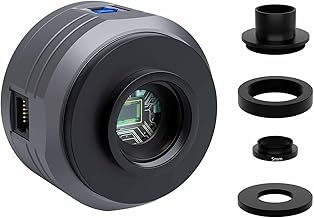
- 1.45μm IMX715 sensor with low readout noise: Suited for sharp planetary details.
- 512MB DDR3 cache: Reduces frame delays for live-view imaging and video capture.
- Compatibility with astronomy software and telescopes: Supports high dynamics in planetary shots.
Best for: Planetary imagers who need a compact, high-sensitivity camera for moons and planets. Why selected: optimized for planetary detail with low noise and fast readout. Limitation: not designed for wide-field deep-sky captures; requires compatible software and telescope setup.
Buying Guide: Space Photography Essentials
What should you consider when choosing a space photography camera? Key factors include sensor size and type, cooling or stabilization features, data transfer options, and how the camera integrates with your telescope or mount. If you primarily shoot deep-sky objects in dark skies, a cooled camera with a large, high- QE sensor is advantageous. For travel or street-astronomy, a compact or mirrorless system with good stabilization and long-exposure support helps minimize gear weight while preserving image quality.
How does sensor technology influence results? Higher quantum efficiency (QE) improves light capture, especially in faint objects. Low readout noise reduces grain in long exposures. Cooling reduces dark current, which is crucial for deep-sky imaging over many minutes to hours. For planetary shots, high frame rates and low latency are more important than extreme field depth.
What is the role of software and compatibility? Many astro cameras rely on specific drivers or software packages for control and stacking. Ensure your computer or tablet supports your chosen software, and verify compatibility with your telescope’s focuser and mount. For beginners, devices with robust app control can simplify calibration and imaging sequences.
FAQ
- What camera is best for beginners in space photography? The ZWO Seestar S30 Pro offers app-driven operation with automatic tracking, making it suitable for beginners seeking a guided experience.
- Do I need a cooled camera for deep-sky imaging? Cooling helps reduce thermal noise in long exposures, which is beneficial for deep-sky targets, especially in longer sessions.
- Can a mirrorless camera work for astrophotography? Yes, many mirrorless cameras with interchangeable lenses can handle wide-field shots and lightweight travel setups, though specialized astro features may be limited.
- Is planetary imaging different from deep-sky imaging? Yes. Planetary imaging prioritizes high frame rates and precise focusing, while deep-sky imaging emphasizes long exposures and low noise.
- What’s the advantage of dual-lens or dual-camera setups? Dual systems enable both wide-field sky captures and detailed close-ups, offering flexibility for varied space photography projects.
- Which camera works best for urban skies? Cameras with built-in light pollution reduction and good signal processing are advantageous for bright, urban nights.