Color accuracy matters in photography and videography. A dependable white balance card helps you establish neutral tones and correct exposure across lighting conditions. This guide highlights five top options that balance portability, durability, and value for American photographers and videographers seeking fast, repeatable color results.
Whether you’re shooting on location, in-studio, or streaming a video, a reliable gray card or color reference can save time in post-production. The selections below cover pocket-sized grey cards, larger reference cards, foldable options for travel, and a multi-card set that provides a complete color-checking toolkit. Use the table to compare core specs at a glance, then dive into detailed product insights.
| Product | Brand | Card Size | Key Benefit |
|---|---|---|---|
| Macolink White Balance Grey Cards | Macolink | 3.35″ x 2.2″ | Fast white balance; durable matte finish |
| Lightdow White Balance Card Folded | Lightdow | 12″ x 12″ | Standardized reflectance; portable folded version |
| Anwenk Grey White Balance Card (3.3×2.1) | Anwenk | 3.33″ x 2.13″ | Scratch-resistant, non-reflective, waterproof |
| Reflex Camera 12×12 Foldable Grey Card | Reflex Camera | 12″ x 12″ | Foldable and portable; versatile for studio/outdoor |
| Pixiss 4-In-1 Color Card Set | Pixiss | Set of cards (size varies) | Includes 18% grey, white, black, and gradient |
Macolink 18% Gray Card for Accurate White Balance

Macolink’s 18% gray card delivers quick white balance and proper exposure, ideal for DSLR photography and video. The neutral gray reference helps calibrate color accurately in mixed lighting, ensuring skin tones read correctly and neutral gray remains consistent across shots. The compact size supports on-location use without adding bulk to your bag.
Its durable, waterproof material with a matte finish minimizes reflections and glare, making it suitable for outdoor shoots and travel. The size is compact at 3.35 by 2.2 inches, so it fits easily in camera bags or pockets for fast calibration between takes.
Lightdow 12×12 White Balance Card Folded

Lightdow’s 12×12 inch gray card uses a standardized reflectance of 17.8% with a density of 0.74. This setup helps limit the maximum deviation of reflectance to about 2% and the maximum exposure error to 1/8 stop, supporting precise color and exposure control in varied lighting conditions.
This folded version is designed for portability, and it comes with a carry bag to simplify transport between locations and shoots. The foldable form keeps weight and volume low while providing a reliable neutral reference on set.
Anwenk Grey White Balance Card 18% (3.3×2.1)
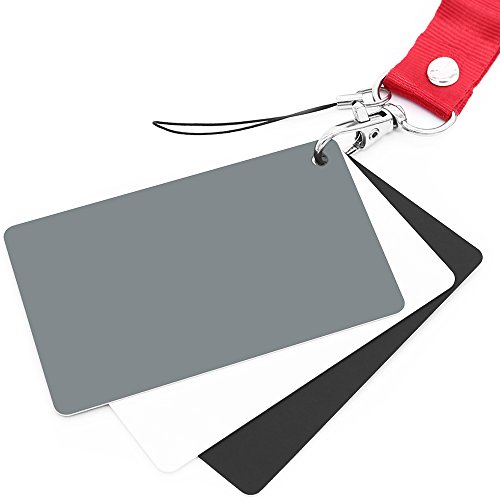
Anwenk’s 18% grey card offers a matte finish for scratch resistance, with non-reflective and waterproof properties. It provides a reliable reference for setting exact color balance and is compatible with any digital camera, including DSLR, video, and film workflows.
Measured at 3 1/3 by 2 1/8 inches, this compact card fits easily into a pocket or camera bag for quick on-the-go calibration. Its simple design emphasizes consistent color without distracting reflections, even in challenging lighting.
Reflex Camera 12×12 Foldable White Balance Card

Reflex Camera’s foldable 12×12 inch grey card offers accurate white balance and color correction for natural-looking images. The foldable design enhances portability, allowing photographers to carry a robust reference in camera bags without adding bulk.
Ideal for both studio and outdoor shoots, this card supports consistent results across environments. Its portability makes it a practical choice for photographers who switch between lighting setups frequently and need a quick calibration reference on location.
Pixiss 4-In-1 Color Card Set

Pixiss presents a premium 4-in-1 color correction card set that includes 18% grey, white, black, and a matte surface, plus a 24-step gradient. This set offers robust exposure control and color balance for diverse lighting scenarios, including video, DSLR, film, and photography workflows.
The cards are waterproof and durable, designed for repeated use in demanding environments. The compact, lightweight bundle includes a camera lens microfiber cloth, helping maintain surface cleanliness for accurate color calibration.
Buying Guide
Key purchase considerations
Size and portability influence how easily a card travels with your gear. Smaller, pocketable cards (around 3.3″ x 2″) are ideal for photographers who recover quickly between shots, while larger 12″ x 12″ references are better for controlled environments and studio work.
Finish and material matter for durability and glare. Matte, scratch-resistant, and waterproof surfaces maintain accuracy over time and in challenging conditions. A matte finish reduces reflections that could skew calibration in bright light.
Color accuracy features to compare
Look for cards that provide a standard 18% gray reference, a 24-step gradient, and a white reference. The 18% gray is the conventional baseline for balancing exposure and neutral tones, while the gradient helps you refine color temperature across scenes.
Some sets offer multiple reference cards (gray, white, black) in one kit, which can simplify on-site shots and post-processing workflows. Consider whether you need a single card or a full color reference suite for versatility.
Use-case and environment considerations
For field and travel work, compact and foldable cards that fit into a pocket or small pouch are advantageous. For studio or location shoots with predictable lighting, larger cards and multi-card sets provide more data for precise calibration and color matching.
Video work often benefits from a broader gradient range and reliable reflectance data to ensure skin tones and color fidelity across scenes and cameras. In such cases, a 4-in-1 set with a 24-step gradient can be especially valuable.
Durability, price, and brand reliability
Durable, waterproof materials extend card life under rain, dust, and rough handling. While premium sets may cost more, they can reduce time spent on calibration and post-production, delivering long-term value for professionals.
Choose brands with clear specifications and compatible formats for your gear. Reading user reviews and confirming how well a card works with your camera and editing workflow helps ensure a smooth integration into your process.