This guide highlights five beginner-friendly camera options and essential accessories to help aspiring photographers improve quickly. Each pick balances ease of use, image quality, and value, with practical notes on who benefits most. The selections include point-and-shoots for portability, a versatile DSLR kit for learning, a compact camera for travel, and reliable gear like a bag and quick-reference tools to speed up learning. Use this overview to compare how each option fits your goals, whether you’re exploring portraits, landscapes, or everyday moments.
| Product | Brand | Type | Why It Fits Beginners |
|---|---|---|---|
| Canon Point-and-Shoot Camera | Canon | Point-and-Shoot | Long zoom, simple controls, solid image quality for travel and everyday use. |
| Canon EOS 4000D DSLR Bundle | Canon | DSLR Kit | entry-level DSLR with bundled lenses and accessories for hands-on learning. |
| Canon PowerShot Elph 360 | Canon | Compact | Ultra-portable with wifi sharing and easy handling for beginners. |
| RAINSMORE Camera Bag Backpack | RAINSMORE | Camera Bag | Protective storage with adjustable dividers and anti-theft design for new gear. |
| DSLR Quick Reference Cheat Sheet | OCQOTAT | Cheat Sheet | Portable learning aid to master exposure, modes, and composition on the go. |
Canon Point-and-Shoot Camera

The Canon point-and-shoot offers a versatile entry path for travelers and hobbyists who want a compact camera with notable reach. The model features a 40x optical zoom with optical image stabilization, which helps capture distant subjects without sacrificing clarity. It supports 4K video and 4K time-lapse, enabling beginners to explore motion and storytelling in addition to still photography. A 20.3‑megapixel CMOS sensor helps deliver detailed images across various scenes, from cityscapes to family gatherings. The combination of zoom, 4K capabilities, and ease of use makes it a strong starter option for budding shooters.
- 40x optical zoom with stabilization
- 4K video and 4K time-lapse
- 20.3 MP CMOS sensor
Who it’s best for: travelers, hobbyists who want flexibility without swapping lenses, and users prioritizing video alongside stills. Limitations may include a smaller sensor relative to some DSLRs, which can affect low-light performance compared with larger sensor bodies. The absence of interchangeable lenses makes it ideal for those who prefer simplicity over expandability.
Canon EOS 4000D DSLR Bundle

The Canon EOS 4000D bundle is an approachable DSLR kit designed for new photographers who want real hands-on learning. The deluxe bundle includes the camera, an 18-55mm lens, plus additional lenses and accessories like a wide-angle lens, telephoto lens, memory, a case, filters, a flash, and a tripod. Its 18.0‑megapixel APS-C CMOS sensor pairs with a DIGIC 4+ image processor to deliver sharp images with accurate color. The camera outputs Full HD 1080p video at 30 frames per second and offers a 9-point AF system with AI Servo AF for tracking moving subjects. A 3 fps shooting rate keeps pace with everyday moments.
- Deluxe bundle with multiple lenses and accessories
- 18.0 MP APS-C CMOS sensor; DIGIC 4+ processor
- Full HD 1080p video; AI Servo AF; 3 fps
Who it’s best for: beginners who want a true DSLR experience with room to grow and a comprehensive starter kit. Potential drawbacks include bulk and heavier handling compared with compact cameras, plus a learning curve for manual controls as users advance.
RAINSMORE Camera Bag Backpack

The RAINSMORE camera bag offers substantial storage with careful organization. It measures around 44 cm by 35 cm by 16 cm, designed to fit a DSLR, several lenses, a 15.6 inch laptop, and essential accessories. The bag includes six removable padded dividers and three elastic security straps, allowing you to reconfigure the main compartment for different gear layouts. It also emphasizes quick access with a side pocket design and anti-theft zippers for added security, making it practical for daily use and travel. Tripod or monopod can be attached to the bottom to preserve balance.
- Large capacity with customizable dividers
- Anti-theft design and quick-access pockets
- Fits up to 15.6″ laptop; tripod attachment
Who it’s best for: beginners who need reliable protection and easy transport for multiple lenses and a laptop. Considerations include comfort on longer walks or commutes and ensuring the bag’s dimensions fit your typical gear set.
DSLR Quick Reference Cheat Sheet

This concise guide is designed for Nikon, Canon, and Sony DSLR users who want a portable reference. The 30-page photography cheatsheet comprises 16 double-sided, color-coded sheets and measures just 4 by 3 inches, making it easy to clip to a camera bag or slip into a pocket. It covers essential topics like exposure, shooting modes, composition, and lighting, delivering quick, approachable explanations. It’s a practical gift for beginners and a compact learning companion for on-location shoots or studio practice.
- 30 pages of essential tips; color-coded
- Fits any DSLR across major brands
- Compact, pocket-sized and portable
Who it’s best for: new photographers who want fast reference while shooting, students learning manual settings, and gift buyers seeking a practical learning aid. While it provides useful basics, it’s not a substitute for hands-on practice and in-depth study.
Canon PowerShot ELPH 360
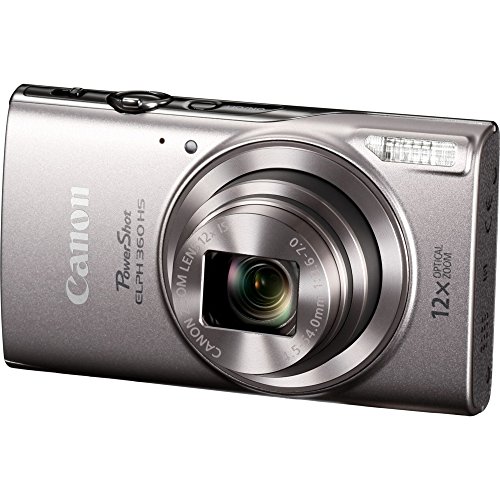
The Canon PowerShot ELPH 360 offers a compact, travel-friendly option for beginner shooters who want solid image quality without complexity. It features a 12x optical zoom with optical image stabilization to keep shots steady across a range of distances. Built-in Wi-Fi and NFC enable easy sharing and wireless transfer to mobile devices. The camera also sports a large 3.0-inch LCD for easy framing and review. With a 20.2-megapixel CMOS sensor and a DIGIC 4+ image processor, it delivers bright, detailed images even in everyday lighting scenarios.
- 12x Optical Zoom with optical image stabilization
- Wi-Fi and NFC for easy sharing
- 3.0″ LCD; 20.2 MP CMOS sensor
Who it’s best for: travelers and casual shooters who want a slim, point-and-shoot with reliable connectivity and straightforward operation. Its compact body makes it less suitable for advanced manual control beyond basic modes, but it remains a dependable everyday camera for learning the basics of composition and exposure.
Digital Camera 44MP FHD 1080P

This compact digital camera is pitched for kids, teens, and adults seeking a budget-friendly, entry-level device with solid stills and basic video. It supports up to 44MP image output and 1080P video, along with features such as smile capture and face detection. A 2.4-inch display provides immediate feedback, and the included 32GB memory card offers ample space for practice sessions. While not a professional tool, it can serve as a low-risk stepping stone for new photographers exploring framing and capturing moments in everyday life.
- 44MP photo and 1080P video
- Smile capture and face detect
- Compact, beginner-friendly design
Who it’s best for: beginners and younger learners seeking simplicity and immediate results. For more serious study or progressive control, upgrading to a larger-sensor camera or a dedicated learning kit may be beneficial.
Buying Guide
Choosing the best camera path as a new photographer depends on your goals, budget, and how much you value portability versus expandability. Here are key considerations to help you compare the five options above and find the right fit for your learning journey.
Camera Type And Learning Curve
Point-and-shoots are typically the simplest to start with, offering automatic settings that let you focus on composition. Compact cameras provide portability with decent image quality, while DSLRs demand more hands-on learning but offer greater control and the potential to grow with better lenses. A learning aid like a DSLR cheat sheet can accelerate your understanding of exposure and modes across formats.
Image Quality Versus Convenience
Sensor size and megapixel count influence image quality, especially in low light. DSLRs with larger APS-C sensors generally deliver better detail and dynamic range than compact models. If you shoot mostly in daylight or in controlled settings, a compact or high-zoom camera may suffice. For learning depth of field and manual exposure, a starter DSLR kit provides more growth potential.
Lens Availability and Expandability
Interchangeable lenses are the strongest advantage of DSLRs and mirrorless systems, but they require knowledge to choose compatible glass. Beginners may start with a kit lens and gradually add primes or zooms. If you prefer a single-device solution, a high-zoom or compact camera minimizes complexity while offering flexibility in focal range.
Portability, Durability, And Travel Readiness
For daily use and travel, weight and size matter. Point-and-shoots and compact cameras win on portability, while DSLRs provide rugged builds that can endure more demanding shooting conditions with appropriate bags and protection. A sturdy camera bag with adjustable dividers helps new photographers stay organized on the go.
Connectivity, Sharing, And Learning Tools
Connectivity features like Wi‑Fi or NFC simplify sharing and remote shooting. Quick-reference resources, practice guides, and cheat sheets can speed up learning, especially when you’re not near a mentor. Consider how often you’ll connect to mobile devices and whether you want in-camera editing options or cloud backup for your growing gallery.
Summary Of Options
The Canon point-and-shoot provides travel-friendly versatility with a long zoom and 4K video, suitable for beginners who also want motion capture. The Canon EOS 4000D DSLR Bundle is best for hands-on learners who want to build photography skills with a full starter kit. The Canon PowerShot ELPH 360 is ideal for true portability and easy sharing. The RAINSMORE bag supports growing gear with secure storage, while the DSLR Quick Reference Cheat Sheet complements practical learning on the go. Each choice suits different paths toward mastering photography as an amateur.