Best Budget Gimbal Head Options for Stable Telephoto Shots
If you’re seeking a budget gimbal head that delivers smooth movement and solid support, these five options are designed for wildlife, sports, and landscape photographers on a budget. Each choice targets different needs—from lightweight travel setups to heavy-lens stability. In this guide, you’ll find who each product is best for, why it was selected, and practical limitations to consider.
Buying Summary
| Product | Best For | Key Benefit |
|---|---|---|
| K&F CONCEPT Aluminum Gimbal Head | Budget-friendly stability | High load capacity up to 44 lbs; strong aluminum build |
| NEEWER GM101 Gimbal Head | Professional-style shooting | Smooth bearing structure for precise motion |
| NEEWER GM102 Gimbal Head | Tripod and monopod versatility | Three-axis adjustments with 360° pan |
| EVUMO P9 Carbon Fiber Gimbal Head | Lightweight strength | Carbon fiber plus aluminum for high stiffness |
| SIRUI PH-30 Gimbal Head | Heavy telephoto work | Very high load capacity and wide tilt range |
K&F CONCEPT Aluminum Gimbal Head With 360° Pan
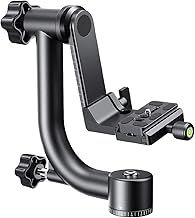
Best for budget-conscious shooters needing strong load support. This gimbal head uses a 6061 aluminum alloy chassis and supports up to 20 kg (44 lbs). The design emphasizes stability for both horizontal and vertical movements, making it suitable for mid-to-long lens setups.
- Best for: photographers on a tight budget who still require robust load capacity.
- Why selected: proven 0% grease leakage with improved sealing and three-stage lubrication for smoother motion.
- Limitations: heavier than some carbon fiber alternatives; best paired with a sturdy tripod.
NEEWER GM101 Gimbal Tripod Head

Better for shooters who want a professional feel without a premium price. The GM101 features a durable aluminum alloy build with a strong load path and precise bearing structure to balance cameras and telephotos smoothly. It supports 360° panning with a dedicated lock, aiding wildlife and sports framing.
- Best for: mid-to-high-end setups where smoothness and stability matter.
- Why selected: integrated bearing structure improves overall motion quality and control.
- Limitations: follow-up action required when loosening knobs to prevent drops; ensure proper handling during adjustments.
NEEWER GM102 Three-Axis Gimbal Head

The GM102 is designed for versatile mounting on tripods or monopods, with a 3-axis adjustment and 360° panorama. It suits wildlife and sports shooters who want full-angle control without swapping heads. It’s CNC aluminum construction backed by a secure ARCA-style quick release system.
- Best for: users who need adaptability across tripods and monopods.
- Why selected: strong three-axis control and a compact footprint for portable setups.
- Limitations: heavier configurations may require extra stabilization on windy days.
EVUMO P9 Carbon Fiber Gimbal Head

Choose this if you want a lightweight yet stiff gimbal head for heavier lenses. The P9 merges carbon fiber and 6061-T6 aluminum to achieve a low weight of about 2.93 lbs with a 20 kg load capacity. It uses a full-bearing design for silky rotation and supports 360° base pan plus 720° mounting versatility.
- Best for: photographers who travel light but shoot with large telephotos.
- Why selected: carbon fiber construction reduces weight without sacrificing strength.
- Limitations: slightly higher price due to materials; ensure compatibility with your tripod setup.
SIRUI PH-30 Gimbal Head

Best for heavy telephoto work and demanding wildlife shoots. The PH-30 offers a high load capacity up to 55.1 lbs (25 kg) with a robust 8-layer carbon fiber build. It provides a smooth 360° pan and a wide tilt range for flexible composition, supported by precise ARCA compatibility.
- Best for: professionals needing maximum load capacity and robust construction.
- Why selected: high payload capacity makes it suitable for large telephotos and pro DSLRs.
- Limitations: heavier and more expensive than mid-range models; may be overkill for small lenses.
Buying Guide: Key Considerations For Your Budget Gimbal Head
- Load capacity: Match the head’s rating to your heaviest lens and camera combo. Exceeding it risks balance issues and potential damage.
- Material and weight: Carbon fiber heads are lighter but pricier; aluminum heads weigh more but are typically budget-friendly and sturdy.
- Pan and tilt range: A full 360° pan with a wide tilt range gives more composition options for wildlife and sports.
- Three-axis control: Gimbal heads with independent pan, tilt, and swing controls offer greater framing flexibility on fast-moving subjects.
- Quick-release compatibility: Ensure ARCA-type plates or the included plates fit your existing tripod system for quick mounting.
- Sealing and lubrication: Look for sealed bearings and proven lubrication to reduce grease leakage and extend life.
- Tripod compatibility: Check thread types (1/4″ vs 3/8″) and whether the head includes adapters for your tripod.
- Stability features: Built-in levels and locking mechanisms help you achieve precise level framing on uneven terrain.
FAQ
- What is the main advantage of a gimbal head over a ball head? A gimbal head allows smooth, controlled pan and tilt for long lenses, improving tracking of moving subjects.
- Do I need carbon fiber or aluminum for a budget setup? Aluminum is typically more affordable and durable; carbon fiber offers lighter weight with higher cost.
- How much load capacity is enough? Choose a head rated for at least 20% more than your heaviest camera-plus-lens combination to ensure stability.
- Can these heads be used with tripods and monopods? Many models support both; verify bottom thread compatibility and included adapters.
- Is a built-in level important? Yes, it helps confirm a level setup quickly, especially when changing angles in the field.
- What maintenance is required? Regularly check knobs, tightenings, and bearing smoothness; re-lubricate if required by the manufacturer’s guidance.