Best Beginner Nature Camera Choices for New Photographers
If you’re just starting out and want to capture nature clearly, these beginner-friendly cameras are designed to be easy to use, versatile, and capable of producing high-quality images and video. They’re suited for aspiring wildlife observers, travel bloggers, and family photographers who want reliable options without a steep learning curve. The following picks balance portability, automatic modes, and useful features like WiFi transfer, zoom, and robust lenses.
| Product | Best For | Why It Stands Out |
|---|---|---|
| VJIANGER 4K Digital Camera | YouTubers and travel beginners | 4K video, 64MP stills, 16X digital zoom, flip screen, 32GB card included |
| KODAK PIXPRO AZ528 | Landscape and wildlife observers | 52x optical zoom, wide 24mm lens, built-in Wi‑Fi |
| Canon EOS Rebel T7 | Aspiring photographers | 24.1MP APS-C sensor, built-in Wi‑Fi, beginner-friendly |
| DEATTI 4K Trail Camera | Wildlife tracking and outdoor adventures | 4K video, 48MP photos, rugged and weatherproof |
| NBD 5K 64MP Digital Camera | Vloggers and multi-angle shooters | Dual-lens setup, 16X zoom, flip screen, external mic |
VJIANGER 4K Digital Camera with WiFi

The VJIANGER camera is aimed at beginners who want straightforward operation plus strong video capability. It features 64MP stills, a 52mm wide-angle to macro lens, and 16X digital zoom. The built-in WiFi lets you use a smartphone as a remote control and quickly share footage to social media. Use this if you want a compact setup that covers both vlogging and casual nature shooting. A caution: digital zoom can reduce image sharpness at longer reaches, so pair with good lighting for best results.
KODAK PIXPRO AZ528 16MP with 52x Zoom

The Kodak AZ528 emphasizes reach with 52x optical zoom, a wide 24mm lens, and a 3-inch LCD for setting up shots in the field. It’s best for travelers and wildlife watchers who need to bring distant subjects closer without changing lenses. The camera also supports Wi‑Fi for quick file transfer. A limitation is that high-zoom shooting may benefit from a tripod in low light or longer focal lengths to maintain crisp detail.
Canon EOS Rebel T7 DSLR Kit

The Canon EOS Rebel T7 is a classic beginner DSLR that helps new photographers understand fundamentals while delivering solid image quality on the APS-C sensor. It includes built-in Wi‑Fi to transfer images and has an approachable 9-point AF system with AI Servo focus for moving subjects. Ideal for learners who want to practice manual controls over time. A potential drawback: entry-level kit lenses offer limited low-light performance compared with higher-end glass.
DEATTI 4K Trail Camera

This trail camera is built for outdoor use and wildlife monitoring with 4K video and 48MP photo capabilities. It includes a practical 2.0-inch color LCD to review footage on-site and is designed to withstand rugged outdoor conditions. Best for wildlife enthusiasts and nature observers who want hands-off recording with a weatherproof build. Note that this model does not support remote Wi‑Fi viewing beyond setting up the hotspot for initial configuration, which means you’ll need to physically retrieve files or use the app within the hotspot range.
NBD 5K 64MP Digital Camera Kit
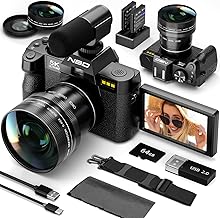
The NBD 5K camera kit combines dual lenses for landscapes and close-ups with a 180-degree flip screen for easy selfies and vlogging. The 16X zoom supports varied subjects, and the included 32GB card plus two batteries ensure longer shooting sessions. This option is best for beginners who want a complete, portable vlogging kit with straightforward setup. A limitation is that some users may prefer a higher-resolution sensor for very low-light scenes; consider additional lighting to maximize performance.
Buying Guide: Key Considerations for Your First Nature Camera
- Image quality vs. simplicity: Beginners should prioritize cameras with guided modes, automatic scene recognition, and solid in-camera stabilization to reduce learning curve.
- Zoom and lens flexibility: Higher optical zoom helps you frame distant wildlife. Consider models with versatile lenses or zoom ranges appropriate for nature subjects.
- Video capabilities: If you plan to vlog or document trips, prioritize 4K video, reliable autofocus, and good wind-noise control or external mic options.
- Connectivity: WiFi or Bluetooth makes sharing photos quick. Some cameras require in-app control for remote shooting—factor in setup distance and compatibility with your phone.
- Durability and weather resistance: Outdoor use calls for rugged bodies, splash or dust resistance, and good battery life for longer excursions.
- Portability: For nature hikes, lighter bodies with compact lenses can reduce fatigue during long shoots.
- Future learning: If you plan to grow into photography, choose a system that offers affordable lens upgrades and more manual controls.
Frequently Asked Questions
- What should a beginner look for in a nature camera?
Look for user-friendly modes, reliable auto exposure, good autofocus, and basic image stabilization to help you learn without wrestling with settings.
- Is a high megapixel count essential for beginners?
Not necessarily. A balance of sensor quality, lens performance, and lighting often matters more than megapixel count for natural scenes.
- Do I need a separate microphone for nature vlogging?
External mics can improve audio clarity in outdoor environments, but build-in mics can suffice for casual videos if you’re starting out.
- Should I buy a camera with a flip screen?
A flip screen helps with self-recording and framing when shooting nature videos or selfies in the field.
- What’s the advantage of optical zoom vs. digital zoom?
Optical zoom preserves image quality at long focal lengths, while digital zoom can reduce sharpness.
- Are trail cameras good for beginners?
Trail cameras excel for hands-off wildlife monitoring but typically prioritize motion-triggered capture over live scene framing.