Battery powered trail cameras enable reliable wildlife monitoring in remote areas where power is scarce. The models below emphasize long-lasting power options—built-in rechargeable batteries, replaceable packs, or solar-assisted systems—so you can capture wildlife without frequent site visits. Each option shown offers solid image quality, dependable night vision, and practical connectivity for on-the-go field use. Whether you prioritize high resolution stills, fast trigger speeds, or seamless app control, this guide highlights five solid choices and explains how their power features influence field performance. The following summary table provides a quick snapshot of the selected models.
| Product | Brand | Power Source | Notable Feature |
|---|---|---|---|
| MAXDONE Trail Camera With Built-In Battery | MAXDONE | Built-in 2000mAh Battery | Wi-Fi/Bluetooth via TrailCam GO; 48MP stills; 1080P video |
| DEATTI Trail Camera 48MP 4K | DEATTI | 8 Batteries Included | 2160P/48MP; 0.1s trigger; built-in 2.0″ LCD; IP waterproof |
| VIDVIS Trail Camera With Solar Power | VIDVIS | Built-in 5000mAh Battery + Solar | 4K/64MP; 49 ft app control; 65 ft night vision |
| Gyliziex 4G LTE Cellular Trail Camera | Gyliziex | Solar Powered Cellular System | GPS; Two-way audio; Ucon app control; remote monitoring |
| Stealth Cam Sol-Pak Solar Battery Pack | Stealth Cam | 3000mAh Li-ion + Solar Panel | External 12V DC jack; extends field life |
Each product section below presents key power-related features and how they translate into real-world field performance. Where applicable, note how power settings affect trigger speed, image capture, and remote accessibility. All sections adhere to a concise, objective overview to help you compare options quickly.
MAXDONE Trail Camera With Built-In Battery

The MAXDONE trail camera centers on a compact built-in 2000mAh battery designed for extended field sessions without frequent recharging. It supports ultra-low power Wi-Fi and Bluetooth, enabling remote control and image transfer through the TrailCam GO app within about 55 feet. The camera records 48MP stills and 1080P video, delivering high-resolution wildlife imagery in a lightweight form factor. With a wide 100° lens view and advanced H.264 encoding, the device streams media directly to social networks or your device without needing a separate conversion step. The absence of a built-in screen is balanced by app-based control and quick access to captured media.
Power management is a practical strength for this model. The 2000mAh battery is sized for repeat field sessions, especially in moderate climates where temperatures remain within the battery’s optimal operating range. While the camera relies on the app for setup and monitoring, the emphasis on wireless connectivity minimizes on-site power draws and supports remote decision-making. For users who want a compact, app-driven option with solid still and video performance, this MAXDONE model offers a balanced battery-first approach with straightforward deployment.
DEATTI Trail Camera 48MP 4K Night Vision

DEATTI’s trail camera emphasizes power versatility with 8 included batteries and a robust feature set. The device supports Bluetooth and WiFi for remote access via a smartphone app, enabling you to check status and view footage even in bad weather. It produces high-quality content with 2160P resolution and 48MP stills, and includes a 2.0-inch LCD for quick on-site viewing. The camera is designed for durability, offering IP-grade waterproofing and a lightning-fast trigger time of up to 0.1 seconds. With a trigger range of up to 30 meters during day and night, this model pairs power reliability with responsive capture capabilities for active wildlife areas.
From a power perspective, the eight-battery configuration supports longer field life compared with smaller packs, especially in cooler conditions where battery efficiency can drop. The built-in LCD aids on-site verification of settings and captured media, reducing the need for constant remote retrieval. The 48MP/4K combination suits users who require crisp imagery across varying light conditions, while remote access ensures you don’t miss critical moments when you’re not on site.
VIDVIS Trail Camera With Solar Power

VIDVIS combines a rechargeable battery with a solar panel to minimize battery anxiety in extended field deployments. The camera features built-in Wi-Fi and Bluetooth, allowing control via the TrailCam Go app from roughly 49 feet away, though the note specifies no home Wi‑Fi connectivity. It delivers UHD 4K video and 64MP photos with an on-board 2.0-inch LCD for local viewing. The 850nm low-glow infrared LEDs provide discreet night vision with a night range up to about 65 feet. A high-capacity battery plus solar charging supports longer standby times, making it a strong option for remote wildlife monitoring without frequent on-site battery changes.
The solar-assisted design is especially advantageous in long-term surveys or seasonal deployments where on-site maintenance is challenging. While the camera’s app features enable remote viewing and sharing, users should plan for the data footprint associated with high-resolution media. The inclusion of a robust solar/thermal power mix helps maintain continuous operation in varied climates, ensuring you capture critical wildlife activity with minimal power interruptions.
Gyliziex 4G LTE Cellular Trail Camera
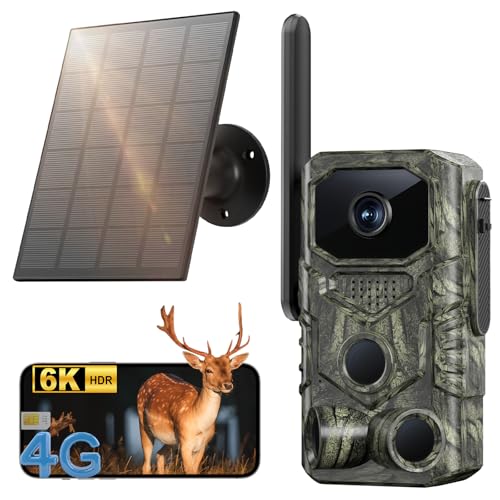
The Gyliziex cellular model leverages a built-in 4G SIM approach, working with AT&T, Verizon, and T-Mobile networks to deliver remote monitoring without home Wi-Fi. GPS tracking helps locate the device, while two-way audio capability supports real-time communication or deterrence. The Ucon app provides settings control, live data, and status monitoring from a distance, aligning with field operations that require rapid adjustments without site visits. The camera outputs 3K imagery and 6K video in a compact, weather-ready form factor. This model is ideal for farm surveillance, perimeter checks, and wildlife observation where cellular connectivity is readily available.
Power-wise, the solar-ready design offers flexibility in off-grid locations. A solar charging setup can further extend field life, reducing dependence on battery swaps. The combination of cellular connectivity, GPS, and remote control makes this camera well-suited for users who need timely updates from multiple distant sites and want to coordinate actions with teammates or land managers.
Stealth Cam Sol-Pak Solar Battery Pack

Stealth Cam’s Sol-Pak Solar Battery Pack focuses on extending the field life of wireless and cellular cameras. It combines a 3000mAh Li-ion battery with a solar panel, offering a renewable power source for extended deployments. The unit includes an external 12V DC jack, enabling compatibility with a broad range of trail cameras that support external power inputs. This approach minimizes battery replacements and reduces maintenance time, making it ideal for security monitoring or wildlife surveys in remote locations where visits are infrequent. The rugged housing is designed to endure outdoor conditions, and the solar capability helps sustain operation in low-light periods or seasons with limited sun exposure.
In practice, the Sol-Pak works as a supplementary power solution rather than a standalone camera. Users should pair it with a compatible trail camera to maximize uptime, especially during long-term studies. Its emphasis on durability and solar-assisted charging aligns with needs for stable field operation in challenging environments, from forests to grasslands, across a range of weather conditions.
Buying Guide
Power Sources and Longevity
- Built-in rechargeable batteries provide compact, ready-to-use power; look for capacity in mAh (or Wh) and how many days of standby you can expect between charges in your climate.
- Replaceable battery packs (AA, 8x AA, etc.) can offer quick field refreshes when solar or external power isn’t feasible.
- Solar panels extend field life but depend on sun exposure; confirm panel size, charge controller, and compatibility with your camera’s power input.
Capture Technology and Latency
- Video and image resolution (4K, 64MP, etc.) should match your monitoring goals and data storage capabilities.
- Trigger speed and detection range are critical for fast-moving wildlife; sub-0.1 second triggers capture more events in dense habitats.
- Night vision range and LED type (low-glow vs. no-glow) influence stealth and image clarity after dark.
Connectivity and Remote Access
- Wi‑Fi and Bluetooth are great for on-site setup and local transfer, but cellular models provide real-time remote access from distant locations.
- App support (TrailCam Go, Ucon, etc.) varies in range and features; verify if the app allows live-view, media download, and camera status checks.
- Note data usage and plan requirements for cellular cameras; heavier media may require larger data allowances.
Durability and Environment
- IP ratings (waterproof) and rugged housings determine performance in rain, snow, or dust.
- Operating temperature ranges affect battery efficiency; extreme cold can reduce battery life and trigger speed.
Compatibility and Accessories
- External power options (12V DC, solar panels) extend uptime; ensure the camera supports your chosen power accessory.
- Storage needs (SD card capacity) should align with video quality and recording frequency; plan for periodic data offload if needed.
Comparative Considerations
- Best for minimal maintenance: solar-assisted systems like VIDVIS or Stealth Cam Sol-Pak when sun access is reliable.
- Best for remote cellular monitoring: Gyliziex offers GPS, two-way audio, and app control without home Wi‑Fi.
- Best for field longevity in cold or remote areas: DEATTI’s multi-battery setup with fast trigger and IP sealing.
When choosing a battery-powered trail camera, balance power strategy with capture requirements. For two or more weeks between site visits, solar-assisted or external power packs add significant reliability. If remote monitoring is essential, prioritize cellular connectivity and robust app features. For dense habitats, prioritize fast triggers and high-resolution media to maximize the value of each capture. By aligning power setup with environmental conditions and monitoring goals, you can optimize field life while preserving data quality.