Astrophotography can be accessible to beginners with the right camera. This guide highlights five beginner-friendly cameras that plug into common telescopes and deliver immediate results for Moon and planet shots, as well as simple deep-sky captures with a computer. Each model prioritizes ease of setup, real-time viewing, and compatibility across Windows, macOS, or Linux. The table below compares basics at a glance, helping you choose a camera that aligns with your observing goals and telescope setup. From plug-and-play planetary cams to fully integrated smart systems, these options cover a range of budgets and experience levels.
| Product | Brand | Primary Use |
|---|---|---|
| SV105 Telescope Camera For Beginners | SVBONY | Beginner lunar/planetary imaging |
| 4K 8MP Telescope Camera | FIBONAX | 1.25″ camera for planetary detail & lunar imaging |
| 2MP USB Telescope Camera | FIBONAX | Budget 2MP 1.25″ camera for planets |
| SV305C Planetary Camera | SVBONY | Entry-level planetary/Lunar & EAA |
| Vaonis Vespera Pro | Vaonis | Smart telescope with live panorama & tracking |
Below are five carefully selected options that balance ease of use, performance, and compatibility for beginners. Each entry includes a link to its Amazon listing, a quick image reference, and core features to help start astrophotography without complicated setups.
SV105 Telescope Camera For Beginners
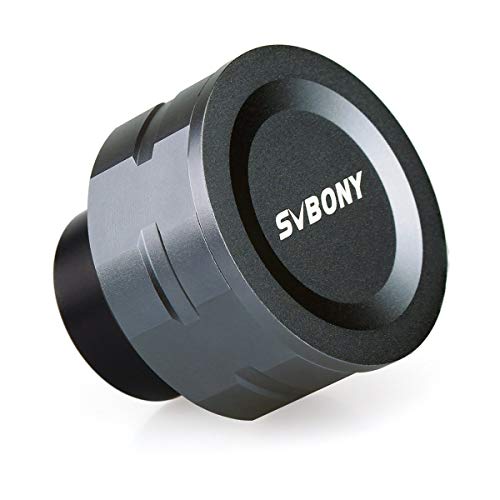
The SV105 serves as a straightforward starting point for astronomical imaging. It works as a 1.25″ eyepiece camera ideal for lunar and planetary shots, letting you record quick videos by simply pointing at the Moon or a bright planet. It streams real-time views to a laptop or PC, facilitating immediate observation and sharing. Setup is designed to be plug-and-play with minimal configuration. Windows users can run with compatible software; Linux users typically download AstroDMx Capture, while Android support is via USB Camera.
- Plug-and-play operation; no driver required on Windows
- Ideal for lunar and planetary imaging
- Real-time dynamic observation on a computer
- Compatibility across Windows, Linux, and Android with appropriate software
- 1.25″ telescope compatibility for standard focusers
4K 8MP Telescope Camera For Beginners

The 4K 8MP telescope camera from FIBONAX brings a high-resolution option with broad OS support. It is a plug-and-play device recognized by Windows 10/11, macOS 12+, and Linux through USB. The 8MP sensor enables 1080P at 60fps and 4K at 30fps, along with still image capture. This camera emphasizes true-color rendering in low-light scenes, making it suitable for capturing lunar craters and Saturn’s rings with clarity. It is designed to fit standard 1.25″ focusers and includes an IR-cut filter to reduce light pollution and protect the sensor from dust.
- Plug & play on Windows, macOS, and Linux via USB
- 8MP sensor; 1080P@60fps; 4K@30fps; stills
- Accurate color reproduction in low light
- 1.25″ compatibility with IR-cut filter
2MP USB Telescope Camera For Beginners

This 2MP USB telescope camera is a compact entry point for astrophotography. It supports 1.25″ telescope interfaces and offers 1080P HD imaging with a removable IR filter to help reduce light pollution and protect the sensor. The aluminum body weighs about 110 grams, aiding telescope balance during extended sessions. The camera delivers smooth 30fps video and aligns with standard eyepiece setups for quick captures of planetary details or distant landscapes.
- Instant 1.25″ telescope compatibility; no tools required
- 1080P HD imaging with removable IR filter
- 30fps video; light, thermally efficient aluminum body
- Crips Jupiter bands and other planetary details in tests
SV305C Planetary Camera For Beginners

The SV305C is a color entry-level telescope camera designed for planetary photography and lunar imaging, with strong suitability for EAA. It uses the IMX662 sensor (1/2.8″ back-illuminated) and a 2.9µm pixel size, enabling a balance of sensitivity and resolution. The camera offers low readout noise and improved red spectral response with reduced glow, helping capture clearer planetary detail without excessive exposure. It is compatible with standard 1.25″ focusers and supports quick setup for beginner-friendly shots.
- Entry-level planetary and lunar imaging
- IMX662 sensor with low readout noise
- Improved red spectral sensitivity for deep sky captures
- 1.25″ compatibility; suitable for EAA workflows
Vaonis Vespera Pro Smart Telescope

The Vaonis Vespera Pro represents a premium, all-in-one solution that combines a smart telescope with an advanced imaging camera. It features a 12.5MP Sony Starvis 2 sensor for high-resolution, full-color images in low light. The CovalENS Live Panorama technology enables real-time wide-field sky views and seamless panoramic captures. A dedicated app controls observation, while the precision optics and a custom field corrector deliver sharp, distortion-free images across the full field of view. This option appeals to both beginners seeking simplicity and experienced users pursuing advanced imaging.
- 12.5MP Sony Starvis 2 sensor for detailed imaging
- CovalENS Live Panorama for real-time wide-field views
- App-controlled operation with precise optics and field correction
- Beginner-friendly to experts’ needs in a single package
Buying Guide
Key purchase considerations help determine the best fit for your goals and telescope setup. First, assess compatibility: 1.25″ focusers are common for entry-level cameras and align with many small refractors and Newtonians. If you plan deep-sky imaging, prioritize sensors with good low-light performance, lower readout noise, and efficient heat management. For beginners, plug-and-play operation and cross-platform support (Windows, macOS, Linux) reduce setup friction. Consider whether you want a dedicated planetary camera or a more versatile system with live viewing, video capture, and potential for future upgrades. Price, weight, and balance on the telescope tube also influence usability during longer sessions.
A few comparison points across the chosen options: SV105 offers a simple lunar/planetary start with minimal fuss, ideal for quick sessions. The FIBONAX 4K/8MP camera provides higher resolution and robust OS compatibility for broader imaging and video. The SV305C adds color imaging with an emphasis on planetary detail and EAA workflows. The Vaonis Vespera Pro combines a smart telescope with sophisticated imaging capabilities, delivering real-time panoramas and a modern app-driven experience, suitable for those seeking an all-in-one solution. For budget-conscious beginners, the 2MP FIBONAX option balances cost, weight, and basic planetary imaging tasks.
Best-use recommendations by scenario:
– Quick planetary and Moon basics: SV105 or SV305C for straightforward captures with minimal setup.
– High-resolution planetary detail and lunar imaging: FIBONAX 8MP 4K camera, with easy cross-OS support.
– All-in-one learning and exploration: Vaonis Vespera Pro for guided observations and real-time panoramas.
– Budget-friendly entry: FIBONAX 2MP USB camera offers core features without complex accessories.