Best 70 300mm Lens Picks for Versatile Telephoto Shots
Finding the right 70–300mm lens depends on your camera system and shooting style. This guide highlights five solid options across major brands, tailored for different needs—from travel photography and wildlife to sports and portrait work. Each pick is best for a specific user, with clear reasons and practical trade-offs to consider.
Product Overview
| Product | Best For | Key Benefit |
|---|---|---|
| Tamron 70-300mm F/4.5-6.3 Di III RXD for Sony | Sony mirrorless shooters | Extremely lightweight telephoto option with strong image quality |
| Canon EF 70-300mm f/4-5.6 is USM | Canon DSLRs needing stabilized long reach | Effective stabilization and USM focusing |
| Canon EF 75-300mm f/4-5.6 III (Renewed) | Budget Canon users | Affordable option with basic zoom reach |
| Nikon 70-300mm f/4-5.6G (Renewed) | Nikon DSLR users seeking reach | Solid manual-to-auto focus versatility |
| Nikon AF-P DX NIKKOR 70-300mm f/4.5-6.3G ED (Renewed) | Nikon DX mirrorless/DSLR hybrid users | Updated stepping motor AF and compact design |
Tamron 70-300mm F/4.5-6.3 Di III RXD for Sony

Best for: Sony mirrorless shooters who want a light, portable telephoto option without sacrificing image quality. This lens is designed for ease of carry, enabling longer sessions without fatigue. The design includes 15 elements in 10 groups to maintain sharpness across the zoom range, helping you focus on creative framing rather than equipment limits. It excels in up-close shooting with a close focusing distance suitable for portraits or small wildlife.
Why selected: It balances weight and performance, delivering versatile reach for travel, street, and nature photography. The compact form makes it a strong companion for Sony A-series or full-frame Sony bodies when you need extra reach without adding bulk. A potential limitation is the slower maximum aperture at longer focal lengths, which may impact low-light shooting.
Canon EF 70-300mm f/4-5.6 is USM

Best for: Canon DSLRs needing a stabilized telephoto zoom with fast focusing. The 3-stop image stabilizer helps counter camera shake, making it a solid choice for handheld telephoto work. The USM motor provides quick, quiet focusing, which is beneficial for portraits and wildlife where sound and speed matter.
Why selected: It’s a reliable, well-established option within Canon’s ecosystem, offering practical reach and a robust focusing system. Limitation: the maximum aperture at the long end is f/5.6, which is less forgiving in dim light and may require higher ISO or longer exposure times.
Canon EF 75-300mm f/4-5.6 III Telephoto Zoom (Renewed)

Best for: Budget-minded Canon users who want a practical telephoto range without new-lens investment. The lens offers a versatile zoom span and a compact footprint suitable for travel and everyday shooting.
Why selected: Renewed options can provide solid value for beginners or hobbyists. Limitation: image quality may not match newer models, and physical wear or firmware quirks could appear, so purchasing from a reputable renewed program is important.
Nikon 70-300mm f/4-5.6G (Renewed)
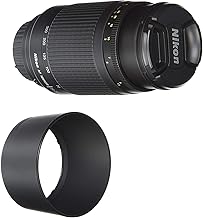
Best for: Nikon DSLR users seeking a long reach with a mid-range price. The lens offers a substantial zoom range, suitable for travel, sports, and wildlife shooting on Nikon bodies that support autofocus.
Why selected: Renewal programs can provide dependable performance at a lower cost. Limitation: some models may require careful compatibility checks with older Nikon bodies and feature sets, especially regarding autofocus behavior on specific bodies.
Nikon AF-P DX NIKKOR 70-300mm f/4.5-6.3G ED (Renewed)

Best for: Nikon DX-format shooters who want a compact telephoto zoom with modern focusing, including a stepping motor for smoother autofocus in video and stills. This lens is a good match for entry- to mid-level Nikon DSLR users or Nikon mirrorless with an appropriate adapter.
Why selected: The AF-P design provides quieter and faster autofocus with newer Nikon bodies, making it suitable for action, birds, and portraits. Limitation: optimized for DX sensors; on full-frame bodies, field of view changes accordingly, and some older bodies may show reduced performance.
Buying Guide
What to consider when choosing a 70–300mm lens
- Camera system compatibility: Ensure the lens mount matches your camera (Sony E, Canon EF, Nikon F, etc.).
- Sensor format: DX/APS-C vs. full-frame affects field of view and image quality at longer ends.
- Aperture and light: Lenses at f/4–f/5.6 are common; consider whether you need brighter glass for dim scenes or faster shutter speeds.
- Autofocus performance: Some lenses use USM or stepping motors; for action or video, smoother and quicker AF is preferable.
- Image stabilization: Built-in IS helps with handheld telephoto work; check stabilization rating and compatibility with your camera’s body.
- Weight and handling: Lighter lenses improve portability for travel and street photography, but may trade off some image quality or build feel.
- Maintenance and renewals: Renewed or third-party options can offer value, but verify return policies and compatibility with your camera body.
Practical scenarios
- Travel and street photography: Choose compact and light lenses with good sharpness across the zoom range (like the Tamron option for Sony).
- Wildlife and sports: Favor lenses with reliable autofocus and stabilization, and consider a longer reach when your subject is distant.
- Portraits: Look for a lens with natural rendering and smooth background separation, especially at mid-telephoto lengths.
Compatibility tips
- Always verify if a lens is designed for your camera’s sensor size to avoid vignette or reduced autofocus performance.
- Check if firmware updates exist for older “renewed” lenses to ensure the best compatibility with newer camera bodies.
- Consider using a lens hood to improve contrast and reduce flare, particularly with telephotos outdoors.
Maintenance and care
- Keep lenses clean; wipe front elements with a microfiber cloth and avoid touching the rear element with fingers.
- Store lenses in a cool, dry place to protect from moisture and fungus growth in humid environments.
- Use a padded bag or case when traveling to prevent bumps that can affect alignment and optics.
FAQ
- Q: Is a 70–300mm lens suitable for beginners?
- A: Yes, it provides a broad zoom range that is forgiving for beginners learning composition and framing with telephoto reach.
- Q: Do these lenses work on full-frame and crop-sensor cameras?
- A: Many are designed for specific mounts and formats; check compatibility with your body to ensure proper image circle and autofocus.
- Q: Will I need a tripod for 300mm shots?
- A: For sharp long-end photos, a tripod or stabilized handheld technique helps, especially in lower light or with slower shutter speeds.
- Q: Are renewed lenses reliable?
- A: Renewed lenses can perform well when purchased from reputable sellers, but verify return policies and inspect for cosmetic or functional issues.
- Q: Which lens is best for Sony mirrorless?
- A: The Tamron 70-300mm Di III RXD is specifically designed for Sony E-mount, prioritizing lightness and portability with solid optical performance.