55-200mm zoom lenses offer a practical balance of reach, portability, and price, ideal for travel, portraits, and everyday shooting. This guide covers versatile options across Nikon, Canon, and Fujifilm ecosystems, including new and renewed listings. By weighing stabilization, autofocus speed, and optical design, you can pick a lens that complements your body and style. The summary table below provides a quick at-a-glance comparison, followed by detailed notes on performance, handling, and compatibility for each option.
| Product | Brand | Mount | Focal Range | Aperture | Stabilization | Condition |
|---|---|---|---|---|---|---|
| Nikon 55-200mm VR Zoom Lens | Nikon | Nikon DX / F | 55-200mm | f/4-5.6 | VR | New |
| Nikon 55-200mm DX Zoom Lens (Renewed) | Nikon | Nikon DX / F | 55-200mm | f/4-5.6 | VR | Renewed |
| Canon EF-M 55-200mm With IS STM | Canon | Canon EF-M | 55-200mm | f/4.5-6.3 | IS | Renewed |
| Canon 55-200mm EFM STM Lens | Canon | Canon EF-M | 55-200mm | f/4.5-6.3 | None Listed | Not Specified |
| Fujifilm XF 55-200mm Zoom Lens | Fujifilm | Fujifilm X | 55-200mm | f/3.5-4.8 | OIS | Renewed |
Nikon 55-200mm VR Zoom Lens

Designed for Nikon DX-format DSLRs, this 55-200mm lens delivers versatile telephoto reach with a practical maximum aperture of f/4-5.6. The build includes two extra-low-dispersion (ED) glass elements that minimize chromatic aberration and preserve detail across the frame. The Silent Wave Motor provides swift, quiet autofocus, helping maintain focus in dynamic scenes. Weighing about 9 ounces, the lens remains light enough for extended shoots and travel, making it a solid upgrade for budget kits that still demand respectable image quality at longer focal lengths.
Vibration Reduction (VR) helps steady handheld shots, particularly at the longer end of the zoom and in moderate lighting. The bulk-packaged variant represents a value-oriented option without sacrificing core optical performance. For shooters building a Nikon DX kit, this lens pairs well with mid-range bodies, delivering dependable image quality for portraits, landscapes, and travel photography. Its compact size and light feel also make it a convenient option for beginners seeking an introductory telephoto zoom with VR.
Nikon 55-200mm DX Zoom Lens (Renewed)
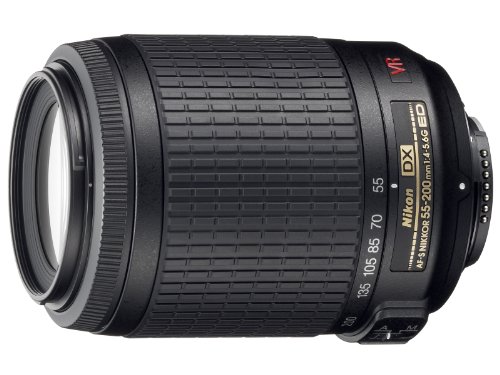
This renewed Nikon lens mirrors the same 55-200mm focal range and f/4-5.6 maximum aperture, optimized for DX-format Nikon bodies. It features a lightweight, compact design and the renowned Silent Wave Motor to deliver fast, quiet autofocus during everyday shooting and travel. While the listing emphasizes renewal status, the optical design relies on two ED glass elements to curb chromatic aberration and preserve image clarity at the long end. Weighing roughly 9 ounces, it remains practical for day trips and on-the-go documentary work.
Autofocus remains reliable for mid- to far- subjects, and the VR system helps stabilize shots without a tripod. This option is well-suited for photographers who want an affordable telephoto option with Nikon’s established lens line. As a renewed product, it can offer substantial savings while keeping the core performance you expect from a 55-200mm DX zoom.
Canon EF-M 55-200mm With IS STM

This Canon EF-M lens is built for the EOS M system, offering a 55-200mm focal range with a maximum aperture of f/4.5-6.3 and Optical Image Stabilization (IS). The STM stepping motor ensures smooth and quiet autofocus, contributing to steadier video and responsive stills in everyday shooting scenarios. The lens construction includes 17 elements in 11 groups, delivering a compact telephoto option for Canon mirrorless shooters who want stabilized reach without adding significant bulk to their kit. Renewed status indicates tested and restored performance.
IS helps compensate for camera shake in low-light situations or when shooting at longer distances. While designed for EOS M bodies, this lens remains a practical choice for travel and portrait work when paired with a compatible Canon body. The combined advantages of IS, lightweight formatting, and a flexible zoom range make it a compelling option within the Canon EF-M lineup.
Canon 55-200mm EFM STM Lens

The Canon 55-200mm EFM STM lens is a compact telephoto option for the Canon EOS M system. The listing notes a focal range of 55-200mm with a constant f/4.5-6.3 aperture and STM autofocus, making it suitable for everyday telephoto needs on a mirrorless body. The accompanying technical details—17 elements in 11 groups and a 27°50’–7°50′ diagonal angle of view—highlight a design oriented toward portability and practical image quality. The absence of stated stabilization means users should manage handholding carefully or rely on camera-based stabilization when available.
As a travel-friendly option within the EOS M ecosystem, this lens appeals to photographers who prioritize light weight and compact gear. It’s a straightforward telephoto choice for casual portraits, street photography, and travel shoots where a modestly longer reach is desirable without adding significant bulk.
Fujifilm XF 55-200mm Zoom Lens

This Fujifilm XF 55-200mm is designed for the X-series mirrorless system, delivering a versatile 55-200mm range with a bright aperture of f/3.5-4.8. The lens includes Optical Image Stabilization (OIS) and a robust optical design, making it a strong pick for travel, portraits, and day-to-day shooting in varied lighting. The OIS helps steady shots in low light and when shooting handheld, while the telephoto reach supports candid photography, sports, or wildlife within a portable, lightweight package. Renewed status confirms tested performance with potential savings.
With its X-mount compatibility and compact form factor, the XF 55-200mm complements Fujifilm’s sensor technology and color science. The combination of a relatively fast maximum aperture and optical stabilization supports flexible shooting in changing environments, from city scenes to outdoor adventures. For photographers invested in the Fujifilm ecosystem, this lens expands telephoto options without compromising image quality or overall system balance.
Buying Guide
Choosing a 55-200mm lens depends on your camera system, stabilization needs, and how you balance weight with performance. The Nikon options generally pair VR with lightweight bodies, making them well-suited for travel and everyday photography on DX cameras. Canon EF-M offerings emphasize image stabilization and compact design for EOS M bodies, while Fujifilm’s XF version provides optical stabilization and strong image quality within the X-series ecosystem. Consider how you shoot most often—portraits, travel, street, or sports—and whether your camera body relies on in-body stabilization or benefits from lens-based IS/VR.
- System compatibility: Ensure the lens mount matches your camera (Nikon F-mount DX, Canon EF-M, Fujifilm X). Adapters are available in some cases but may affect autofocus speed and data transmission.
- Stabilization: VR (Nikon) or IS (Canon) and OIS (Fujifilm) reduce camera shake. If your camera body already offers robust IBIS, you may prioritize lenses without stabilization to save weight and cost.
- Aperture and light: 55-200mm lenses with f/4-5.6 or f/4.5-6.3 are common. Wider apertures improve low-light performance and background rendering, but weight and size can increase.
- Autofocus performance: Look for Silent Wave Motor (Nikon), STM (Canon), or Linear Motor (Fujifilm) for quiet, reliable focusing in both stills and video.
- Optical design: ED elements help control chromatic aberration and maintain sharpness across the frame, especially at longer focal lengths.
- Weight and handling: Travel-friendly telephotos prioritize lighter builds; consider the combined weight with your camera body and other gear to avoid fatigue.
- Price and condition: New, renewed, and used listings each have trade-offs between cost and warranty. Renewed units typically undergo testing and refurbishment while offering savings.
Practical considerations for each system
Nikon: A VR-enabled 55-200mm is especially beneficial on bodies without robust in-body stabilization. The lens designs emphasize transportability and quick focusing, making them suitable for travel and street photography as well as family portraits.
Canon EF-M: For EOS M users, IS and STM play a key role in video and focus speed, particularly with compact, mirrorless bodies. Since the EF-M lineup is narrower than Canon’s DSLR ecosystem, choose within the EF-M family to preserve size and weight advantages.
Fujifilm X: The XF 55-200mm with OIS is a strong all-around telephoto for the X-series, balancing image quality, stabilization, and autofocus speed with a compact form factor. It suits landscape, portrait, and travel photography while keeping gear manageable.