Best 4K Cameras for Independent Filmmakers in 2026
When choosing a 4K camera for independent filmmaking, the goal is clear: reliable image quality, flexible recording options, and workflow that fits a DIY production schedule. This guide highlights five strong options, from cinema cameras to versatile ENG-style camcorders. It identifies who each camera is best for and why it stands out, along with practical cautions. The top picks cover filmmakers needing raw workflow, budget-conscious creators, and those chasing broadcast-ready capabilities.
| Product | Best For | Key Benefit |
|---|---|---|
| Blackmagic Pocket Cinema Camera 4K Power Bundle | Indie creators needing ProRes/Blackmagic RAW | Extra batteries and accessories for extended shoots |
| Blackmagic Pocket Cinema Camera 4K | Small crews prioritizing raw formats | High dynamic range and flexible post |
| Canon XA60 | On-the-go documentary and livestreamers | Integrated stabilization and bundle accessories |
| XbotGo Chameleon AI Auto Sports Action Camera | Sports teams and coaching capture | AI tracking and live streaming |
| Blackmagic Micro Studio Camera 4K G2 | Live production and studio setups | Compact broadcast-grade control |
Blackmagic Pocket Cinema Camera 4K Power Bundle
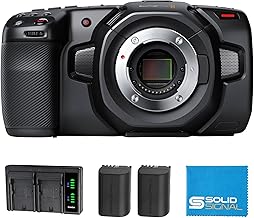
The Blackmagic Pocket Cinema Camera 4K Power Bundle provides a compact 4/3” sensor camera with a native 4096 x 2160 resolution and a versatile MFT lens mount. It offers 13 stops of dynamic range and dual gain ISO up to 25,600, helping filmmakers capture detail across varied lighting. It records to SD/UHS-II, CFast 2.0, or external USB-C SSDs, and supports Apple ProRes and Blackmagic RAW. An included activation key for DaVinci Resolve Studio supports post-production workload.
Best for independent filmmakers who need robust raw and ProRes options in a compact form. The bundle is especially suitable for shoots that require extra runtime and reliable battery life in remote locations.
Limitation: While highly capable, the bundle’s extra batteries and accessories add size and weight compared to bare cameras, which may affect ultra-light rigs.
Blackmagic Pocket Cinema Camera 4K

This model mirrors the Pocket 4K’s strong image quality with the same 4/3” sensor, 13-stop dynamic range, and dual ISO up to 25,600. It supports both Apple ProRes and Blackmagic RAW, enabling flexible post workflows. You can record to SD/UHS-II or CFast 2.0 cards, or external USB-C SSDs for longer takes. It’s a lean, capable option for indie crews prioritizing RAW or high-quality ProRes in a compact body.
Best for solo operators or small crews prioritizing cinema-grade image quality and post-friendly formats. Choose this if you value RAW flexibility and a lightweight, budget-friendly cinema solution.
Caution: This camera’s compact size means it relies on external rigs for extended battery life and may require careful monitoring of heat during long takes.
Canon XA60 Professional 4K UHD Camcorder

The Canon XA60 combines 4K UHD recording with a 20x optical zoom and 5-axis Stabilization, making it ideal for documentary work and event capture. Its DIGIC DV6 processing delivers crisp detail, while bundled accessories (shoulder bag, memory card, and USB power) support on-the-go productions. The camcorder is well-suited for journalists or educators who need reliable handheld footage and straightforward workflow.
Best for field reporters and small crews needing a ready-to-shoot setup with strong stabilization. Opt for this if you require long handheld runs and easy live-streaming potential.
Limitation: The 1/2.3″ sensor is smaller than cinema cameras, which can affect shallow depth of field compared to larger sensor options.
XbotGo Chameleon AI Auto Sports Action Camera

The XbotGo Chameleon AI Auto Sports Action Camera is designed for hands-free game footage with AI-powered tracking. It offers FollowMe Mode to lock onto key players and supports live streaming to RTMP platforms, making it suitable for parents, coaches, and small teams who want real-time sharing. The camera is compact and simple to operate while delivering action-focused footage.
Best for coaching staff and youth teams aiming for easy, live coverage and single-operator use. Choose this if you want AI tracking to minimize setup time during games.
Limitation: As an action-focused camera, it may not deliver the same cinematic depth as larger-sensor cinema gear in controlled environments.
Blackmagic Design Micro Studio Camera 4K G2

The Micro Studio Camera 4K G2 is crafted for live production and studio use with a compact carbon composite body, dual native ISO, 13 stops of dynamic range, and Blackmagic RAW recording. It integrates with ATEM switchers, supports tally, remote control, and can record to USB disks. This camera excels in controlled studio environments, broadcast setups, and live events requiring consistent color and broadcast-grade control.
Best for studio directors and live producers who need a compact, broadcast-grade camera that integrates with existing ATEM workflows. Choose this if your setup requires precise color control and reliable live switching.
Caution: This camera is optimized for studio use; in field conditions, power and connectivity options may be more limited than portable cinema options.
Buying Guide
- Sensor size and image quality: Larger sensors with higher dynamic range generally deliver more cinematic depth and better performance in low light. Cinema cameras often win here, while camcorders emphasize ease of use and stabilization.
- Recording formats: RAW and ProRes provide greater editing flexibility but require more storage and processing power. Consider your post workflow when selecting formats.
- Lens ecosystem and mount: An MFT mount offers a wide selection of affordable lenses, while other mounts may require adapters. Plan for future lens investments based on your project needs.
- Portability vs. feature set: Small, lightweight cameras suit run-and-gun filmmaking; heavier rigs may provide more stabilization and frame accuracy for controlled shoots.
- Battery life and power options: External power options and additional batteries are important for long shoots without frequent interruptions.
- Live production needs: If you plan to stream or mix feeds live, prioritize cameras with clean HDMI/SDI outputs, tally, and reliable control surfaces.
- Budget and workflow: Balance camera capabilities with total project costs, including memory, storage, and software licenses for post-production.
Frequently Asked Questions
- What camera is best for indie filmmakers on a budget? The Blackmagic Pocket Cinema Camera 4K variants offer strong image quality with flexible formats at accessible prices for small teams.
- Do I need RAW to succeed in independent filmmaking? RAW provides maximum post flexibility, but ProRes offers a simpler workflow with excellent results; choose based on your editing setup and storage capacity.
- Is a smaller sensor a drawback for shallow depth of field? Smaller sensors can challenge achieving very shallow depth of field; use fast lenses and careful lighting to mitigate.
- Is external streaming possible with these cameras? Some models support live streaming or RTMP feeds, notably action cameras with integrated streaming features and cameras designed for live production.
- Which camera is best for a field documentary? The Canon XA60’s built-in stabilization and bundled accessories make it a strong choice for handheld field work and quick setup.
- Can these cameras be used with a single operator? Yes, many listed options are suitable for one-person shoots, especially those with good autofocus, mode presets, and lightweight bodies.