The choice between 250mm and 300mm lenses spans two realms: specialized laser scanning optics and traditional telephoto/mirror lenses. This guide highlights five commonly sought options that illustrate the practical differences in field coverage, focus behavior, and application suitability. By examining F-theta scanning lenses and 250mm reflex/mirror lenses, readers can evaluate which focal length best suits their project—whether for laser marking, engraving, or portrait and wildlife photography. Each product below reflects real-world performance characteristics and compatibility considerations.
| Product | Brand | Type | Focal/Field | Best For |
|---|---|---|---|---|
| HUNST F-Theta Scan Lens 300x300mm | DGHUNST | F-Theta Scanning Lens | 300x300mm field, FL 420mm | Laser engraving and marking |
| Cloudray F-Theta Lens 300x300mm | Cloudray | F-Theta Scanning Lens | 300x300mm field, FL 420mm | Fine laser marking and drilling |
| QOMOLANGMA 300mm F Theta Scan Lens | QOMOLANGMA | F-Theta Scan Lens | 300mm field option (BT 150–300mm variants) | Flexible laser scanning setups |
| TTARTISAN 250mm F5.6 Reflex Lens | TTARTISAN | Reflex (Mirror) Lens | 250mm focal length | Donut-bokeh portraits and telephoto imaging |
| NiSi 250mm F5.6 Reflex Lens | NiSi | Reflex (Mirror) Lens | 250mm focal length | Vintage-style bokeh and retro look |
HUNST F-Theta Scan Lens 300x300mm

The HUNST F-Theta 300x300mm lens is designed for fiber laser engravers and galvo systems that require a wide, uniform scanning field. With a 300x300mm field and a 420mm focal length, the lens supports precise marking across sizable work areas and maintains consistent spot quality. The maximum scanning angle is approximately ±28°, enabling efficient coverage of complex patterns without frequent repositioning.
- 300x300mm scanning field with uniform illumination
- Focal length around 420mm supports deep focus and consistent spot size
- Designed for high-power laser operation with thermal stability
- Durable materials suited to high-temperature environments
Ideal for intricate laser work on metals and other materials, this lens balances field coverage and precision. Its robust construction helps minimize thermal focus drift during extended marking sessions, a common concern in high-power laser applications.
Cloudray F-Theta Lens 300x300mm
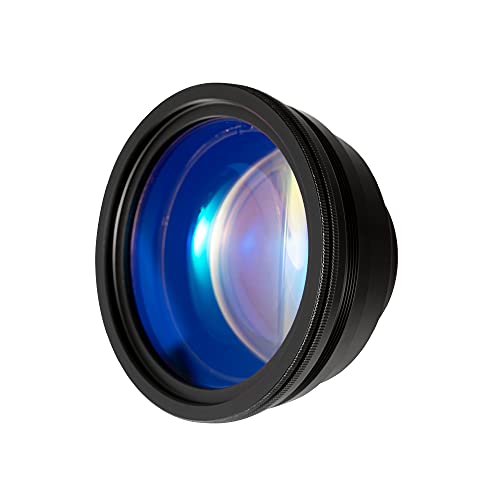
The Cloudray 300x300mm F-Theta lens emphasizes ultra-fine laser marking and precise focusing within a generous field. It’s built for reliability, featuring wear resistance and high-temperature tolerance that help reduce thermal focus shift during continuous operation. This lens is commonly paired with one or two axis galvo mirrors to enable rapid, accurate beam positioning across the 11.8×11.8 inch workspace.
- Ultra-fine marking and precise focus across a 300x300mm field
- Wear-resistant, thermally stable construction
- Compatible with standard 1064nm fiber laser systems
- Optimized for fast positioning with galvo-based systems
For users who need high repeatability in marking across a substantial area, Cloudray’s F-Theta lens offers dependable performance in industrial settings where precision cannot be compromised.
QOMOLANGMA 300mm F Theta Scan Lens

QOMOLANGMA’s scanning lens offers flexibility with multiple field options, including a 300mm area. The product notes indicate compatibility with fiber laser scanning systems that use galvanometer mirrors. The 150x150mm to 300x300mm range supports varied applications—from detailed micro-marking to broader area scans—making it a versatile choice for labs and production lines.
- F-Theta scanning lens compatible with galvanometer systems
- Field options from 150x150mm to 300x300mm
- Suitable for ND:YAG and green-YAG-type setups
- Designed for stable operation with 1064nm fiber lasers
When selecting a laser scanning lens for 300mm-field coverage, consider the desired working distance and the required marking precision across the full field to ensure the chosen model aligns with your workflow.
TTARTISAN 250mm F5.6 Reflex Lens

The TTARTISAN 250mm F5.6 Reflex Lens is a compact telephoto option designed for M42-mount cameras. Its catadioptric design yields distinctive donut-shaped bokeh, a visual effect favored in artistic and portrait photography. The lens can be adapted to other mounts with appropriate adapters, broadening its compatibility across classic and modern camera bodies.
- Catadioptric design for unique donut-shaped bokeh
- Lightweight and compact for telephoto use
- Primarily intended for M42-mount cameras, adapter-ready for others
- Manual focus and fixed aperture control
For enthusiasts seeking a retro aesthetic with a focal length of 250mm, this reflex lens provides a distinctive look while remaining adaptable through adapters in mixed-camera setups.
TTARTISAN 250mm Reflex Lens for M42 Mount

This TTARTISAN variant is a 250mm f/5.6 reflex lens designed for M42 mount use. It emphasizes a compact form factor and the signature donut-shaped bokeh effect, adding a stylized dimension to portraits and wildlife photography. The lens is compatible with Canon, Nikon, Sony, and other systems through adapters, enabling cross-platform use.
- Donut-shaped bokeh for a creative look
- Light and portable telephoto option
- Versatile with adapters for multiple camera brands
- Manual focus with fixed aperture for artistic control
As a 250mm option, this lens serves photographers aiming for a distinctive, painterly rendition in telephoto shots while maintaining flexibility across systems with the proper adapters.
NiSi 250mm F5.6 Reflex Lens
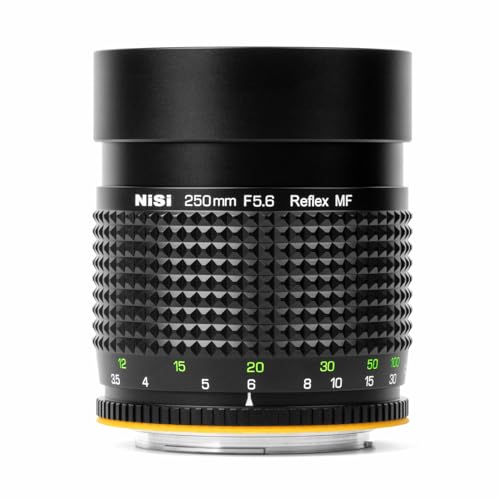
The NiSi 250mm F5.6 Reflex Lens is a full-frame mirror lens designed for Canon EF mount cameras. Its vintage-inspired mirror design creates a distinctive look with soft rendering and a creamy bokeh. The optical stack uses six elements in three groups with 48-layer dielectric coatings to maintain color fidelity and reduce chromatic aberration.
- Canon EF mount compatibility (adapters available for others)
- Six-element, three-group design with dielectric coatings
- Retro, painterly bokeh with smooth falloff
- Manual focus and fixed aperture for creative control
For photographers who appreciate classic lens aesthetics, the NiSi 250mm reflex lens delivers a strong visual signature while offering reliable optics and coating technology for modern digital bodies.
Buying Guide
Key purchase considerations when deciding between 250mm and 300mm lenses cover application, field of view, working distance, and lens design. The following factors help clarify which length best fits your needs:
- Application type: Laser scanning versus traditional photography. F-Theta 300mm-class lenses excel in uniform, repeatable laser marking, while 250mm reflex lenses suit creative portrait and telephoto work.
- Field coverage: A 300mm F-Theta lens provides a larger scanning field, which can reduce the need for multiple passes, but may require greater system rigidity and calibration. A 250mm reflex lens focuses more tightly and emphasizes bokeh and subject isolation in photography.
- Working distance and mounting: Scanning lenses typically rely on precise galvo mounts and a stable optical path. Reflex lenses emphasize compatibility with SLR/mirrorless bodies via adapters, with emphasis on weight and balance.
- Thermal stability and power handling: Laser lenses often demand materials that resist thermal drift and high temperatures. Photography lenses prioritize coatings, flare control, and color fidelity under varying light conditions.
- Maintenance and compatibility: Check mount compatibility (M85, Canon EF, etc.), adapter availability, and ease of maintenance. Ensure you select a lens with a compatible integration path for your laser system or camera body.
- Cost-to-performance balance: Higher-end F-Theta lenses deliver precise laser scanning with robust optics, whereas 250mm reflex lenses provide distinctive aesthetics at potentially lower cost and with broader camera compatibility.
- Future-proofing: If you anticipate expanding to larger fields or different materials, a 300mm-class F-Theta lens may offer more flexibility in field coverage and focus control than a fixed 250mm reflex lens.
In sum, choose 300mm F-Theta lenses for laser scanning projects requiring broad, uniform coverage and strict beam control, and 250mm reflex lenses for portrait-oriented photography with characteristic donut or painterly bokeh. Your final selection should balance field reach, image style, and equipment compatibility to fit your workflow.