Whether you’re building a Raspberry Pi-based camera, a compact cine rig, or an aspiring CCTV setup, 16mm C-mount lenses offer compact form and versatile mounting. This guide highlights five strong options and practical adapters that extend your lens choices across popular cameras, including Canon EF-M, Sony E-mount, Fujifilm X, and Nikon F. Each pick balances image quality, durability, and ease of use. You’ll find direct 16mm C-mount lenses and robust adapters to help you unlock new shooting possibilities without unnecessary complexity.
| Product | Brand | Notes | Compatibility |
|---|---|---|---|
| Arducam C-Mount Lens for 12MP IMX477 Raspberry Pi HQ Camera | Arducam | 16mm focal length; manual focus; adjustable aperture; good image quality with minimal shading | Raspberry Pi HQ Camera (IMX477) |
| Fotasy 16mm C Mount Lens To Canon EF-M Adapter | Fotasy | Enables 16mm C-mount lenses on Canon EF-M bodies; infinity focus guaranteed; note on DSLR compatibility | Canon EF-M mirrorless |
| Fotasy C Mount To E-Mount Adapter | Fotasy | Allows 16mm cine lenses to fit on Sony/NEX E-mount; infinity focus; no electronics | Sony E-mount |
| Fotasy 16mm C Mount Lens To Fuji X Adapter | Fotasy | Mounts 16mm cine lenses to Fujifilm X; infinity focus; manual operation | Fujifilm X-mount |
| Fotasy 16mm C Mount to Nikon F Adapter | Fotasy | Adapters for C-mount lenses to Nikon F bodies; infinity focus; manual controls | Nikon F |
Arducam 16mm C-Mount Lens For Raspberry Pi HQ Camera
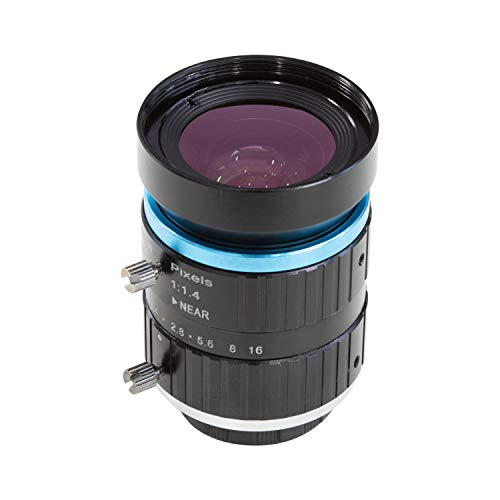
The Arducam lens is designed specifically for the Raspberry Pi HQ Camera’s IMX477 sensor, offering a 16mm focal length with manual focus and adjustable aperture. This configuration suits tight spaces while preserving image clarity across a reasonable field of view. The lens demonstrates minimal shading and dark corners, aligning with the needs of hobbyists and students assembling compact rigs. The 44.6° horizontal and 33.6° vertical field of view on the standard sensor context provides a balanced perspective for interior scenes and close-up work. It is a practical, low-cost option for those who want predictable results without extra tuning.
In practice, users note that the lens “just works” on the Raspberry Pi HQ Camera, a valuable trait for quick prototypes and classroom demonstrations. The design emphasizes reliability over exotic optics, making it ideal for educational projects and small builds where simplicity matters. The 16mm focal length offers a natural perspective for product shots, room-scale photography, and surveillance-like monitoring in compact housings. While not a substitute for high-end cinema glass, it delivers consistent results for everyday DIY videography and imaging tasks.
Fotasy 16mm C Mount Lens To Canon EF-M Adapter

This Fotasy adapter enables a 16mm C-mount cine lens to be used on Canon EF-M mirrorless bodies. It fixes infinity focus and provides a simple, mechanical solution for growing your lens library without changing camera bodies. The trade-off is the lack of electronic communication; auto aperture and autofocus are not available with this adapter, so exposure and depth-of-field control require manual settings on the lens itself. The build quality is solid for the price, making it a reliable pick for budget-friendly projects and experiments.
Compatibility notes emphasize that the adapter is not designed for Canon DSLRs (such as the 5D or 6D series). It purposefully targets the EF-M line, including models like the M50 and M6 II. If your plan involves cine-style shoots or surveillance-style timelapses, this adapter offers a straightforward path to expand lens choices while keeping the camera footprint compact. For learners, it provides a tangible way to explore manual exposure and focus techniques with minimal setup.
Fotasy C Mount To E-Mount Adapter

The Fotasy C Mount To E-Mount Adapter is a practical bridge for 16mm cinema lenses to work with Sony’s E-mount bodies. The adapter provides infinity focus but carries no electrical contacts, meaning there is no automatic diaphragm control or autofocus when using these lenses. It is well-suited for shooters who rely on manual focus pulls and fixed aperture settings, especially for documentary-style work or budget cinema experiments. The construction focuses on maintaining a snug fit and reliable alignment, which is essential for consistent focus accuracy in handheld rigs.
Flange distance considerations are important here: while you can achieve infinity focus, you may need to verify precise backfocus with your specific lens combination. The adapter’s simplicity also keeps weight down, a benefit when building compact rigs. For enthusiasts exploring the boundary between C-mount optics and modern mirrorless bodies, this adapter offers a clean, no-frills path to expand creative possibilities without electronic constraints.
Fotasy 16mm C Mount Lens To Fuji X Adapter

The Fotasy Fuji X adapter enables 16mm cinema lenses to mount on Fujifilm X-series cameras. Infinity focus is guaranteed, while maintaining a simple, mechanical interface. Like other adapters in this set, there are no electronic contacts, so users must manually manage exposure and focus. This option is especially appealing for photographers and videographers who value the Fuji X system’s color science and compact form, while still wanting to experiment with classic C-mount optics. The adapter’s straightforward design supports reliable alignment and predictable performance in run-and-gun shoots.
When planning use with Fuji X cameras, consider the lens’s coverage and distortion characteristics, as the short backfocus path can reveal vignetting or field curvature with certain optics. The adapter is best paired with well-corrected C-mount lenses and a steady hand for focus and exposure control. It provides a practical bridge for shooters exploring vintage-style cine optics on modern mirrorless bodies.
Fotasy 16mm C Mount To Nikon F Adapter
The Nikon F adapter lets you pair C-mount lenses with Nikon F bodies for cine-style shooting or CCTV applications. Like other adapters in this guide, it delivers infinity focus but no electronic communication, so manual focus and exposure control are essential. This option suits users who want to explore 16mm cinema lenses on Nikon bodies while preserving the familiar handling and ergonomics of the F mount. Check backfocus carefully with your chosen 16mm lens, as flange distances can influence focus at infinity depending on the lens’s optical design.
This adapter broadens practical options for those with Nikon ecosystems or educational setups that rely on older, robust camera bodies. It also supports a budget-friendly entry into C-mount sharing across mounts without investing in full-frame cinema gear. For project-based work, it’s a flexible solution that emphasizes hands-on control and reliable physical compatibility.
Buying Guide: Key Purchase Considerations
When choosing a 16mm C-mount lens or adapter, consider how you plan to shoot and what camera you’ll pair it with. Direct C-mount lenses deliver the simplest path to 16mm optics, while adapters expand compatibility across mounts and bodies. The following factors help compare options and prevent surprises after purchase.
- Mount compatibility: Start with your camera’s mount. If you want to use a C-mount lens on a Canon EF-M, Sony E, Fuji X, or Nikon F body, you’ll rely on adapters. Each adapter type has a specific flange distance and fit, which affects infinity focus and alignment.
- Infinity focus and back focus: Infinity focus is essential for landscapes and distant subjects. Some adapters guarantee infinity focus, while others require careful backfocus calibration with each lens combination. Confirm which lens-to-camera pairings have proven focus compatibility.
- Manual vs. electronic control: Most C-mount adapters provide a purely mechanical path with manual focus and exposure control. If you need auto aperture or metering, you’ll need a lens with electronic communication or a body-mount adapter that supports it, which is less common for vintage C-mount glass.
- Image quality considerations: Optical design influences sharpness, distortion, vignetting, and color rendition. A 16mm focal length often yields a compact perspective with moderate distortion. Lens coatings and glass quality impact flare control and overall contrast, especially in bright conditions or backlit scenes.
- Build quality and durability: Look for sturdy metal construction and reliable alignment in both lenses and adapters. A poorly aligned adapter can cause micro-jitters and misfocus, undermining a compact rig’s reliability.
- Compatibility with project goals: For Raspberry Pi projects, a direct lens like the Arducam option may provide the most predictable results. For cine-style experiments, adapters enable creative flexibility across different camera systems.
- Manual operation discipline: With most adapters, you’ll rely on manual focus and exposure. This suits documentary-style work and artistic explorations but may be less convenient for fast-paced action or quick-turnaround shoots.
- Budget and availability: C-mount lenses and adapters span a wide price range. Budget-friendly options can still deliver good results, but it’s wise to test optics for your specific lighting and framing needs before committing a larger purchase.
In practice, the best approach often mixes a direct 16mm C-mount lens for a dedicated camera like the Raspberry Pi HQ setup with a few adapters to explore different mounts. This combination supports a scalable workflow, from educational demos to independent filmmaking experiments. Always verify compatibility with your specific camera body, sensor size, and intended shooting distances to ensure your chosen optics deliver the intended field of view and sharpness in real-world use.